This is Why Marty Lagina Is Filthy Rich Compared to Rick Lagina!
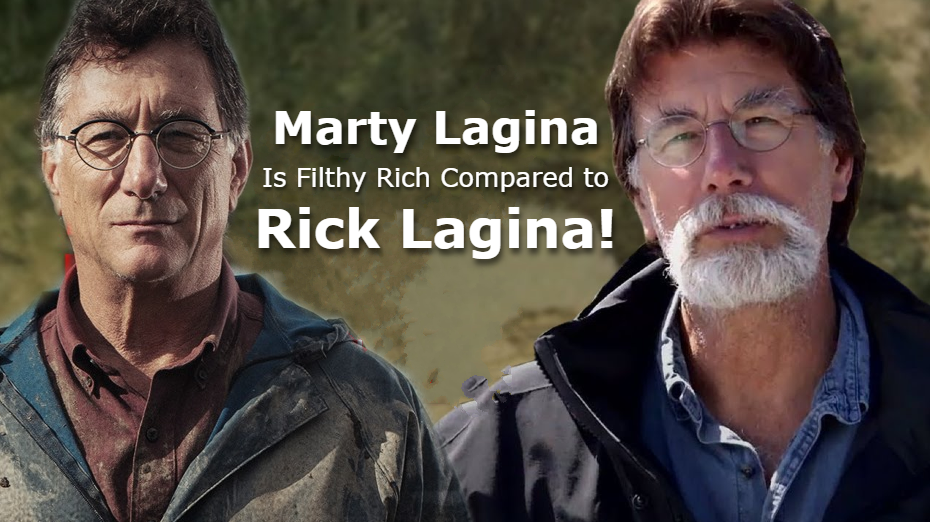
The Oak Island Mystery: Why Marty Lagina’s Fortune Outshines Brother Rick’s
For more than two centuries, Oak Island has drawn adventurers, historians, and dreamers into its orbit. Buried treasure, secret vaults, pirate gold, and even holy relics have all been rumored to lie beneath the Nova Scotian soil. But thanks to The Curse of Oak Island on the History Channel, the legend has been brought into millions of living rooms worldwide—and at the center of it all are brothers Rick and Marty Lagina.
Together, they’ve become household names as the “Fellowship of the Dig” continues its search for the elusive treasure. But while Rick’s fascination with Oak Island stretches back to his boyhood, it is Marty whose name often sparks a different kind of curiosity: why is he so much wealthier than his older brother?
A Childhood Obsession Turns Into a Lifelong Mission
Rick Lagina was just 13 years old when he first read about Oak Island’s “Money Pit” in a 1965 Reader’s Digest article. He shared the story with his younger brother Marty, and the two dreamed of someday uncovering its secrets. Decades later, they would pool their resources to buy a stake in the island and launch what has become one of reality television’s most enduring adventures.

The show, which premiered in 2014, has explored everything from Templar artifacts and mysterious coins to ancient inscriptions. Theories swirl: was Oak Island a hiding place for Captain Kidd’s pirate loot, a secret vault of the Knights Templar, or even the resting place of Shakespeare’s lost manuscripts? Yet, despite fascinating finds, the true treasure remains undiscovered—at least for now.



The Wealth Gap Between the Brothers
While both brothers share equal passion for the hunt, their financial paths could not be more different. Rick, who worked for decades as a postal worker, has modest means compared to his younger brother. Marty Lagina, on the other hand, built an entrepreneurial empire long before Oak Island fame ever reached him.
Born in 1955, Marty earned degrees in mechanical engineering and law before striking gold in the energy sector. In the late 1980s, he co-founded Terra Energy, a natural gas company that grew into one of Michigan’s largest operators. By 1995, Terra’s portfolio was valued in the billions. When CMS Energy purchased the company, Marty reportedly pocketed around $60 million from the sale.

Not content to stop there, he reinvested his fortune into real estate, renewable energy, and winemaking.
A Career in Clean Energy and Fine Wine
In 2004, Marty and business partner Craig Tester founded Heritage Sustainable Energy, an ambitious venture aimed at harnessing wind and solar power. Today, Heritage’s projects generate more than 200 megawatts of clean energy—enough to power tens of thousands of homes annually. Marty remains the company’s principal owner, further cementing his place among America’s most successful renewable energy entrepreneurs.
At the same time, he pursued another passion: wine. Inspired by his Italian heritage, he established Mari Vineyards on Michigan’s Old Mission Peninsula. Unlike many local winemakers, Marty took risks by planting European grape varieties such as Merlot and Cabernet Franc. His bold approach paid off: Mari’s wines have become both award-winning and beloved by enthusiasts.
Why Marty’s Wealth Matters for Oak Island
The difference in fortunes between Rick and Marty is striking—but it may also be the very reason the brothers’ Oak Island dream became reality. Without Marty’s deep pockets, funding the expensive excavations, high-tech scans, and specialized teams would have been nearly impossible. Estimates suggest the Lagina brothers and their partners have poured millions into the search, far beyond what a TV production budget alone could cover.

Marty’s entrepreneurial success has therefore not only secured his own fortune but also kept alive the quest that first fascinated his brother decades ago.
Treasure or No Treasure, a Legacy Secured
Skeptics dismiss Oak Island as “Hoax Island,” suggesting the supposed treasure is nothing more than myth. Supporters, meanwhile, point to artifacts like a medieval cross, Spanish coins, and even DNA evidence that hint at deep historical connections. Whether the ultimate prize is a chest of pirate gold, Templar relics, or simply the thrill of the hunt, the Lagina brothers’ story continues to captivate millions.
And in the end, perhaps the greatest treasure is not buried beneath Oak Island at all. It may be the bond of two brothers—one with boundless curiosity, the other with financial vision—who turned a childhood obsession into one of television’s most compelling modern legends.