Oak Island’s Biggest Clues Yet: Gold Signals, Ancient Markers, and a Hidden Pattern
Is the Curse of Oak Island Finally Unraveling? Groundbreaking Discoveries Push the Search to New Heights

As the sun rises over Oak Island, the sound of heavy machinery breaks the silence, signaling a new chapter in the hunt for one of the world’s most enduring mysteries. In episode 7 of The Curse of Oak Island Season 13, the search for treasure intensifies across three critical fronts: the Money Pit, Lot 5, and a startling geometric connection that spans the entire island. Could these disparate clues finally be converging into a single map pointing to the legendary treasure that has eluded treasure hunters for centuries?
The Money Pit: A Deep Dive Into the Mystery
The team’s focus sharpens on borehole I9.5, a new drilling location aimed at reaching a depth of 210 to 230 feet to intersect a geological anomaly known as the solution channel. Dr. Spooner and Dr. Michael had previously confirmed that the water in this area contained high concentrations of dissolved gold, silver, and other precious metals. But the question remains: are these metals remnants of a vast man-made hoard or simply natural deposits?





As the drill hits 209 feet, the core sample is brought to the surface. The material is loose, wet, and exactly what the team had hoped for—a promising sign of a potential treasure hoard. A pinpointer is used to scan the mud, and it picks up a metallic signal, but in a classic Oak Island twist, the signal disappears upon re-scan. Yet hope is not lost. A more sensitive detector confirms the presence of metallic material, hidden within the dense clumps of clay and rock. This could be the breakthrough the team has been waiting for.
Lot 5: A Glimpse Into the Island’s Hidden History
While the drilling continues at the Money Pit, the team turns its attention to Lot 5, where new discoveries are reshaping the timeline of Oak Island’s history. Amid pottery shards and other historical artifacts, a small, ornate bead catches the team’s attention. Identified as Venetian glass, this bead dates back to the 12th to 19th centuries and suggests a possible connection to the Knights of Malta, who were active in the region during the 17th century.
Could this bead be evidence of a secret group, such as the Knights Templar, using Oak Island as a hidden treasure vault? Finding multiple beads in the same area hints at more than just a casual loss; it suggests a purposeful placement, perhaps a clue left by those who once guarded the island’s secrets.

The Drilled Stone and the Tree of Life Theory
However, the most significant discovery of the episode lies in a stone marker on Lot 5. Initially thought to be a random rock, the team’s 3D modeling reveals it was deliberately placed and surrounded by smaller stones. This formation matches ancient survey markers used by the Romans and later the Vikings, hinting that these ancient cultures may have used Oak Island for something much more significant than treasure storage.
Surveyor Steve Guptal tests the theory by projecting a line from the marker on Lot 5, extending it into the woods, where the team uncovers a drilled stone on Lot 27. This discovery aligns perfectly with the Kingdom Stone, which has been a central piece in the “Tree of Life” theory, linking the island’s geological markers to a sophisticated islandwide map. If this theory holds true, it suggests that the location of the treasure was not chosen at random but was mathematically and geometrically determined.
The Divider Tool: A Link to the Money Pit’s Flood Tunnels
Adding to the intrigue, a mysterious iron tool discovered on Lot 15 is brought to blacksmith Carmen Le for analysis. Initially thought to be a compass, the tool is identified as a divider—a drafting instrument used by engineers and architects. Dating back to between 1543 and 1620, the tool is shockingly linked to the period of early explorers and the post-Templar orders.
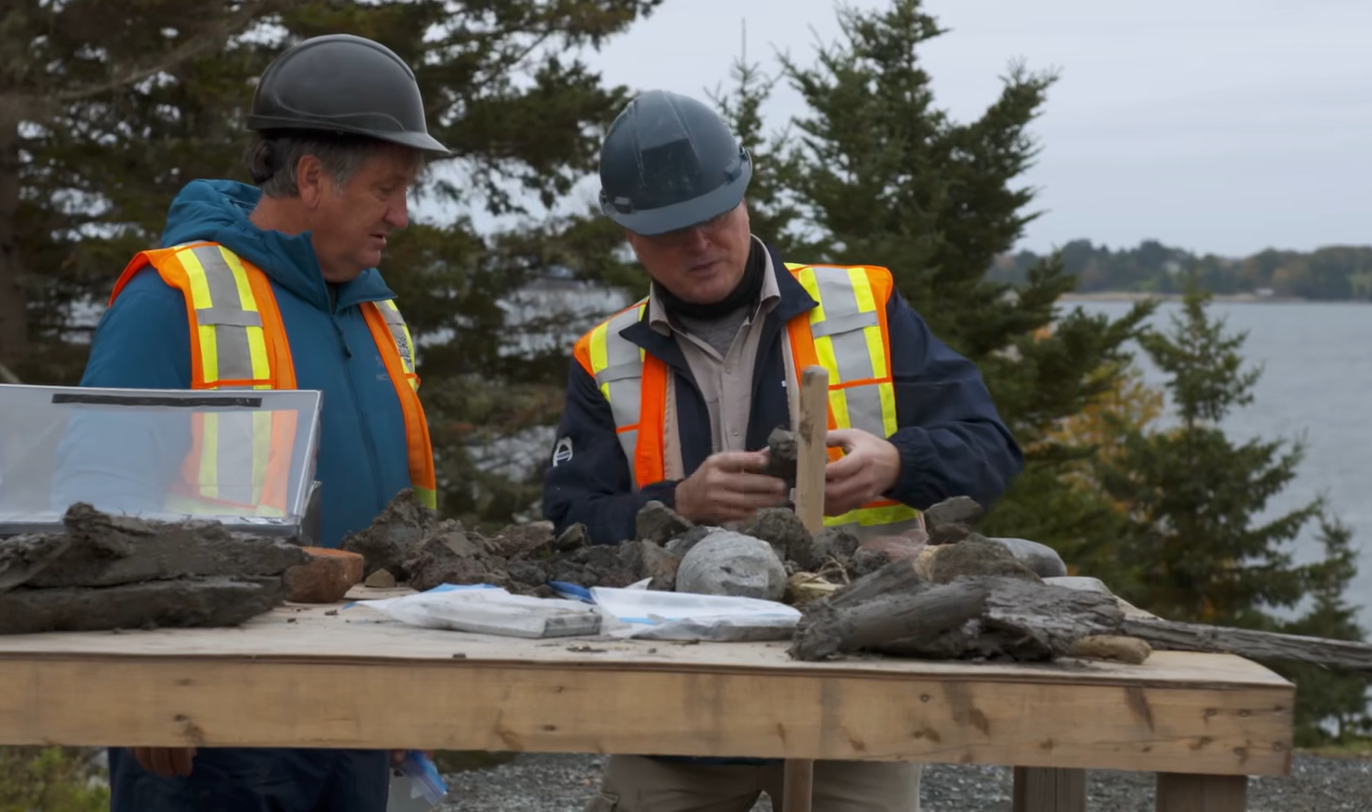
What makes this discovery even more compelling is the high chlorine content in the iron, suggesting that the tool was submerged in saltwater for an extended period. This points to the possibility that the tool was left deep within the Money Pit, potentially by the original architects who designed the intricate flood tunnels. When Robert Dunfield excavated the Money Pit in 1965, the flood tunnels burst, flooding the pit with seawater and possibly displacing this crucial tool onto Lot 15.
A Monumental Discovery
With the new evidence from Lot 5, the drilled stone on Lot 27, and the divider tool, the picture is becoming clearer. Oak Island was not simply a hiding place for treasure; it was a carefully planned, multi-generational site of immense cultural and historical significance. The alignment of Roman, Viking, and Templar markers, coupled with the discovery of Venetian artifacts and the divider tool, suggests that the island may have been continuously visited and modified over centuries.
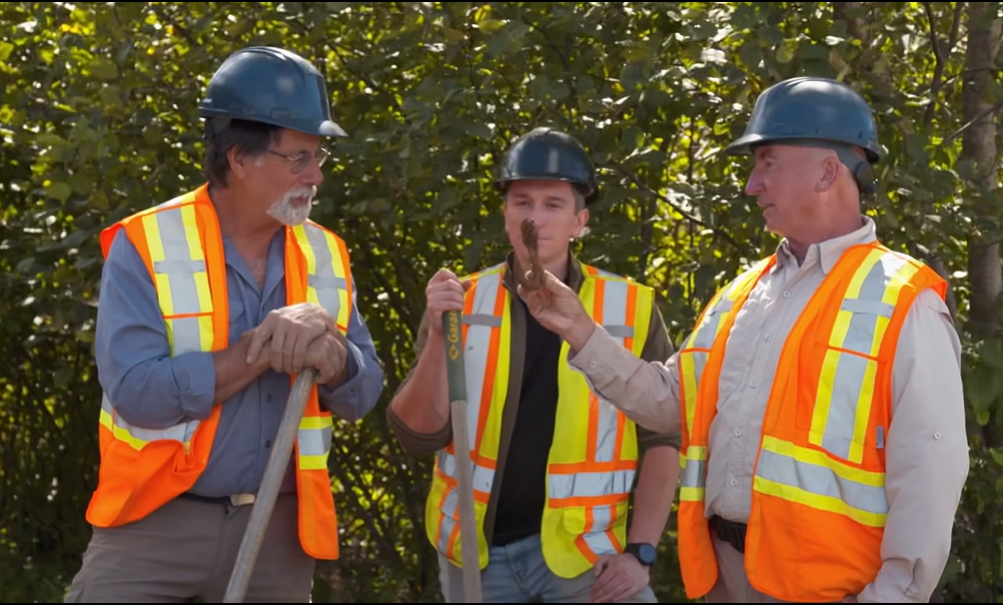
As Rick and Marty Lagina stand over the drilled stone on Lot 27, gazing along the line that leads to the Kingdom Stone, the weight of the discovery settles in. They are no longer just searching for treasure—they are decoding an ancient map, a message left by some of the most brilliant minds of the ancient world. The next chapter in the Oak Island mystery promises to reveal even more, as the team races to uncover what lies hidden beneath the surface.
Conclusion: The Search Continues
Episode 7 of Season 13 marks a pivotal moment in the Oak Island investigation. What started as a treasure hunt has evolved into a quest to uncover a lost chapter of history, filled with complex geometry, ancient cultures, and hidden secrets. With each discovery, the team moves closer to understanding the true purpose of Oak Island. But as always, the biggest questions remain buried deep below the surface, waiting to be uncovered.