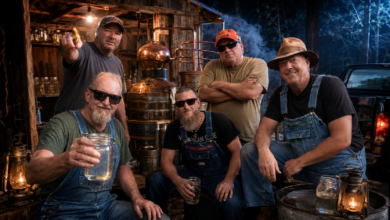
The Mystery Behind Marvin “Popcorn” Sutton’s De:ath – A Moonshiner’s Legacy.
Marvin “Popcorn” Sutton was more than a moonshiner—he was a cultural icon. A larger-than-life figure who embodied Appalachian tradition, rebellion, and grit, Sutton’s legacy lives on long after his death in 2009. Revered in songs, murals, documentaries, and festivals, his name has become synonymous with moonshining and mountain defiance. This is the story of a man who brewed liquor, challenged the law, and became a symbol of a vanishing American way of life.
Roots in the Smoky Mountains

Born on October 5, 1946, in the Hemphill region of western North Carolina, Sutton was raised on the edge of the Great Smoky Mountains National Park. His Appalachian lineage ran deep—his ancestors had lived in the hills of Hemphill and Cataloochee for generations. Like many mountain families, the Suttons lived by their wits and the land. Marvin’s childhood was steeped in the harsh simplicity of rural life: pulling weeds for pigs, picking tomatoes for 15 cents an hour, and living in a community where the only phone was for calling the undertaker.
A Born Moonshiner
Moonshine was never far from Marvin Sutton’s life. His father, like many in the region, made liquor using age-old techniques passed down from Scotch-Irish settlers. Moonshine in Appalachia wasn’t just a drink—it was medicine, currency, and tradition. At 16, Sutton began distilling his own batches, later admitting his early efforts were hardly drinkable.

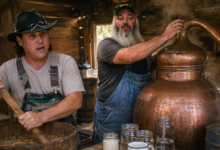


By 20, he had abandoned conventional employment entirely, opting instead for full-time illegal distilling. His infamous nickname, “Popcorn,” came after a barroom brawl in which he destroyed a malfunctioning popcorn machine with a pool cue—an early act of defiance that set the tone for the rest of his life.
A Character of the Mountains
Sutton didn’t just sell moonshine—he sold a story. From his roadside antique shop in Maggie Valley, North Carolina, he peddled jars of homemade whiskey next to rusted tools and odd trinkets. With his scruffy beard, tattered fedora, and sharp tongue, he was both a walking stereotype and a self-aware showman.
In 2002, Sutton starred in a homemade documentary titled This Is the Last Dam Run of Liquor I’ll Ever Make. Shot on a shoestring budget, it documented his distilling process with raw footage and unfiltered humor. The VHS tapes sold out from the back of his car and caught the attention of national media. Appearances on the History Channel and CMT soon followed, propelling him to folk hero status.
Outlaw Fame and Federal Eyes
With fame came scrutiny. While Sutton charmed crowds at heritage festivals with moonshine-making demos—sometimes offering samples to the dismay of organizers—he never stopped producing large volumes of whiskey behind the scenes. In 2007, a fire at his Tennessee property led to a federal raid that uncovered over 1,700 gallons of moonshine and massive stills.
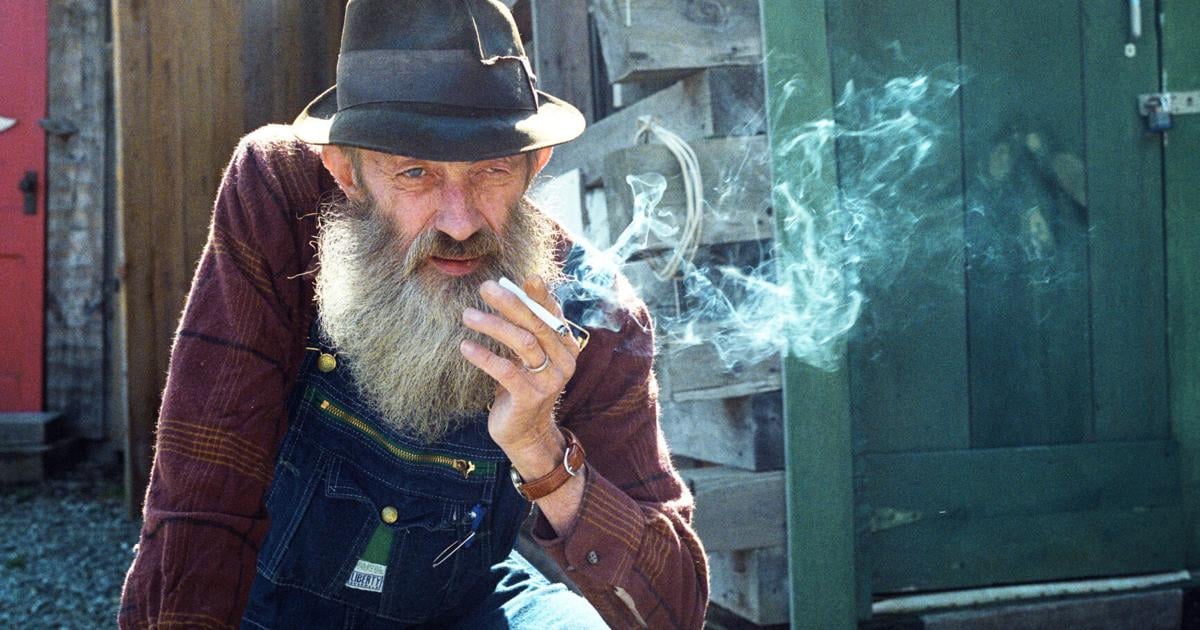
Unfazed, Sutton rebuilt his operation, even larger than before. But a sting operation followed, and in 2009, he was sentenced to 18 months in federal prison for illegal distillation.
A Tragic Ending
Popcorn Sutton was never meant for prison. Ten days before he was due to report, he died by suicide at the age of 62. Authorities found him in his beloved 1982 Ford Fairmont, a car he once bought with three jars of moonshine. It was a fittingly defiant final act from a man who had spent his life eluding the system.
The Legend Lives On
Sutton’s death only deepened his legend. Today, his face is painted on murals in Asheville and Nashville. Festivals celebrate his name. Songs sing of his exploits. His self-published book, Me and My Likker, is a collector’s item. To many, he’s a martyr—a man who stood up to government overreach and preserved a cultural craft that regulators tried to erase.
Myth vs. Man
But behind the myth was a complicated man. Sutton was fiercely proud, deeply rooted in Appalachian heritage, and unrelenting in his resistance to authority. Yet his lifestyle came with consequences—legal trouble, personal struggles, and the constant weight of rebellion.
“I’m just about gone,” he once said. “And when I’m gone, the damn liquor’s gone.”
An Appalachian Icon
Whether viewed as an outlaw, artist, or folk hero, Popcorn Sutton remains a towering figure in Appalachian lore. His life, full of fire and defiance, stands as a tribute to a disappearing way of life—one built on self-reliance, storytelling, and the relentless spirit of the mountains.
He may be gone, but his story continues to ferment in the hills he called home.