What Tony Beets Risked $2.7 Million On: And Why It Paid Off
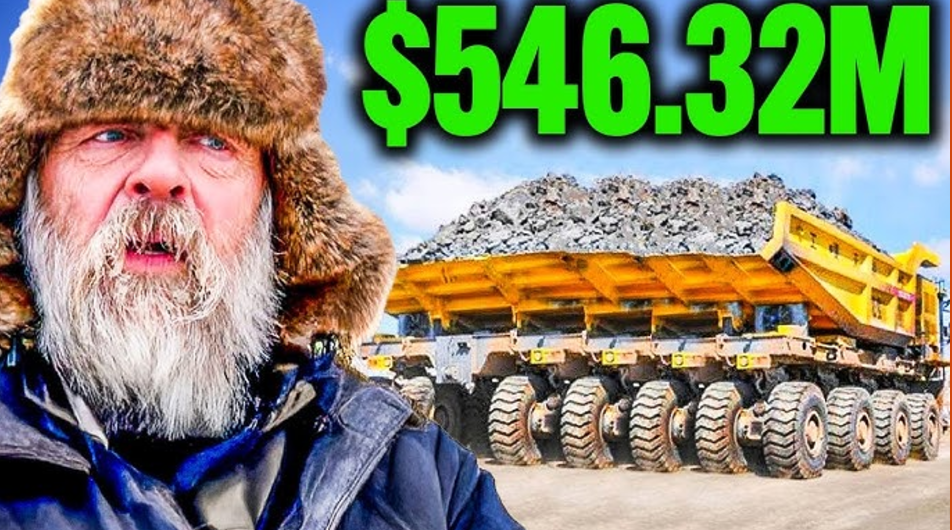
Inside the $2.7 Million Gamble: How Tony Beets’ D11 Dozer Changed Gold Rush Forever
In the frozen wilderness of the Yukon, fortune favors the bold — and sometimes, the borderline insane. For mining legend Tony Beets, the road to gold is paved with risk, steel, and staggering machinery.
A New Era of Gold Mining
“We buy the new stuff and we’re going to do 9,000–10,000 ounces every year from now on. You can’t do that with old crap.”
That’s Tony Beets — blunt, relentless, and never afraid to gamble big.
In the brutal world of gold mining, the line between success and disaster is razor-thin. For Beets, the veteran prospector known as The Viking of the Klondike, that line ran right along the edge of a 40-foot cliff. Beneath it lay millions in gold, trapped in frozen ground as hard as concrete.
To reach it, Tony needed more than grit and experience. He needed power — 120 tons of it.
The Monster on the Edge
The camera pans over a scene that looks more like a battlefield than a mine. A brand-new Caterpillar D11 Dozer — gleaming yellow and fresh from the factory — rumbles toward the cliff. It’s a $2.7 million investment, weighing more than a blue whale, and it’s about to be pushed to its limits.


At 35 feet long and armed with 850 horsepower, the D11 isn’t just a bulldozer — it’s a mobile earthquake. Its front blade can move 45 cubic yards of earth in one push, but its true weapon is the ripper: a 10-ton steel claw at the back, capable of tearing through frozen ground like butter.
Tony’s mission: to break apart a 40-foot wall of permafrost hiding gold-rich pay dirt 80 feet below.
The plan was simple. The execution? Potentially catastrophic.
One Wrong Move from Disaster
Standing at the controls, Tony Beets knows the stakes. If he goes even an inch too far, the 120-ton dozer could plunge over the cliff — a $2.7 million disaster that could end his season, or worse.
“Want to get to 9,000 ounces? Then we’re going to have to do some serious stripping,” Tony growls.
The ground trembles as he lowers the ripper. The steel shank bites into the frozen cliff, and with a deafening roar, tons of permafrost crumble away. The wall collapses in slow motion — a thunderous cascade of rock and ice tumbling into the pit below.
The crew watches in breathless silence. One wrong twitch, and Tony could vanish over the edge.
But this time, the gamble pays off.

In just five days, the D11 cleared the way to gold that would have taken weeks to reach with traditional equipment. It was a jaw-dropping demonstration of engineering and courage — and proof that in the Yukon, the biggest rewards belong to those willing to risk everything.
The Cost of Gold: Beyond Steel and Sweat
While the D11 was a modern marvel, it wasn’t Tony Beets’ first multi-million-dollar gamble. Years before this mechanized monster arrived, Beets made headlines with one of the boldest projects in Gold Rush history — resurrecting a 75-year-old gold dredge.
A relic from the early 20th century, the dredge was a floating factory, designed to scoop, sift, and wash gold-bearing gravel from riverbeds. Long abandoned and nearly forgotten, it represented both a historical treasure and a massive financial sinkhole.
“The ship is ready to sail,” Tony declared at the time. “Let’s put it in the water — see if we can dredge some gold with it.”
What most miners would call madness, Tony called opportunity. For him, every rusted bolt and leaking pipe was another step toward reviving a piece of Klondike history — and possibly rewriting the rules of modern mining.
The Ultimate Gamble
Whether it’s reviving century-old technology or betting millions on brand-new machines, Tony Beets’ story is a masterclass in high-stakes ambition.
Gold mining in the Yukon is, at its heart, a war against the earth itself. The tools are massive, the risks are terrifying, and the potential payoffs are staggering.
For Tony, it’s simple: you don’t win by playing it safe. You win by pushing to the edge — and sometimes, right over it.