Rick Ness’s $150,000 Mistake: The Costly Pump That Nearly Sank His Gold Rush Comeback
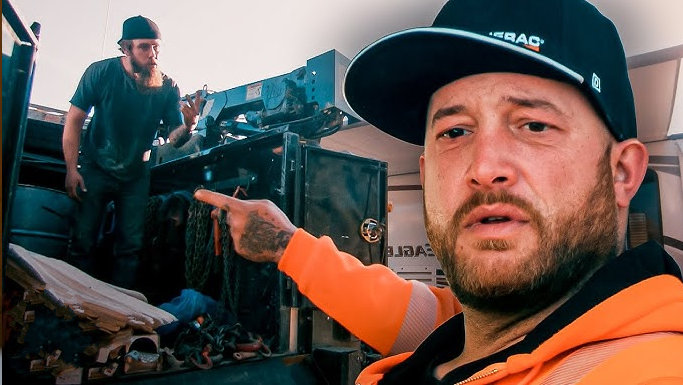
When Gold Rush star Rick Ness returned to the Yukon after a year away battling his personal demons, fans saw a man determined to rebuild his career—and himself. His comeback wasn’t just about mining gold; it was about redemption. Determined to hit big numbers and prove he still had what it takes, Rick made one massive investment that he believed would change everything: a $150,000, 12-inch Cornell water pump.
It was supposed to be the beating heart of his new operation at Rally Valley. Capable of moving 6,000 gallons of water per minute, the pump was a powerhouse on paper. “This was a big investment,” Rick said at the time. “$150,000 we gotta make up in gold just to pay this pump off.” The stakes couldn’t have been higher.
The crew watched with excitement as the gleaming machine was lowered into place. For a miner, new iron always brings hope. With everything connected and ready, they flipped the switch—and waited for the surge of water that would feed Monster Red, their wash plant. But nothing came. The pump was running, but the lines were dry.




Panic set in. After frantic searching, the crew found the first problem: a hairline crack in a custom-welded reducer fitting. The tiny flaw was letting air into the system, preventing suction. A quick weld seemed to fix it. Round two looked promising—until the intake hose collapsed under pressure, strangled by the pump’s sheer suction power. They had solved one problem only to create another.
The clock was ticking. Every hour lost meant lost gold, lost wages, and mounting expenses. When they finally got the system running again, the result was devastating. The water pressure was pitiful. Instead of blasting pay dirt clean, it trickled weakly from the spray bars. For all its power, the pump was performing worse than the old one it replaced.
Mechanic Ryan ran diagnostics and confirmed the unthinkable: the pump was fine. It wasn’t a mechanical failure—it was a design mismatch. Rick had purchased a volume pump, designed to move vast amounts of water, not to generate high pressure. What his operation needed was a pressure pump, capable of blasting through tough gravel and clay.
That single misunderstanding—confusing flow rate with pressure—was a $150,000 mistake. Rick had focused on one impressive number, “6,000 gallons per minute,” while overlooking the critical PSI rating. The result: a powerful machine completely unsuited to his needs.

The fallout was immediate and brutal. The short Yukon season doesn’t forgive delays, and Rick’s team was now days behind schedule, burning money with no gold to show for it. Morale plummeted. The shiny new pump that once symbolized hope now stood as a monument to failure.
For Rick Ness, the mistake wasn’t just financial—it was personal. His crew had followed him back into the field, trusting his leadership and vision. Now, their livelihoods were on the line because of a single miscalculation. The pressure wasn’t just on the pump anymore; it was crushing him.
It’s easy to judge from the couch, but the Yukon doesn’t offer do-overs. In an environment defined by exhaustion, cold, and endless financial stress, even experienced miners can make tunnel-visioned choices. Rick’s blunder serves as a harsh reminder: in mining, details are everything.
The question now is whether he can recover. Selling the pump would barely dent the losses. Modifying it would mean spending even more time and money he doesn’t have. The real challenge ahead for Rick Ness isn’t just finding gold—it’s rebuilding trust, repairing morale, and proving that one mistake doesn’t define a man.
Because in the Yukon, redemption—like gold—comes hard-earned.