Gold Rush: Parker Schnabel Faces Worst “Mining Suspension” in Its Career.
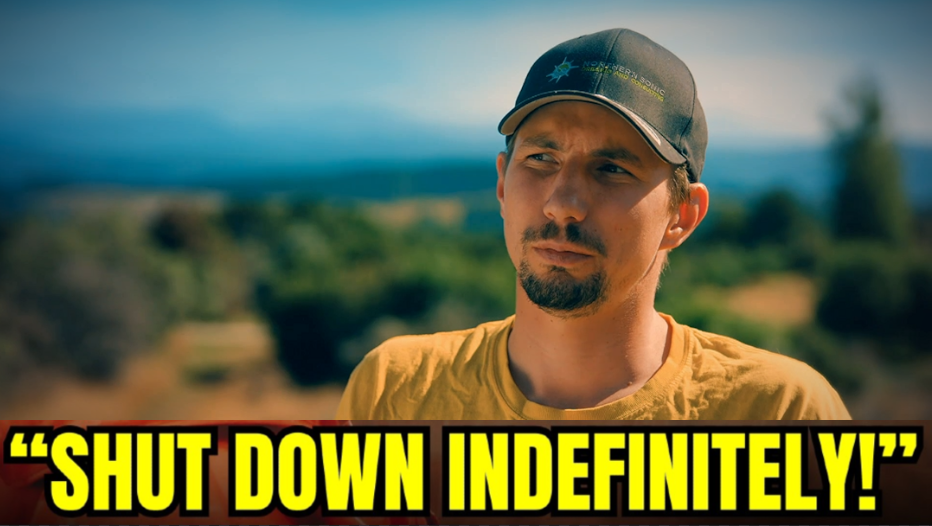
Mother Nature Brings Parker Schnabel’s Gold Rush to a Grinding Halt
When it comes to obstacles in gold mining, fans of Discovery’s Gold Rush might picture broken excavators, tense crew disputes, or last-minute financial scrambles. For Parker Schnabel — the driven miner who’s built his reputation on outworking and outthinking every challenge — none of those proved to be the season’s biggest blow.
Instead, the opponent was far older, stronger, and utterly indifferent: Mother Nature.
This season in the Klondike had already been tough for Schnabel’s crew. Gold totals were lagging, the weather had been unpredictable, and Parker was pushing his team harder than ever to make up lost ground. But a relentless monsoon slammed into his operation, wiping out hard-earned momentum in just a few days.



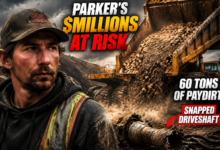
Three days of torrential rain drenched Schnabel’s claim, saturating every shovel of pay dirt — the gold-bearing material that fuels his wash plants and bankrolls his season. Initially, the crew pressed on, assuming the storm would pass without serious disruption. But the damage was already done.

In gold mining, wet pay dirt is more than an inconvenience — it’s a shutdown waiting to happen. Instead of flowing smoothly through the wash plant, the waterlogged muck clumped together, clogging belts, choking chutes, and reducing production to a frustrating trickle.
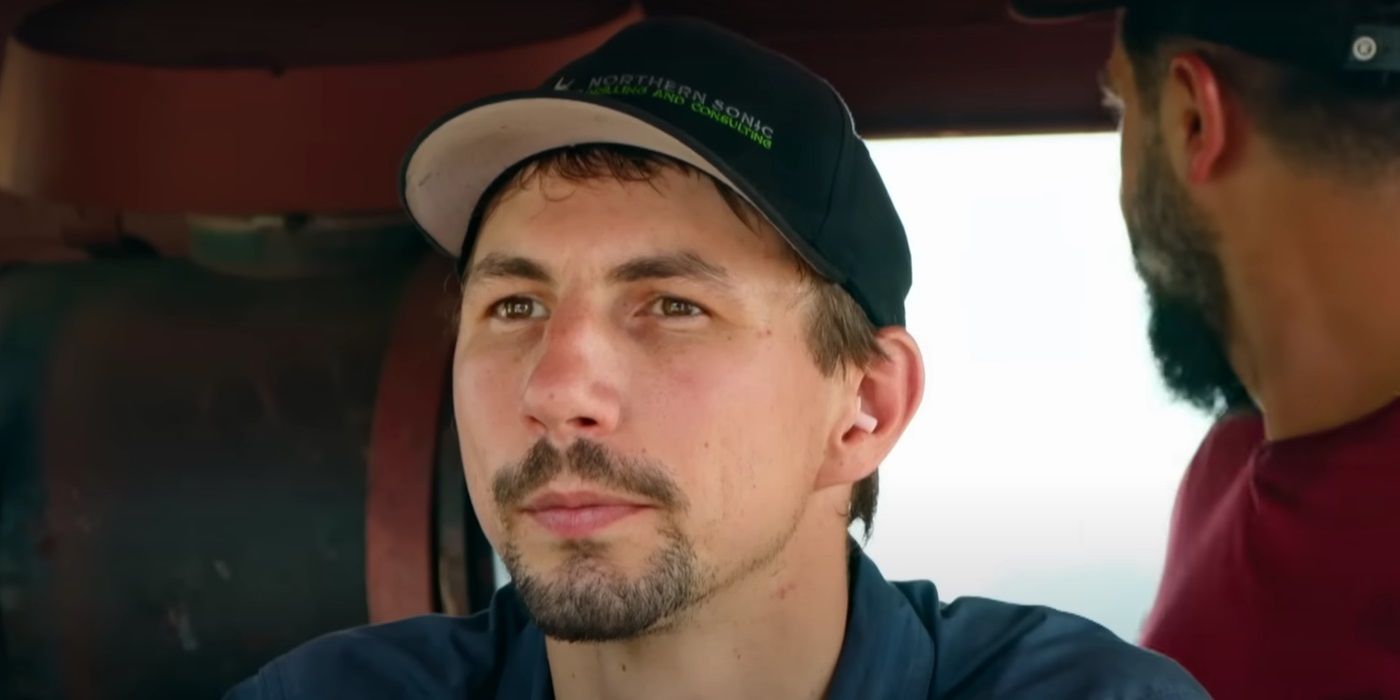
The turning point came when Parker’s right-hand man, mechanic Mitch Blask, came running with an urgent warning: stop feeding the plant. The extra water from the wash process was compounding the problem, turning sticky material into a full-blown system jam. When Parker inspected the situation himself, the sight of backed-up pay dirt was enough to make even the famously tough miner wince.
“I screwed up,” Schnabel admitted, acknowledging that his decision to keep running the material had cost him valuable time — and potentially a large chunk of the season’s gold haul.
In the unforgiving world of Yukon gold mining, every day counts. Seasons are short, weather is volatile, and profit margins can be razor-thin. For Schnabel, whose operations depend on processing thousands of yards of pay dirt each week, a shutdown of this scale could be devastating.

The only solution, Mitch explained, was to remove the sodden dirt from the plant and let it dry before running it again. On paper, that’s simple. In reality, it could mean days or even weeks of downtime — a dangerous gamble in a place where winter can arrive early and without warning.
The question now: could Parker find dry material elsewhere to keep his plant running? If not, the shutdown could be one of the most costly of his career.
Nature: Schnabel’s True Rival
For over a decade, Gold Rush has followed Schnabel’s rise from ambitious teenager to one of the Klondike’s most successful miners. He has battled broken machinery, bad ground, dwindling crew morale, and the constant pressure of running a million-dollar operation on camera. But while human and mechanical problems can be fixed, Mother Nature plays by her own rules.
In the Klondike, just one week of heavy rain can turn prime pay dirt into unusable slurry. A September cold snap can freeze the topsoil solid, forcing crews to shut down early. Flooding can cut off access roads. Hillsides can collapse. And unlike a rival miner, you can’t negotiate with the weather.
Even when the skies are clear, the mining season is a race against time. The window between spring thaw and autumn freeze is brutally short, and every lost day puts final totals at risk.
The Environmental Cost of Gold
The conflict between miners and the land isn’t only about weather. Gold mining is one of the most environmentally damaging industries in the world. According to Earthworks.org, producing a single gold wedding ring generates around 20 tons of waste. Multiply that by the thousands of ounces Parker’s crew aims to recover, and the scale of the environmental footprint becomes clear.
Mining can contaminate water sources with arsenic, mercury, and lead. It can destroy habitats and disrupt ecosystems that have existed for generations. While Gold Rush focuses on human drama and hard-won triumphs, the long-term scars — tailings piles, diverted streams, and stripped landscapes — remain long after cameras stop rolling.
The show has faced real-world backlash over environmental concerns. In 2017, residents of a Colorado town accused the crew of damaging a local hillside and disturbing the peace with heavy machinery. Earlier, The Oregonian reported incidents where the crew allegedly drove equipment through salmon habitats and, in one case, killed a black bear.
Will Parker Beat the Clock?
For Schnabel, the current shutdown is more than a temporary inconvenience — it’s a direct challenge to his identity as one of the hardest-working miners in the Klondike. He’s known for last-minute turnarounds, but finding dry pay dirt in a waterlogged claim is a puzzle that can’t be solved with overtime shifts or new machinery.
If he can locate an alternate source of material, he might salvage the season. If not, each silent day at the plant will cut deeper into his totals — and into the razor-thin margins between success and loss.
As the season ticks on, the question looms: will this be the year Mother Nature finally gets the best of Parker Schnabel?
In the goldfields, technology, skill, and determination can move mountains — but they can’t stop the rain. And in this race, the land always gets the last word.