Controversy Erupts on Gold Rush as Firing and Replacement Decisions Divide Fans.

A recent episode of Gold Rush has ignited intense debate among viewers, not because of gold totals or mechanical failures, but over a personnel decision that many fans believe exposed deeper questions about fairness, leadership, and pressure inside the Dominion Creek operation.
The moment centred on Tavan, a young and capable crew member who was abruptly told to pack up and leave. According to the explanation given on screen, the issue was not productivity but attitude. Tavan insisted he was not boasting about his performance, only expressing pride in his work. To Nona, however, that response was interpreted as a failure to listen, adjust, and grow. In her view, it signalled stagnation rather than progress—and the decision was made.
What unsettled many viewers was not the dismissal itself, but how it unfolded. Tavan did not react with anger or defiance. Instead, he appeared genuinely hurt, caught off guard by a conclusion that felt final and non-negotiable. For longtime fans of the series, the scene raised uncomfortable questions. Was the response proportionate? Was enough evidence shown to justify such a decisive move?





In mining, turnover is common. Crews change, roles shift, and replacements are often unavoidable. Yet this moment struck a nerve because many viewers struggled to see Tavan as a problem. He was not shown ignoring safety, refusing instruction, or undermining the team. On the contrary, he appeared invested in results and proud of contributing. When that confidence was framed as a flaw rather than an asset, a section of the audience felt something did not add up.
The reaction intensified when the replacement was revealed. With Tavan gone, the Dominion Creek crew faced an immediate operational issue. They were short-staffed, and loader operators are critical. Without a steady flow of material into wash plant Bob, production slows or stops entirely—an unacceptable risk for a team chasing a season target of 10,000 ounces under Parker Schnabel’s leadership.
Instead of bringing in an experienced operator who could step in immediately, the role went to India Greenhalgh, the girlfriend of foreman Tyson Lee. The timing alone raised eyebrows. For many viewers, the sequence felt troubling: Tavan dismissed for reasons they already questioned, followed almost immediately by the hiring of someone with a personal connection to management.
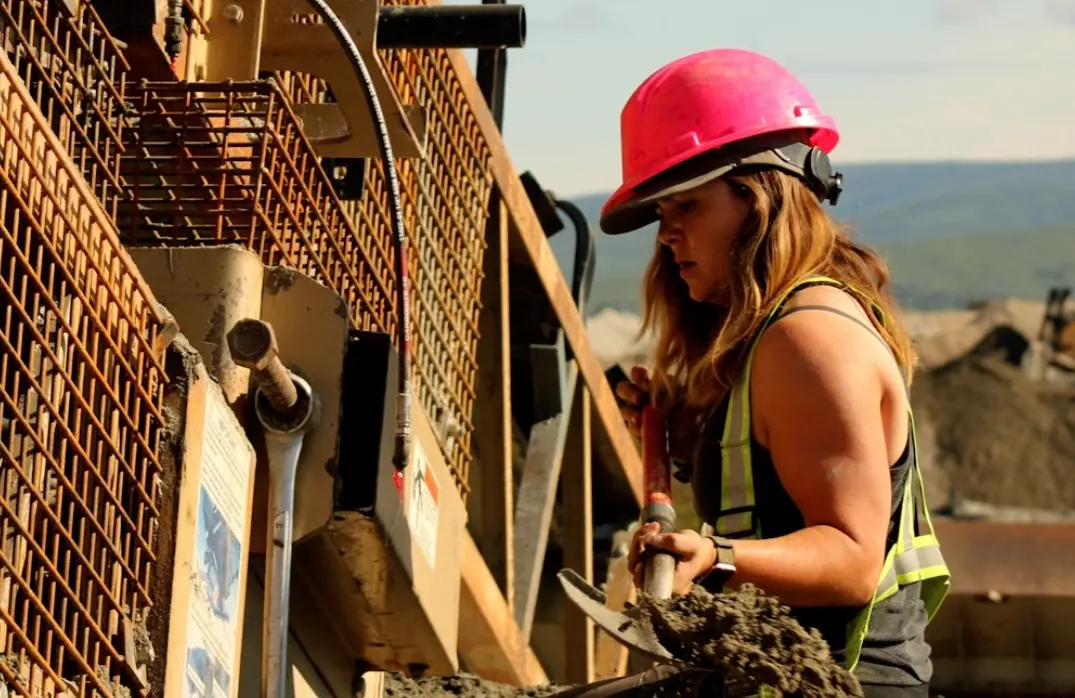
Public reaction was swift. Even fans trying to remain neutral admitted the optics were poor. It was not simply about whether India was capable or willing to work hard. It was about perception. To many, it appeared that one person was removed to make room for another—someone who had not yet proven herself in the role.
That perception deepened when it became clear India was new to operating heavy equipment. With only days of loader experience, she required significant training at the exact moment the crew could least afford a learning curve. For viewers, this became the central issue: if the goal was peak performance, why replace a second-year operator with someone still learning the basics?
India herself does not underestimate the challenge. She openly acknowledges how intimidating the role is and understands that operating a loader under production pressure is far more demanding than it looks. She left a job she was comfortable in to take on a new path, fully aware that mistakes in mining can have immediate consequences for the entire crew.

Her background adds another layer. Before joining the operation, India spent four years working behind the scenes with the Gold Rush film crew, gaining familiarity with the Yukon and Parker’s claims. That is how she met Tyson. While this explains her presence and comfort around the environment, many fans argue that proximity to mining is not the same as responsibility for production.
As the episode progresses, the focus shifts to whether India can handle the pressure. Tyson takes on the responsibility of training her, walking her through every step—alignment, bucket control, feeding the hopper smoothly, and staying alert to potential problems. When the hopper clogs, it becomes a lesson in how quickly small issues escalate. India, nervous but determined, returns to the controls and steadily improves.
By the end of the sequence, she has not mastered the role—but she has shown resilience and composure under pressure. Still, for many viewers, the frustration remains. This was never just about one new crew member. It was about a dismissal that felt abrupt, a replacement that raised questions, and a high-pressure environment making decisions that, from the outside, seemed difficult to justify.
Until results speak louder than controversy, the situation at Dominion Creek is likely to remain one of the most debated moments of the season.