The Metro Isn’t Impressed: Clarkson’s Farm Season 5 Faces Mixed Reactions
Clarkson’s Farm returned to Prime Video for its fifth season with high expectations. After four seasons of Jeremy Clarkson’s unique blend of humor, farming chaos, and British countryside charm, fans were eager to see what new challenges awaited Diddly Squat Farm. From fresh technological upgrades to the unpredictable behavior of livestock and crops, Season 5 promised the usual mix of entertainment and education. Yet not all critics and viewers have been fully satisfied, with The Metro recently publishing a review that tempered the hype and raised questions about the show’s current trajectory.

One of the main criticisms highlighted by The Metro is the pacing of the new episodes. While Clarkson’s Farm has always relied on the slow, methodical unfolding of daily farm life, some reviewers argue that the new season occasionally feels stretched. The interplay between Clarkson, his partner Lisa Hogan, and the farm team—including fan favorite Kaleb Cooper—is still engaging, but certain sequences of crop planting, sheep management, or machinery maintenance have been flagged as repetitive. For casual viewers, the charm of observing Clarkson struggle with the minutiae of farming may be wearing thinner compared to earlier seasons.
The Metro also raised concerns over the balance between genuine farming challenges and entertainment value. Season 5 introduces new machinery and ambitious projects designed to modernize the farm, but some critics suggest these attempts occasionally overshadow the authenticity of farm life. High-tech equipment, like automated tractors and heavy-duty harvesters, offers spectacle, yet they may reduce the sense of hands-on struggle that helped distinguish the early seasons. Fans accustomed to seeing Clarkson muddle through tasks manually might feel that the show’s “heart” is being diluted by the technological additions.
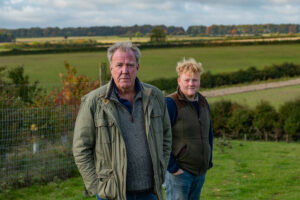




Despite these criticisms, the season still contains numerous highlights. Clarkson’s interactions with Kaleb and other team members provide both humor and emotional depth. The show’s ability to educate viewers about the realities of modern farming while weaving in Clarkson’s sarcastic commentary remains strong. Fans have praised moments where unexpected events—such as weather disasters, animal mishaps, or mechanical failures—reintroduce tension and excitement, demonstrating that even with modern upgrades, farming remains unpredictable.
Another positive element noted by viewers is the exploration of the broader context of British agriculture. Season 5 touches on the impact of government policy and budget decisions, as well as the struggles faced by farmers in a changing economy. These storylines offer real-world relevance that resonates with viewers who may not have direct farming experience but can appreciate the societal and environmental implications.
Viewer reaction on social media has been mixed, reflecting the divide between long-time fans and newer audiences. Many applaud the continued humor, Clarkson’s candid commentary, and the team’s camaraderie, citing these as reasons they remain invested in the series. Others echo The Metro’s concerns, suggesting that certain segments could be condensed or edited to maintain momentum. The discussion around season 5 demonstrates how Clarkson’s Farm occupies a unique space between documentary, reality TV, and comedy, making it both beloved and occasionally polarizing.
In conclusion, Clarkson’s Farm Season 5 offers the familiar blend of laughter, education, and rural charm, while introducing new challenges and equipment that add spectacle to the series. However, critics like The Metro have noted pacing issues and moments where modern machinery may overshadow the raw, hands-on struggle that defined earlier seasons. Viewer reactions continue to vary, with some praising the season’s depth and humor and others hoping for a return to the simplicity that initially captured audiences. As the season progresses, it will be interesting to see whether Clarkson can strike a balance between technological innovation and authentic farm life, keeping both critics and fans equally engaged.