Jeremy Clarkson Sparks Backlash Over Surprising Pub Rule Change.
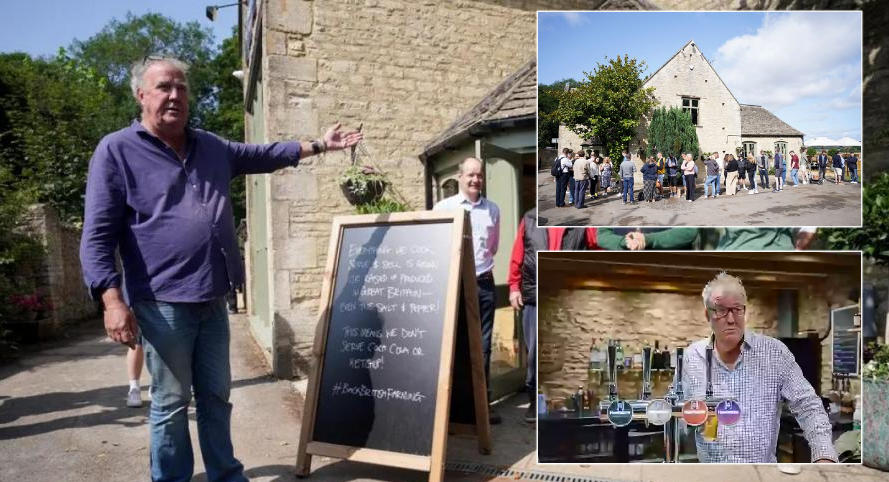
Jeremy Clarkson Slammed by Fans Over Controversial Pub Move at The Farmer’s Dog
Jeremy Clarkson, the outspoken television presenter turned farmer, has once again found himself in the firing line of public criticism—this time over a branding decision at his countryside pub, The Farmer’s Dog.
The controversy erupted after fans accused Clarkson and his Diddly Squat Farm team of “outmuscling” a small independent business in a move that some believe undermined the authenticity of their much-publicised “100% British” ethos.
From TV Stardom to Pub Ambitions
In the latest season of Clarkson’s Farm on Amazon Prime Video, one of the central storylines followed Clarkson’s efforts to open The Farmer’s Dog, a pub dedicated to serving entirely British-sourced food and drink.
When he first announced the project in August last year, Clarkson boldly declared his aim:
“We are attempting to go all British for the food at my pub. But we are struggling to find black pepper grown here. Can anyone help?”




While the pub managed to open quickly, Clarkson soon discovered that sourcing exclusively British products was a far greater challenge than anticipated. One notable casualty was ketchup—a staple condiment that typically relies on imported ingredients.
The Ketchup Challenge
The absence of ketchup from The Farmer’s Dog menu was no small detail. Signs around the pub proudly proclaimed its “100% British” identity, meaning no foreign-sourced condiments could be served.

This caught the attention of Condimaniac, a small artisan condiment producer run by Kier Kemp and his team. Rising to the challenge, they created a ketchup made entirely from British-grown ingredients—a rare feat given the climate challenges of tomato farming in the UK.
According to Kemp, the creation wasn’t just a marketing stunt.
“It is not just a gimmick for them—they really live and breathe this 100% British thing,” he explained in a video on Instagram.
Impressed by the ethos of The Farmer’s Dog and Diddly Squat Farm Shop, Kemp described Clarkson’s team as “one of the best wholesale clients I have ever dealt with”, adding that everyone he met was “super lovely” and genuinely supportive of British producers.
The Label Dispute That Sparked Backlash
Despite the positive collaboration, trouble began brewing when fans noticed something unusual—the ketchup bottles on sale at the pub didn’t carry Condimaniac’s original branding. Instead, the label had been redesigned to feature Diddly Squat Farm’s branding prominently, relegating the condiment maker’s name to a much smaller mention.
In a TikTok post showing the ketchup’s production and bottling, viewers were quick to voice their disapproval.
One user wrote:
“Hate that they made you get a new label for it.”
Another commented:
“As if they made you relabel it.”
Others suggested that the rebranding gave the impression that Diddly Squat was the primary creator of the ketchup rather than a retail partner.
“I don’t think it’s right to make the label change. It’s YOUR sauce promoting HIS business—he doesn’t need to be on the label that big anyway,” one fan remarked.
Support and Criticism Collide
Interestingly, while online criticism grew, Kemp himself maintained a positive stance toward Clarkson and his team, emphasising that the business relationship remained mutually beneficial.
He credited the exposure from being stocked at The Farmer’s Dog and Diddly Squat Farm Shop with helping promote Condimaniac’s mission to use only homegrown ingredients.
However, the fan backlash highlights a recurring challenge for celebrity-led enterprises: balancing personal branding with genuine support for smaller partners.
No Official Response Yet
At the time of writing, Newsquest has reached out to Diddly Squat Farm for comment regarding the rebranding controversy but has not yet received a reply.
For Clarkson, who has made a career out of courting controversy—from his Top Gear days to his farming adventures—this latest spat is unlikely to derail the popularity of Clarkson’s Farm. But it does raise an interesting question about how far a “100% British” promise should extend—not only in sourcing ingredients but in how credit is shared.