Clarkson’s Latest Project Faces a Familiar Hurdle.
Clarkson’s Farm vs. Red Tape: How One Man Turned Planning Laws into Prime-Time Drama
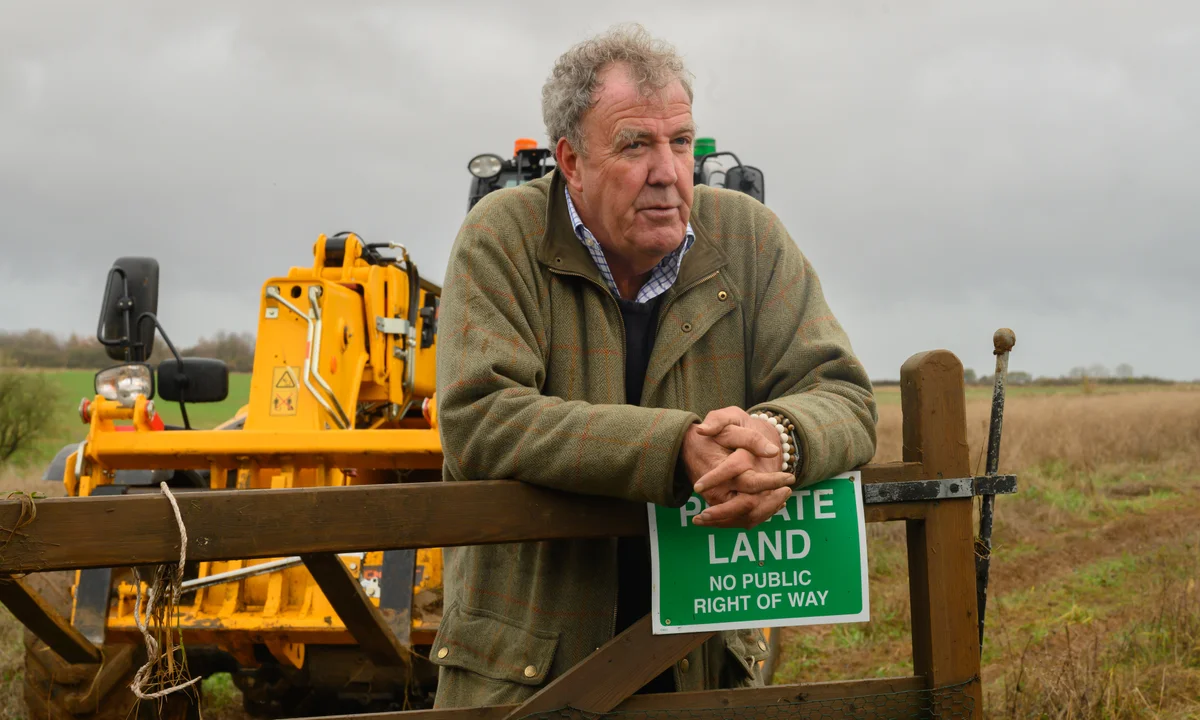
Jeremy Clarkson might be best known for his explosive reviews and car antics, but in Clarkson’s Farm, he’s doing something no one expected—turning paperwork, local councils, and planning disputes into must-watch television.
🎬 From Fields to Fame
Since its debut, Clarkson’s Farm has grown into a global sensation. The latest season became Amazon Prime’s #1 show in the UK, drawing over 5 million viewers on opening weekend and more than 100 million globally across all seasons. And it’s not just a streaming hit—Clarkson’s real-life farming adventures have sparked real-world protests, media headlines, and even planning controversies in the Cotswolds.
At the center of it all is Clarkson’s Diddly Squat Farm—a 1,000-acre plot in Oxfordshire—and his constant battle with the West Oxfordshire District Council. What began as a farming documentary quickly evolved into a deep dive into Britain’s broken planning system.
🏗️ The Real Villain? Bureaucracy
In every season, Clarkson runs into new obstacles. His restaurant gets blocked. His car park gets denied. His farm shop faces community objections. And now, even his latest project—reviving a local village pub—has sparked concern.




Clarkson captures it perfectly:

“Without knowing it, the West Oxford District Council is writing a fantastic script.”
While it’s easy to frame the council as the villain, the truth is more nuanced. Planning laws are designed to protect nature, preserve heritage, manage traffic, and reflect community voices. But when the system becomes too slow, rigid, and complex, even small projects face mountain-sized obstacles.
🧾 Loopholes, Loopholes, Loopholes
Blocked at every turn, Clarkson finds clever ways to push forward—like using permitted development rights to convert an old barn into a pop-up restaurant. These legal loopholes allow temporary structures on farmland without full planning permission.
But the loopholes are temporary. Eventually, the council shut that project down too. It’s a cycle of resistance and adaptation that perfectly mirrors what architects, designers, and small business owners face across the UK every day.
🍻 Season 4: The Pub Problem
In the latest season, Clarkson buys a derelict pub with hopes of transforming it into a farm-to-fork eatery using his own produce. But again—red tape.

His application meets the same issues: traffic, parking, safety. Even minor renovations or repurposing spaces trigger months of bureaucracy. As Clarkson puts it:
“It’s going to be another planning committee meeting… and then another.”
He’s not wrong—applicants often wait 12–18 months for approvals. Many give up.
📺 The Power of Prime-Time Planning
What makes Clarkson’s Farm brilliant isn’t just the tractors or the tantrums—it’s how it exposes a hidden system. Clarkson is no everyman, but his show shines a light on how complicated, outdated, and discouraging the planning system can be for every citizen.
He turns rural development and local politics into gripping drama. He teaches viewers that the obstacles to innovation don’t always come from nature—but from policy, paperwork, and preservation culture.
🛑 The Real Question
Councils aren’t villains. They follow rules set to protect communities. But in a fast-changing world, systems that default to “no” may be the biggest threat to progress.
When big ideas are punished and red tape wins, what kind of future are we really planning for?