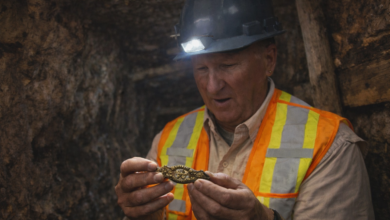
New Theory Shakes Oak Island Mystery: Was It Really Just a Maritime Worksite?
A new interpretation of Oak Island is reshaping how some viewers and theorists understand the long-running mystery featured in The Curse of Oak Island. Instead of viewing the island solely as a site of hidden treasure vaults, booby traps, and secretive societies, this perspective suggests a far more practical origin: a historic maritime industrial site focused on ship maintenance and coastal engineering.
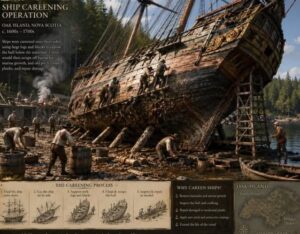
At the center of this reinterpretation is the idea that Oak Island may have functioned as a working maritime hub during the 1600s and 1700s. In this view, rather than being constructed purely for concealment, many of the island’s unusual structures could have served practical purposes tied to naval and commercial activity.
One of the key visual references supporting this theory is the concept of a large wooden sailing ship being careened along the shoreline. Before the existence of modern dry docks, ships were often deliberately tipped onto their sides so workers could clean hulls, repair damage, remove barnacles, and recaulk seams. This process required carefully engineered shoreline conditions, including logs, support beams, and controlled water access—all elements that some believe may align with features found at Oak Island, particularly around areas such as Smith’s Cove.
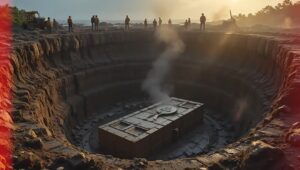
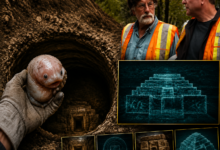


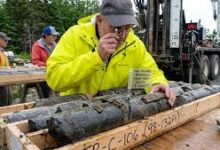
From this perspective, the infrastructure observed in certain parts of the island may reflect organized maritime labor rather than mysterious treasure protection systems. Wooden structures, drainage-like features, and layered construction could potentially be explained as functional components designed to support ship maintenance operations. Water management systems, often interpreted as “flood tunnels” in treasure theories, might instead have been practical solutions for controlling tides, runoff, or worksite stability in a coastal industrial setting.
Supporters of this interpretation argue that it helps make sense of the island’s complexity without relying solely on hidden treasure narratives. Instead of assuming every engineered feature was designed as a trap or concealment system, this approach considers the possibility that multiple phases of human activity shaped the landscape over time. Early industrial use, followed by later excavation attempts and natural collapse, could have contributed to the layered and confusing structures discovered by modern researchers.

This theory also introduces a broader historical context. Coastal regions in the Atlantic world during the 17th and 18th centuries were often used for ship repair, supply staging, and temporary harbor operations. If Oak Island was part of such a network, its features might reflect practical engineering adapted to challenging tidal conditions rather than secretive construction.
Over time, however, later digging efforts, speculation, and treasure hunting could have significantly altered or damaged the original structures. This would explain why modern investigations often encounter fragmented, inconsistent, or seemingly contradictory evidence beneath the surface.
Within the framework of The Curse of Oak Island, this interpretation adds another layer to the ongoing debate about what the island truly represents. While the show has long focused on the possibility of buried treasure, secret societies, and hidden vaults, this alternative view suggests that at least part of the mystery may stem from misunderstood industrial history rather than intentional concealment.
Still, the theory does not entirely dismiss the possibility of something more. Instead, it proposes a layered explanation: a real working maritime site that was later modified, repurposed, and eventually mythologized over centuries. As stories evolved and excavation attempts continued, practical infrastructure may have been reinterpreted as evidence of something far more extraordinary.
As the investigation on Oak Island continues, ideas like this remind viewers that the truth may not lie in a single explanation. Whether industrial site, treasure vault, or a combination of both, the island remains a complex puzzle shaped by history, human activity, and imagination.
For now, The Curse of Oak Island continues to sit at the intersection of myth and reality—where every structure can tell more than one story, and every theory adds another layer to the island’s enduring mystery.