So Close, Yet Sonar: Why Oak Island’s Latest Discovery Deepens the Mystery Instead of Solving It.
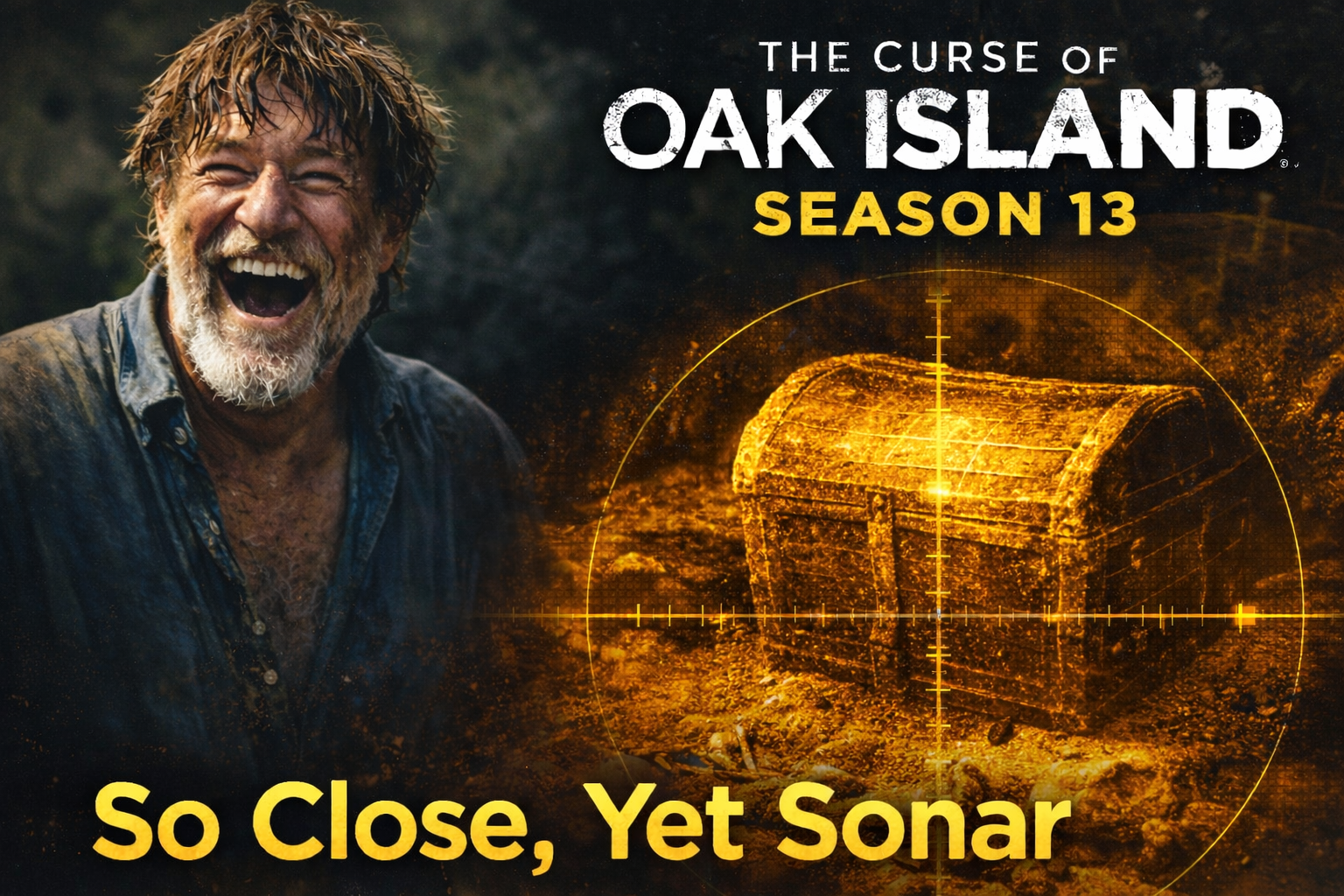
After more than a decade of drilling, theories, false dawns, and fleeting triumphs, The Curse of Oak Island continues to do what it has always done best: pull viewers to the brink of certainty, only to reveal an even larger question waiting beneath the surface. The latest chapter doesn’t deliver a clean breakthrough—but it does something arguably more powerful. It tightens the mystery.
A Shift Away From Chaos—and Toward Context
The episode opens not with collapsing tunnels or frantic drilling rigs, but on Lot 5—an area that has quietly evolved into one of the most intellectually satisfying parts of the entire investigation. Unlike the long-troubled Money Pit, Lot 5 offers context. Here, the team confirms that a recently uncovered object is not merely old or decorative, but a verified sacred religious artifact.
That confirmation matters. Oak Island has produced countless “could-it-be” moments, but verification elevates this find into a different category altogether. A sacred artifact implies intentional placement, belief systems, ritual significance, and organized human presence. This is not a sailor’s lost trinket. It suggests purpose.

While the episode avoids pinning the artifact to any single group, the implications are impossible to ignore. Medieval Christian orders, early European explorers, or secretive religious organizations all linger as possibilities. The message is clear: Oak Island may not have been just a hiding place—but a site of meaning.


The Return to the Money Pit—and a Familiar Trigger Word
Just as the Lot 5 discovery threatens to reshape the island’s narrative, the focus shifts back to familiar territory: the Money Pit. This is where the episode earns its title and reignites long-dormant hopes. Drilling reveals something unexpected—a void.
For veteran viewers, that word carries enormous weight. Voids imply empty space. Empty space suggests structure. Structure suggests design. And design means human hands. The excitement among the team is immediate, but tempered by experience. The critical question emerges quickly: is the void natural or man-made?
That distinction changes everything. A natural cavern would weaken decades of speculation. A man-made cavity would validate the belief that the Money Pit was engineered with intent, resources, and long-term planning.
Sonar: The Promise and the Frustration
To answer that question, the team turns to sonar technology—long touted as a potential solution to Oak Island’s greatest problem: how to see underground without destroying what might be there. Drilling risks collapse. Excavation is expensive and dangerous. Sonar offers clarity without chaos—or so the hope goes.
When the team confirms they are inside the cavity, anticipation peaks. Statements suggesting the opening is “not natural” instantly fuel speculation about vaults, tunnels, and complex underground systems. The long-rumored idea of multiple vaults suddenly feels less like fantasy and more like possibility.
And yet, seasoned fans know better than to celebrate. Sonar images can be ambiguous. Data can be interpreted multiple ways. Even proof of human construction does not automatically equal treasure. It equals more questions.
A More Serious Tone—and a Sharper Edge
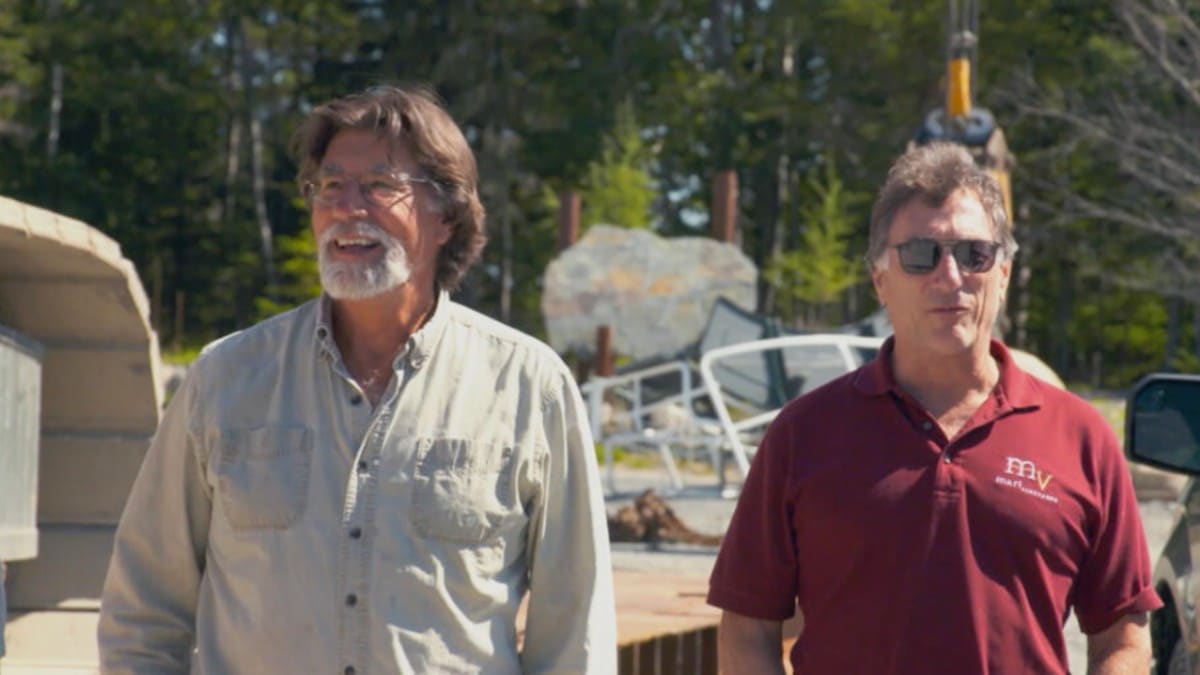
What stands out most is not what the episode reveals, but how it presents it. There is less wild theorizing and more process: verify the artifact, drill carefully, identify the void, deploy sonar. The tone feels grounded, almost restrained, as if the show itself understands how close—and how fragile—this moment is.
There is also a noticeable psychological shift among the team. Early seasons brimmed with optimism. Now, the language is cautious, measured, and quietly intense. When someone says they would love nothing more than to confirm a man-made cavern, it sounds less like hype and more like a plea.
Still Standing on the Edge
Ultimately, this chapter does not resolve the Oak Island mystery—it sharpens it. Cultural evidence on the surface and engineered anomalies below begin to align, suggesting deliberate human activity above and beneath the ground. Yet certainty remains just out of reach.
“So close, yet sonar” feels less like a title and more like a mission statement. The island continues to reveal just enough to justify belief, but never enough to grant closure. And with sacred artifacts emerging and sonar probing a non-natural void, one thing is undeniable: Oak Island is not finished yet.