CLARKSON’S HEALTH DILEMMA HIGHLIGHTS A COMMON STRUGGLE AMONG FARMERS.
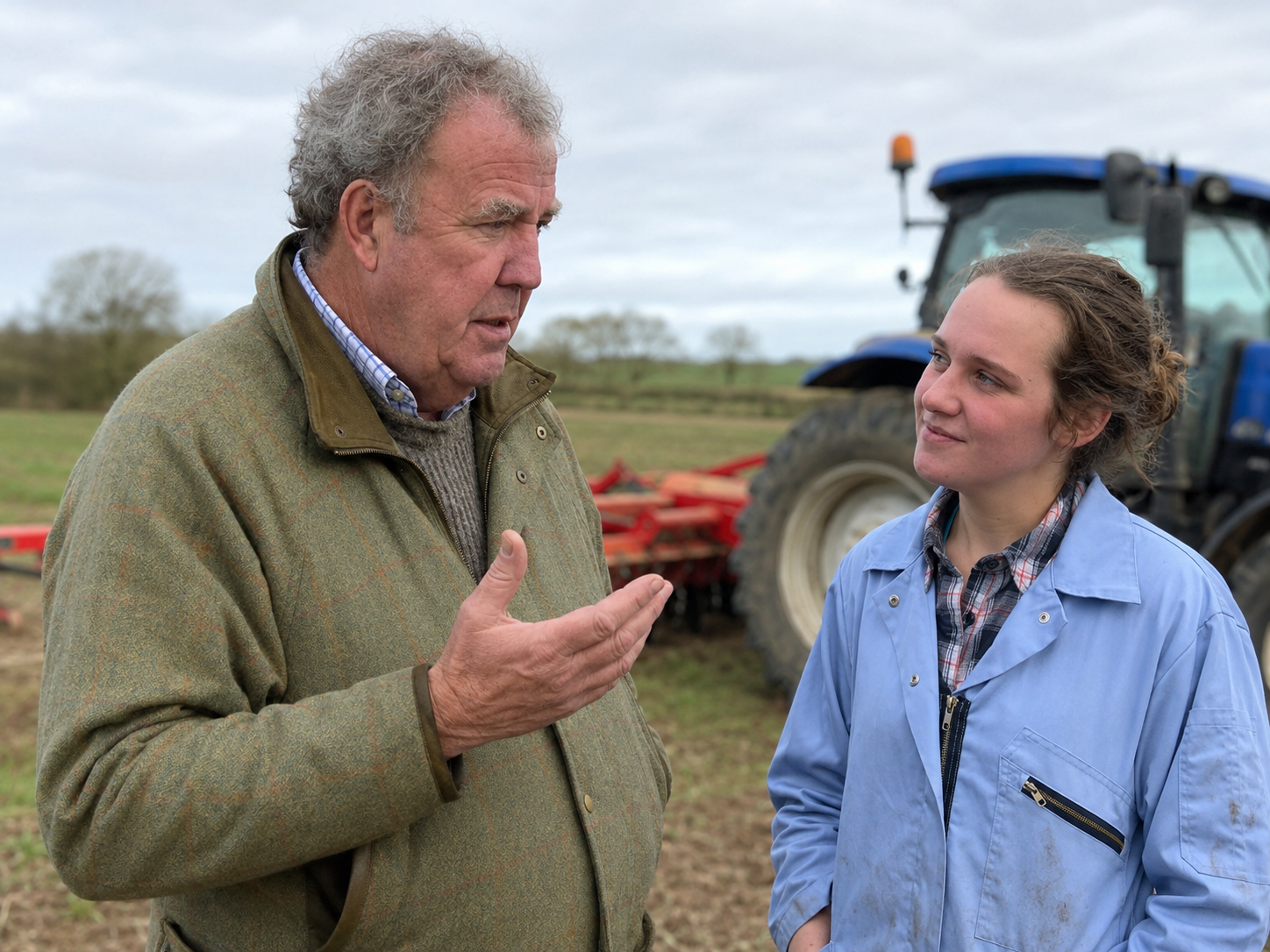
Jeremy Clarkson’s recent health revelation has not only drawn public attention because of his celebrity status, but also because it has shed light on a far more widespread issue within the farming community—how serious illness can force farmers into an impossible balancing act between personal health and the relentless demands of agricultural life.
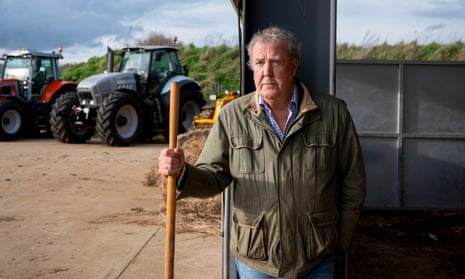
The television presenter, best known for Clarkson’s Farm, recently revealed in the latest episode of the series that he had been diagnosed in 2025 with an aggressive form of prostate cancer. While he has since confirmed that he is now in remission, his comments about the experience have sparked wider discussion about the pressures faced by farmers when illness strikes at the worst possible time.
Clarkson admitted that one of his biggest concerns during treatment was how it would overlap with critical periods on his Cotswolds farm—where timing, weather conditions, and livestock care leave very little room for disruption.
That sentiment, according to farmers and rural support organisations, is far from unique.



“FARMERS CALCULATE EVERYTHING—INCLUDING ILLNESS”
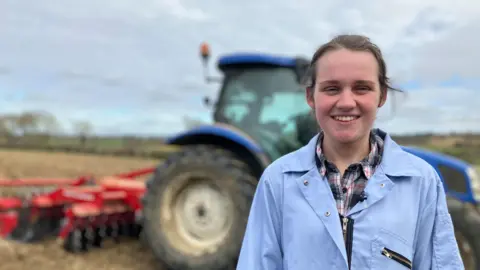
Fifth-generation farmer Bridgette Baker, who works on a beef and arable farm in Montacute, Somerset, said Clarkson’s experience reflects a reality that many in agriculture quietly understand but rarely discuss publicly.
“Farmers calculate how many days they would be off and think, ‘how far back in my jobs list am I going to be?’” she explained.
Unlike many professions where responsibilities can be temporarily delegated or paused, farming often operates on strict biological and environmental timelines. Animals must be fed, crops must be harvested, and machinery must be maintained regardless of personal circumstances.
Baker said that on her family farm, there are no external employees to step in during periods of illness, making it extremely difficult to manage even short absences.
In many cases, she added, farmers face a deeply personal dilemma: prioritising urgent medical care or continuing to manage essential farm operations that cannot simply be postponed.
“Sometimes you’d think the priority is to get the treatment,” she said, “but sometimes farmers like to put their farm first to get the jobs done.”
THE SILENT PRESSURE BEHIND RURAL LIFE
Clarkson’s comments have brought renewed attention to the hidden pressures that define rural life. Farming is not just a job—it is a continuous responsibility that often involves entire families, generations, and local communities.
Experts say that one of the most difficult aspects of farming during illness is the lack of flexibility. Unlike urban workplaces, farms cannot simply shut down without consequences. Livestock still requires daily care, crops follow natural cycles, and delays can lead to financial losses that are difficult to recover from.
This constant pressure means that many farmers delay medical appointments, minimize symptoms, or continue working through serious health concerns simply to keep operations running.
SUPPORT ORGANISATIONS STEP IN
In response to these challenges, organisations such as the Farming Community Network (FCN) are working alongside Macmillan Cancer Support to improve access to healthcare and emotional support for farming families.
The FCN has highlighted that rural communities often face additional barriers when it comes to accessing cancer treatment and medical services. These include long travel distances, limited local healthcare facilities, and reduced availability of support networks.
A spokesperson for the organisation explained that the impact of cancer within farming households can extend far beyond the individual patient.
“Cancer can impact a family business that may employ many people,” the spokesperson said. “That can have significant impacts on an individual and their families, including their housing and extended family situation or immediate welfare issues for livestock.”
This interconnected structure means that a single health crisis can ripple through every part of a farm’s operations, affecting income, employment, animal welfare, and long-term sustainability.
A BROADER CONVERSATION BEYOND ONE STORY
While Jeremy Clarkson’s situation has drawn media attention due to his public profile, rural advocates stress that his experience is far from exceptional. Instead, it reflects a systemic issue that has long existed within agriculture but rarely receives mainstream visibility.
Health experts argue that greater awareness is needed to ensure farmers feel able to prioritise treatment without fear of losing their livelihoods. At the same time, there is growing recognition that more flexible support systems are needed to allow farming operations to function during medical emergencies.
Clarkson’s openness about his diagnosis and recovery has, in many ways, helped bring this conversation into the public sphere. By highlighting the tension between health and responsibility, his story has resonated with thousands of farming families who face similar dilemmas every year—often without public recognition.

CONCLUSION: WHEN HEALTH AND DUTY COLLIDE
The discussion sparked by Clarkson’s experience underscores a difficult reality at the heart of rural life: for many farmers, personal health cannot be separated from professional survival.
As awareness grows, so too does the urgency to build stronger support systems that allow farmers to seek treatment without feeling that they are abandoning their life’s work.
In the end, the story is not just about one public figure’s diagnosis—it is about an entire community where health decisions are rarely simple, and where the cost of stepping away can feel as heavy as the illness itself.