CLARKSON’S FARM SEASON 5: THE CRITICS VS REALITY debate erupts as viewers defend the show’s true meaning.
Many critics have taken aim at Clarkson’s Farm Season 5, describing it as repetitive, predictable, or overly staged. But that criticism may be missing something far more important: the show was never meant to be reinvented every season. Instead, its strength lies precisely in its consistency — a carefully balanced mix of chaos, comedy, and real farming reality that continues to resonate with millions of viewers.
The argument that the series has become “repetitive” seems to overlook what fans actually return for year after year. Yes, Jeremy Clarkson still battles cows, sheep, unpredictable weather, and endless bureaucracy. Yes, Kaleb Cooper continues to correct him with blunt honesty. And yes, Gerald remains charmingly indecipherable. But that familiar structure is not a flaw — it is the foundation of the show’s appeal.
A FORMULA THAT WAS NEVER BROKEN
At its core, Clarkson’s Farm is not trying to reinvent documentary television. It is a story about a man completely out of his depth attempting to run a working farm, and repeatedly discovering that nature does not care about ambition, fame, or budget.
Critics calling it “staged” also miss the point. Of course, Clarkson understands television. Of course, certain scenarios are amplified for comedic effect. But that has never replaced the underlying reality: farming is unpredictable, exhausting, and often absurd on its own.



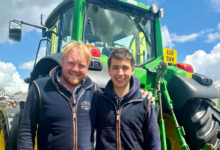
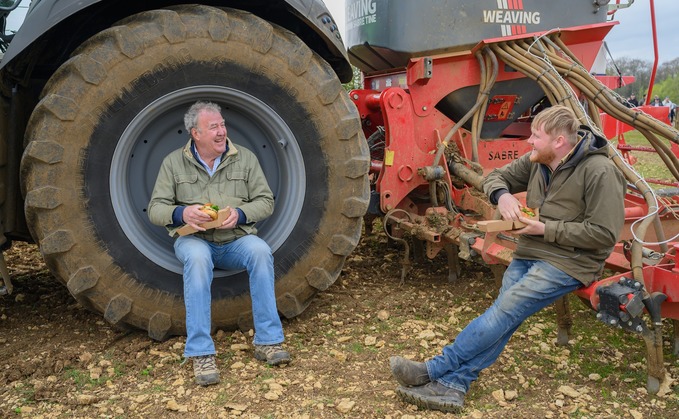
What the show captures so effectively is not authenticity in the strict documentary sense, but emotional truth — the frustration of failure, the joy of small victories, and the constant tension between idealism and reality.
WHEN CHAOS BECOMES THE POINT
Season 5 continues this tradition with characteristic chaos. From Clarkson’s early-season health scare — where he was hospitalised and warned about serious cardiac concerns — to the daily pressures of livestock management, the series repeatedly reminds viewers that this is not a stress-free countryside fantasy.
Even the most comedic moments are rooted in real operational strain. Whether it is experimental farming technology like autonomous tractors and seed-planting robots, or Clarkson’s increasingly ambitious business ideas at the pub, everything circles back to one truth: farming is economically fragile and physically demanding.
The introduction of automated machinery planting hundreds of thousands of onions overnight may sound like a gimmick, but it reflects a genuine shift happening in modern agriculture — the tension between tradition and technology.
THE COMEDY STILL HITS BECAUSE IT IS REAL
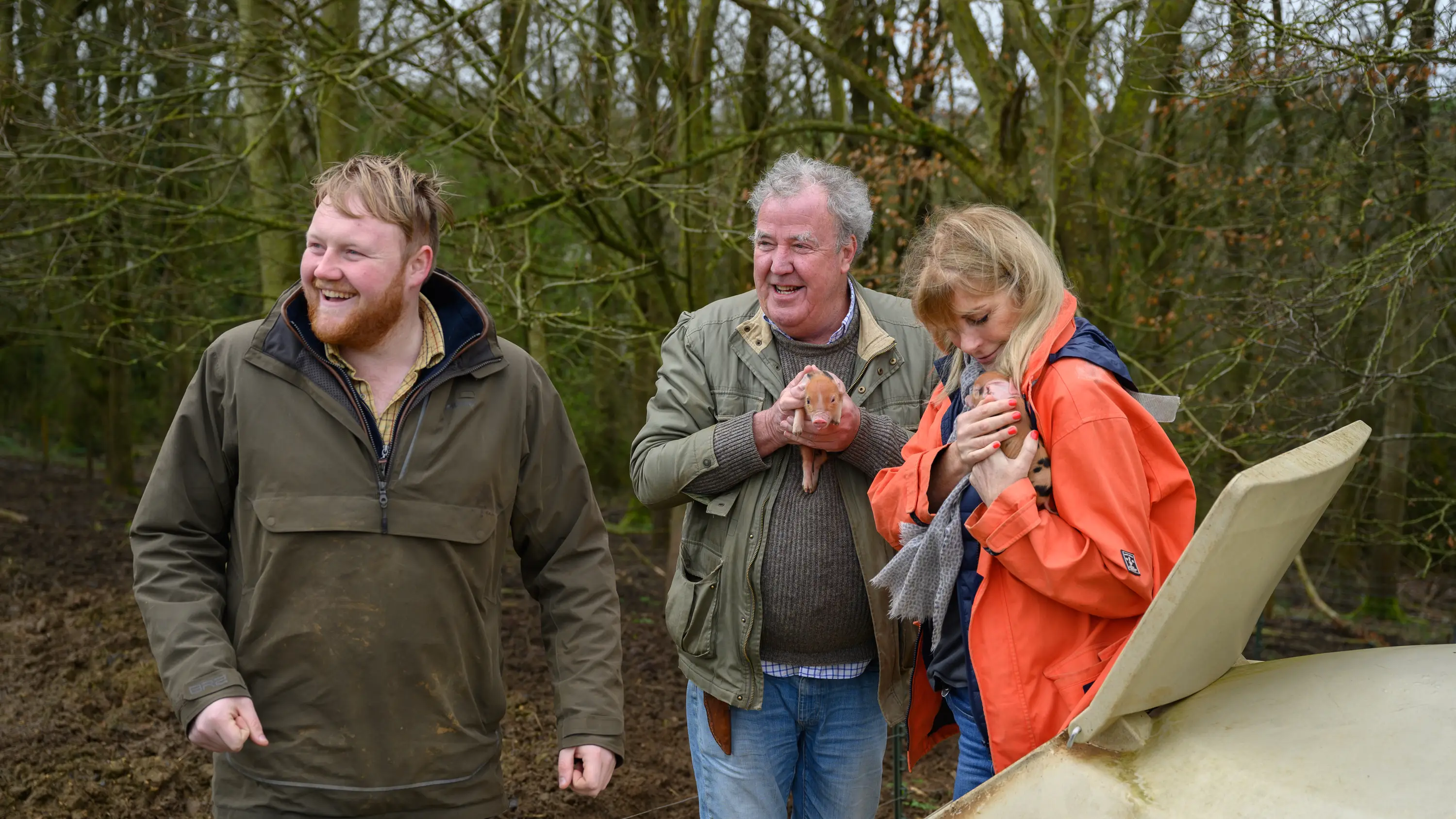
One of the strongest arguments in defence of the show is simple: it is still genuinely funny. Clarkson being covered in mess while working with livestock, or struggling to understand basic agricultural concepts, is not scripted comedy in the traditional sense — it is situational humour born from real ignorance meeting real expertise.
Kaleb Cooper remains the perfect counterbalance, grounding every overly ambitious idea with blunt practicality. Their dynamic is not repetitive; it is consistent — and consistency is what makes it work.
Even Gerald, whose cryptic explanations have become a running joke, represents something deeper: the generational and cultural divide within farming itself.
WHEN THE SHOW BECOMES SURPRISINGLY EMOTIONAL
What critics often overlook is that Clarkson’s Farm is not purely comedic. Season 5 continues to lean into genuinely emotional territory.
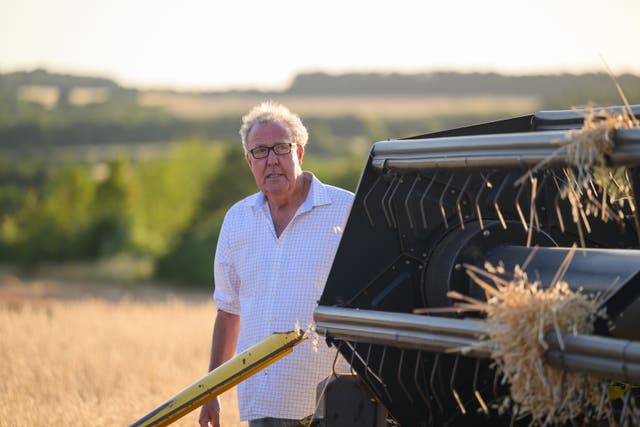
Clarkson’s reaction to helping deliver a healthy calf is one such moment — physically demanding, intense, and unexpectedly vulnerable. It is a rare glimpse of someone who is often portrayed as sarcastic and detached showing real emotional investment in life on the farm.
Similarly, the loss of livestock to a fox attack triggers a very human reaction of anger and frustration. These moments remind viewers that behind the entertainment is a real working environment where outcomes matter.
Even the lighter storylines — like experimental pub events featuring extreme food challenges — carry underlying commentary about economics, waste, and survival in modern hospitality and agriculture.
THE BUSINESS REALITY BEHIND THE JOKES
Another recurring criticism is that Clarkson can “laugh off” failures because of his financial success elsewhere. But that argument also misses the emotional core of the series. What makes Clarkson’s Farm compelling is not whether he can afford losses — it is how much he visibly cares when things go wrong.
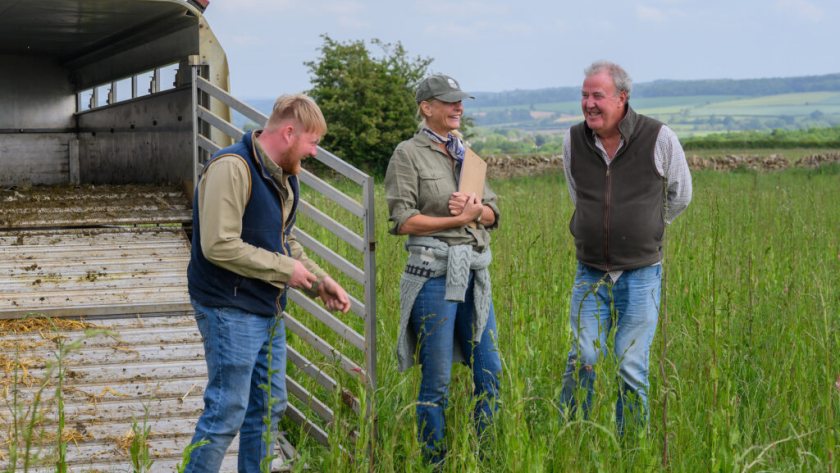
The frustration, the anger, the exhaustion — these reactions are not performance pieces. They reflect someone who has become deeply invested in something he initially approached as a curiosity.
Farming, as the show repeatedly demonstrates, is not just a business. It is a relationship with land, animals, and time — and that relationship is often unforgiving.
WHY THE “REPETITION” ACTUALLY WORKS
Life on a farm is inherently seasonal and repetitive. Animals are bred, raised, harvested. Fields are planted, managed, and cleared. Weather patterns repeat. Challenges return in different forms.
In that sense, expecting Clarkson’s Farm to radically change each season misunderstands its subject entirely. The repetition is not a flaw — it is a reflection of agricultural reality.
What changes is not the structure, but the stakes. Each season adds new pressure, new technology, and new emotional weight.
FINAL THOUGHT
Season 5 of Clarkson’s Farm may not reinvent the formula, but it does not need to. Its strength lies in its balance — between comedy and hardship, ambition and failure, spectacle and reality.
Critics who focus on repetition are arguably looking for the wrong kind of evolution. The real evolution is subtler: deeper emotional moments, higher stakes, and a growing awareness that behind every chaotic scene is a real farm trying to survive.
And that is precisely why audiences keep watching.