Clarkson’s Farm Producer Reveals Why the Hit Series Will Eventually End
Clarkson’s Farm may still be gearing up for another highly anticipated season, but behind the scenes, the creative team is already acknowledging a reality that many fans may not want to hear: the show will not last forever. As excitement builds for Season 5—and with Season 6 already confirmed under specific conditions—the series’ future has become a topic of growing discussion.
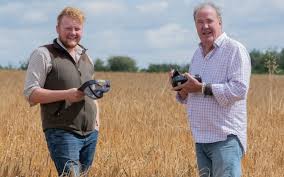
Jeremy Clarkson is set to return in Season 5, continuing the chaotic, humorous, and often eye-opening journey of running Diddly Squat Farm. However, Clarkson himself recently hinted that Season 6 is not guaranteed, stating he would only proceed if there is “a good story” worth telling. That comment alone has sparked speculation about how much longer the series can realistically continue.
Now, executive producer Andy Wilman, Clarkson’s long-time collaborator and one of the key creative forces behind the show, has offered further clarity on its long-term direction. According to Wilman, Clarkson’s Farm has a “finite life” and will only continue for as long as Clarkson remains genuinely engaged in the project. In other words, the series is not designed to run indefinitely—it is tied directly to Clarkson’s personal journey and interest.
This perspective highlights a key difference between Clarkson’s Farm and many other long-running factual entertainment series. Rather than being built as an endless format, it is structured around a specific real-life experience: Clarkson learning, struggling, and adapting to the realities of farming. Once that journey reaches a natural conclusion—or once the central figure chooses to step away—the show is expected to end.
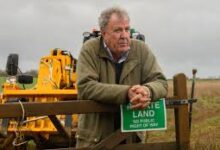
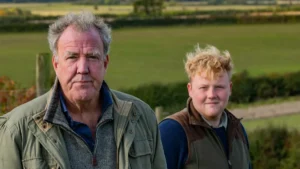
Wilman’s comments also reflect the broader philosophy behind the series. From the beginning, Clarkson’s Farm was never intended to be a traditional farming documentary or a scripted reality franchise. Instead, it was conceived as a character-driven exploration of agriculture through the eyes of someone with no formal farming background. That premise inherently limits how long the story can remain fresh and authentic.
As the series has progressed, Diddly Squat Farm itself has evolved significantly. What began as a small experiment has grown into a complex operation with livestock, crop management, staffing challenges, and increasing public attention. While this expansion has provided rich storytelling material, it also raises the question of sustainability—both for the farm and for the show’s narrative structure.
Fans have responded with mixed emotions. On one hand, there is excitement for upcoming seasons and curiosity about how Clarkson will continue to handle the pressures of modern farming. On the other hand, there is growing awareness that every new season brings the series closer to its natural endpoint.
Industry observers note that this planned conclusion may actually contribute to the show’s lasting appeal. By avoiding overstaying its welcome, Clarkson’s Farm maintains a sense of authenticity and purpose. Each season feels meaningful because it reflects a real progression, rather than an endlessly extended format.
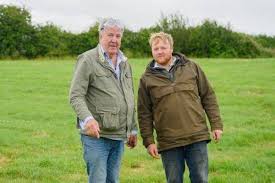
Wilman’s confirmation that the series will end when Clarkson decides reinforces the idea that creative control remains firmly in the hands of its central figure. Unlike many long-running television franchises, there is no obligation to continue beyond interest or relevance. Instead, the show’s lifespan is directly tied to real-world farming experiences and Clarkson’s willingness to keep exploring them.
For now, however, the focus remains on what is still to come. With Season 5 on the horizon and potential for Season 6 depending on storytelling direction, fans still have plenty to look forward to. But beneath the anticipation lies a quiet acknowledgment: every season of Clarkson’s Farm could be one step closer to its final chapter.
And when that moment eventually arrives, it will mark the end of not just a television series, but a unique experiment in storytelling—one rooted in soil, struggle, humour, and the unpredictable reality of farm life.