Jeremy Clarkson Speaks Out: Diddly Squat Highlights Growing Concerns in British Farming
Jeremy Clarkson has never been one to hold back his opinions, and his latest comments regarding the state of British agriculture are no exception. Known primarily for his outspoken style on Top Gear and Clarkson’s Farm, Clarkson has increasingly used his platform to shed light on issues affecting rural communities. Recently, he turned the focus to Diddly Squat Farm, his personal property in the Cotswolds, to illustrate the wider challenges facing farmers across the United Kingdom.
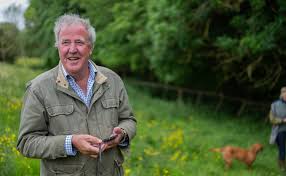
At the heart of Clarkson’s concerns is the disconnect between government policies and the realities of modern farming. He argues that while policymakers often introduce regulations with the best intentions, the practical outcomes frequently hinder farmers rather than support them. Issues like rising fuel costs, labor shortages, and environmental compliance measures are just the tip of the iceberg, according to Clarkson, who has experienced the daily pressures of running a mixed farm firsthand.
Diddly Squat, a working farm and visitor attraction, provides Clarkson with a unique perspective. By blending traditional farming with modern agritourism, Clarkson has a platform to demonstrate both the potential and the constraints of rural agriculture. From the challenges of maintaining livestock to dealing with crop rotations, he highlights how regulations and government directives often fail to account for the complexity of farm life. The stark contrast between legislative intent and operational reality is something he emphasizes repeatedly.
One of the most pressing issues Clarkson has addressed is financial sustainability. British farmers face increasing production costs, including feed, machinery maintenance, and labor wages, while market prices do not always reflect these expenses. Clarkson points out that even with innovative approaches like farm shops and visitor experiences, many farmers struggle to maintain profitability. He argues that the government must consider practical economic pressures in policy-making to prevent further decline in rural communities.

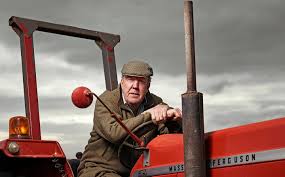
Clarkson has also touched on generational concerns. Many young people are reluctant to enter the farming profession because of economic uncertainty and regulatory complexity. This trend threatens the future of British agriculture. By showcasing the realities at Diddly Squat, Clarkson aims to inspire public awareness and discussion about how policies can be improved to retain young talent in farming. He highlights how essential it is to bridge the gap between policy and practice, ensuring that agriculture remains a viable and respected profession.
Beyond economics, Clarkson raises environmental concerns. While he supports sustainability, he is critical of overly rigid measures that do not take into account local circumstances. Farmers, he argues, are capable of adopting innovative environmental practices, but a one-size-fits-all approach often proves counterproductive. By demonstrating adaptive methods at Diddly Squat, Clarkson emphasizes that environmental responsibility and productive farming can coexist if policies are grounded in reality.
Public reaction to Clarkson’s statements has been mixed. Supporters praise his candidness and firsthand insight, applauding his willingness to challenge policy with evidence from his farm. Critics argue that his perspective is limited to a single property and may not reflect the experiences of all British farmers. Nonetheless, his influence cannot be denied. Clarkson’s visibility in both media and rural circles means that his critique carries weight and invites meaningful debate.
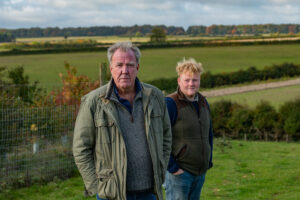
Ultimately, Clarkson’s Diddly Squat experiment serves as more than just entertainment; it is a lens through which viewers can understand the pressures and opportunities in British agriculture. His outspoken critique underscores the importance of dialogue between farmers, policymakers, and the public. By leveraging his platform, Clarkson continues to highlight the need for policies that are practical, informed, and supportive of the people who feed the nation.
For those following Clarkson’s Farm, it’s clear that Jeremy Clarkson is not just cultivating crops—he is cultivating awareness, using his farm as a stage to showcase the urgent need for reform and understanding in the UK’s agricultural sector.