Oak Island’s Ghost Fleet Uncovered: New Scans Reveal Buried Ship—and a Secret That Could Eclipse the Money Pit!
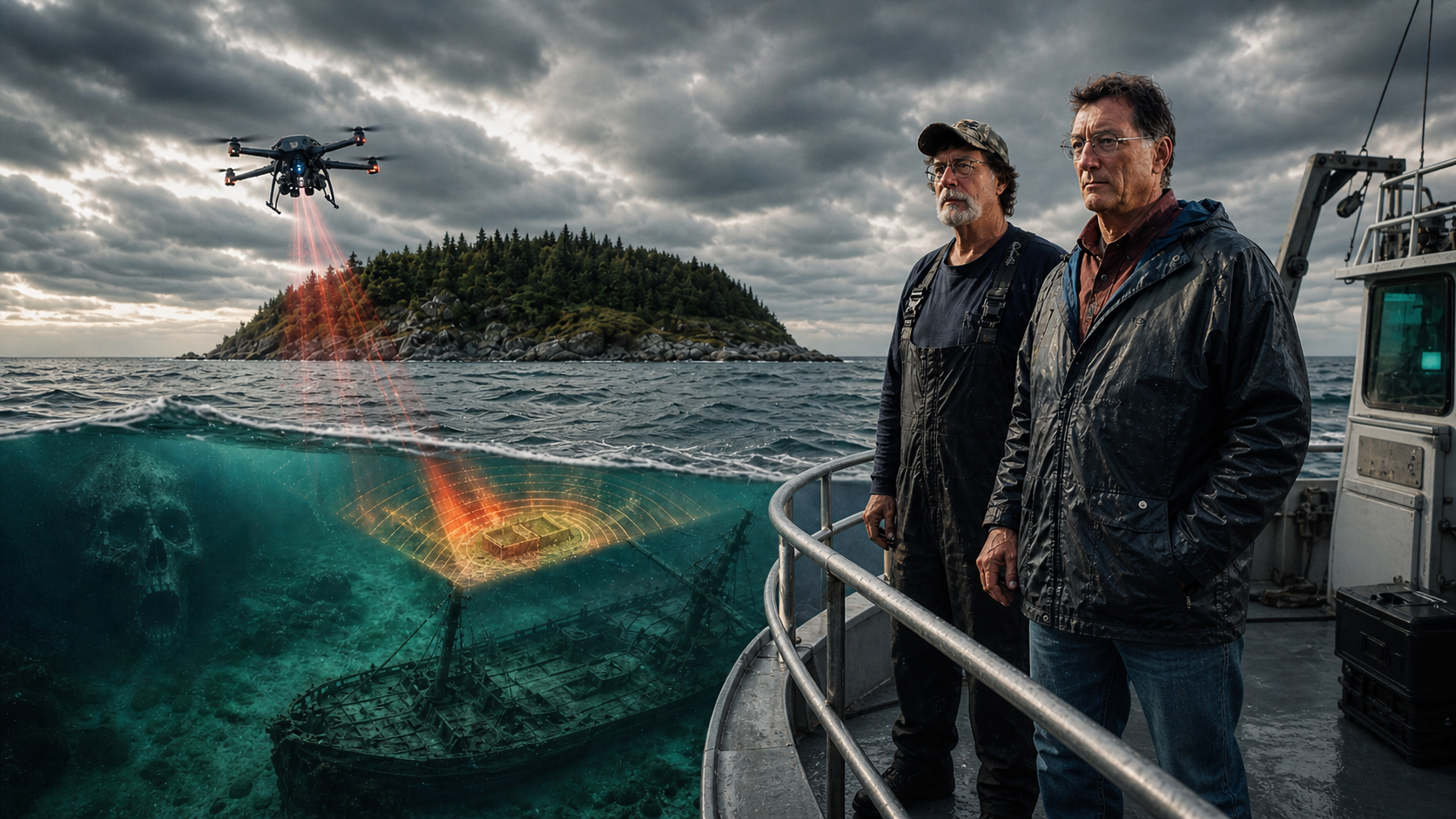
For more than two centuries, the mystery of Oak Island has pulled treasure hunters deeper into shafts of mud, water, and disappointment. Generation after generation became fixated on one idea: that the truth lay straight down, hidden at the bottom of the infamous Money Pit. But recent discoveries suggest that obsession may have been misplaced all along. The real answers, it now seems, may have been hiding in plain sight—just offshore and beneath the island’s swampy heart.
In a dramatic shift in strategy, Rick Lagina, Marty Lagina, and their team turned away from brute-force digging and toward advanced scanning technology. What they uncovered has left even seasoned experts stunned: not just tunnels or voids, but massive, ship-shaped anomalies buried where no ships should ever be.
A Signal in the Water
The breakthrough began offshore. Using a high-resolution magnetometer survey, the team scanned the northern waters surrounding Oak Island, searching not for loose coins or debris, but for large concentrations of ferrous metal. The goal was simple but ambitious—to detect signatures big enough to suggest cannons, anchors, or the iron framework of a full-sized vessel.
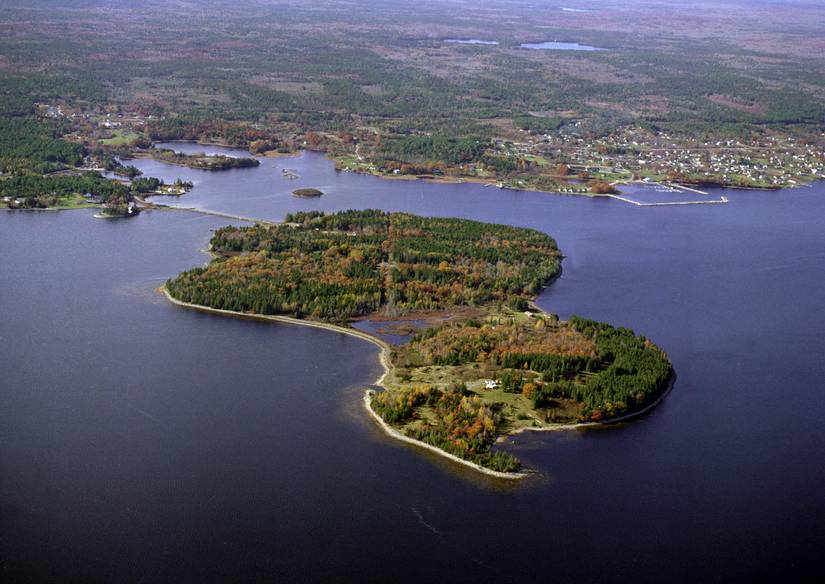



Almost immediately, the data lit up.
Near Frog Island Shoal, a notoriously dangerous stretch of water that ships would normally avoid, the scans revealed a striking six-foot linear feature buried beneath the seabed. This was no random clutter. The magnetic intensity pointed to a dense concentration of iron, the kind associated with large sailing ships rather than modern refuse.
To assess the find, the team brought in diver Tony Sampson and renowned underwater archaeologist Lee Spence, a man credited with locating more than 100 shipwrecks worldwide. His reaction was unequivocal. Based on the shape, strength, and location of the anomaly, Spence identified the site as a highly probable shipwreck.
The theory quickly took shape: a vessel may have been deliberately steered into the shoal, stripped of its cargo, and then destroyed or sunk to erase evidence of what had been moved onto Oak Island.

A Dive That Raised More Questions
The subsequent dive was both promising and maddening. At just 19 to 20 feet deep, the site should have been easy to explore. Instead, thick silt, dense vegetation, and near-zero visibility turned the operation into a test of patience. Handheld scanners screamed with strong hits, confirming a large metallic object directly beneath the divers—but the iron remained buried, unreachable without excavation permits.
It was the ultimate tease. Sensors verified something substantial was there, yet the team could only hover above it, knowing history lay just inches below the mud.
The Swamp That Shouldn’t Hold a Ship
While attention focused offshore, an even more unsettling discovery loomed on land. Years earlier, seismic scans of the triangular swamp had revealed a 200-foot-long anomaly buried deep within the muck. Its curved outline was unmistakable. It wasn’t bedrock. It wasn’t random debris. It looked like a ship.

A ship buried in a swamp, far from open water, defies logic—unless the landscape itself was altered. Excavation efforts led by Billy Gerhardt have steadily reinforced the idea that the swamp may be artificial, engineered to conceal something massive. Each layer removed makes the theory of a deliberately hidden vessel feel less outrageous and more plausible.
A Fleet, Not a Fluke?
What makes these discoveries so unsettling is that they don’t stand alone. Offshore anomalies. A buried ship-shaped structure in the swamp. Both pointing toward coordinated activity rather than isolated accidents. The emerging picture suggests Oak Island may not have been a single hiding spot, but part of a much larger operation—one involving ships deliberately sacrificed to conceal what they carried.
If true, the Money Pit may only be one piece of a complex system designed to hide, transport, and protect something of immense value.
After centuries of digging straight down, Oak Island’s mystery may finally be opening sideways—into the water, the swamp, and a story far bigger than anyone imagined. The island, it seems, is not just a treasure vault. It may be a graveyard for secrets that were never meant to surface.