Emma Culligan Analyzes Unusual Artifact Discovered on Oak Island — What Could It Reveal?
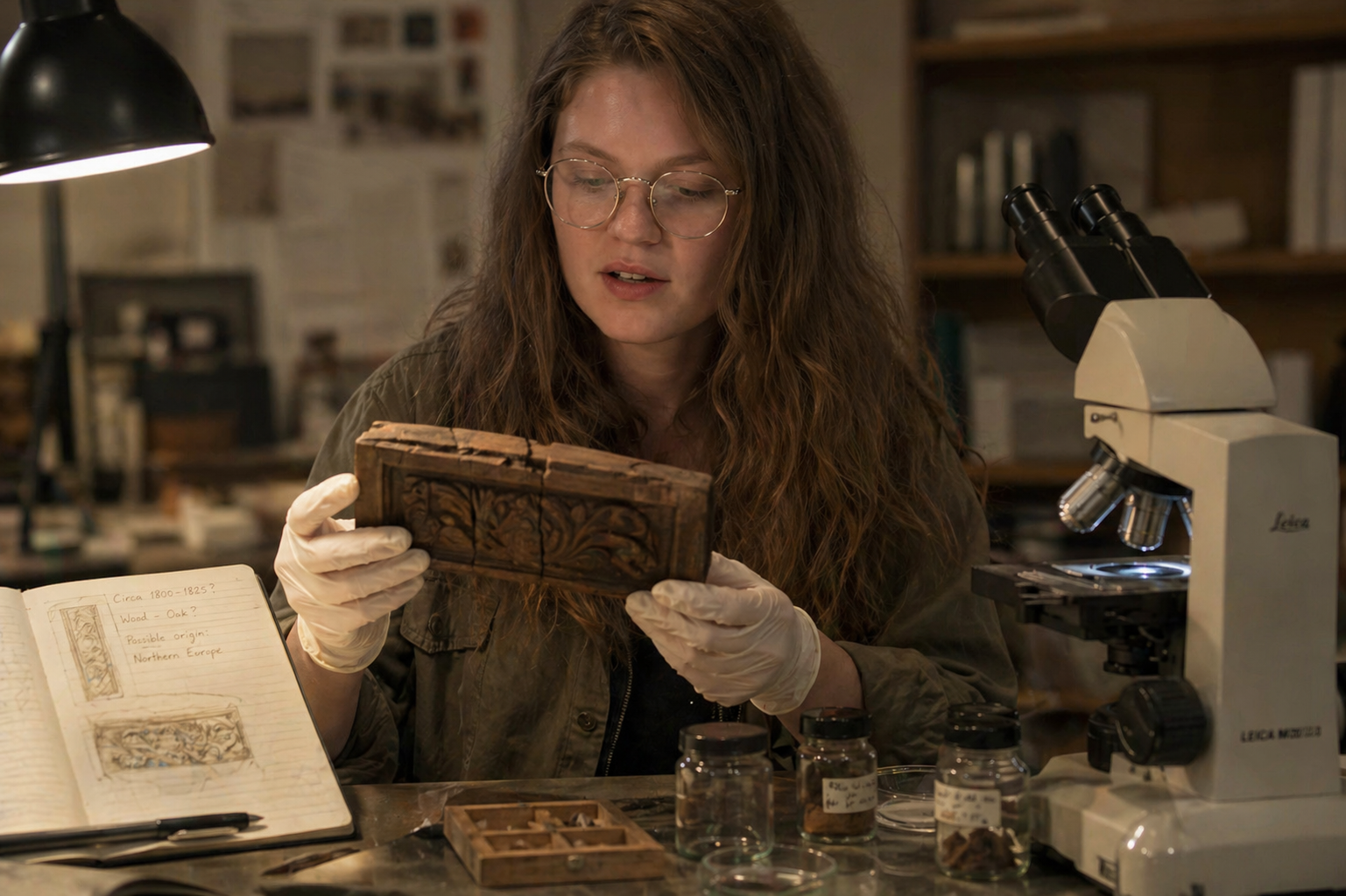
On The Curse of Oak Island, viewers have become used to dramatic moments unfolding in muddy trenches, stone features and deep shafts. But some of the most intriguing turning points happen far from the dig site itself, when an object that first appears small or ambiguous is handed over for closer analysis. That is where Emma Culligan has become such an important part of the series. As the show’s archaeometallurgist, her work often gives the team its first serious indication of whether a strange object is ordinary debris, a meaningful historical artifact or something that could shift the entire conversation. History’s own Oak Island material describes her as the expert who has identified unusual metal compositions in key finds and helped date them through scientific testing.
That is exactly why the idea of Emma examining an unusual artifact instantly sparks curiosity among fans. On Oak Island, significance rarely comes from appearance alone. A corroded piece of metal can look unimpressive at first glance, yet under testing it may turn out to have a composition linked to a much earlier era than expected. The series has repeatedly leaned on that possibility, especially when Gary Drayton or other members of the team recover items whose age or purpose is not immediately clear. In one early example highlighted by History UK, Emma analyzed a small square metal object believed to be a coin and concluded that its makeup indicated it had been made before the 16th century. That finding immediately pushed the object beyond casual interest and into the world of major theory-building.
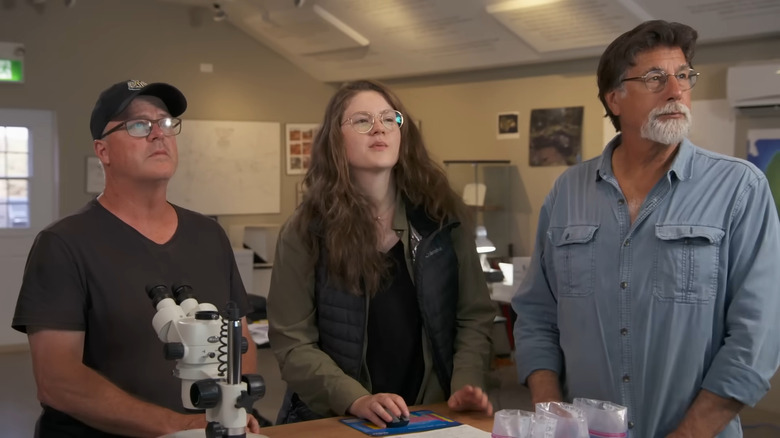
One of the clearest examples of Emma’s influence comes from the Oak Island interactive map published by History. The site says that a trade weight found on Lot 7 was determined by Emma to contain arsenical bronze, and that this mattered because the use of that potentially hazardous compound in metallurgy had ceased after around 1500 A.D. In practical terms, that meant the artifact was at least 500 years old. For the team, that kind of result is never just about chemistry. It changes the timeframe of the story. It suggests that activity on the island may reach further back than a viewer might assume from the later treasure-hunting history alone.



That is what makes any new “unusual artifact” so compelling. On Oak Island, an odd object is not merely another collectible from the ground. It is a possible time marker. If Emma Culligan identifies a metal profile, manufacturing technique or trace element that places the item centuries earlier than expected, the artifact stops being an isolated curiosity and becomes part of a much larger puzzle. Her role, as summarized by Screen Rant, is precisely to examine unearthed materials and provide insight into their origin, age and likely purpose. In other words, she does not just test artifacts. She helps turn them into evidence.
The fascination also comes from the way Oak Island works as a mystery. The show has never been driven by one single discovery alone. Instead, it builds momentum through clusters of clues: a coin here, a paved feature there, a token, a cross, a timber, a trace of metal in water samples. The History map gathers many of those finds in one place, including the Lot 5 lead barter token, the Roman half coin, the stone features in the swamp, and the Lot 7 trade weight. Seen together, these discoveries suggest not one simple episode of activity, but multiple layers of human presence across different eras. When Emma analyzes an unusual artifact, fans are really asking whether it will strengthen one of those layers, connect two pieces of evidence, or introduce a completely new timeline to consider.

That is also why her conclusions carry such dramatic weight around the table scenes on the show. Oak Island is full of speculation, but the series often treats Emma’s findings as moments when the mystery is forced to answer, at least a little, to science. If a strange object turns out to be recent, it may weaken a bold theory. If it turns out to be genuinely old, it can energize the room instantly. History UK’s write-up of Season 10 captured exactly that pattern: a suspicious little square of metal was tested, and Emma’s conclusion that it predated the 1500s opened the door to further speculation about medieval connections. The object did not solve the mystery, but it changed the seriousness with which it could be discussed.
Still, the most interesting part of Emma’s work may be what it does not do. It rarely provides a final answer. Instead, it narrows the possibilities and makes the next question sharper. If an artifact is shown to be hundreds of years old, then who brought it there? Was it lost, traded, buried deliberately or reused by later searchers? If its composition resembles European metalworking traditions, does that indicate direct presence, indirect trade, or something more complicated? Oak Island thrives in that space between revelation and uncertainty. Emma’s analysis tends to move the conversation forward without ever fully closing it down. That is one reason viewers keep paying such close attention to her scenes.

There is also a broader shift in what her presence says about the show. Oak Island has long been associated with legends, folklore and ambitious theories, but Emma represents the series’ push to present more laboratory-backed interpretation alongside the treasure-hunt atmosphere. Her role brings a more technical dimension to the storytelling. Rather than asking only whether an object looks old, the team can ask what its alloy says, what period its metallurgy matches, and how unusual that combination would be in the context of North American finds. That blend of scientific testing and speculative interpretation is now part of the show’s identity.
So what could an unusual artifact really reveal? The most likely answer is not a single dramatic solution, but a stronger sense of context. It might confirm that a specific area of the island was active earlier than expected. It might suggest European contact of a certain period. It might link one site on the island to another through shared material characteristics. Or it might simply show that an object previously dismissed as insignificant belongs in a much older and more intriguing chapter of the island’s history.
And that is why Emma Culligan’s analysis matters so much. On Oak Island, mystery often begins in the dirt, but it becomes meaningful in the interpretation. A strange artifact may catch the eye when it is first unearthed, yet the real excitement begins when Emma starts asking what it is made of, when it was made, and what that means for everyone’s understanding of the island. In a treasure hunt driven by fragments, even one unusual object can make the entire story feel newly open.