Farming Attracts More Women Thanks to Harriet Cowan and Other Influencers.
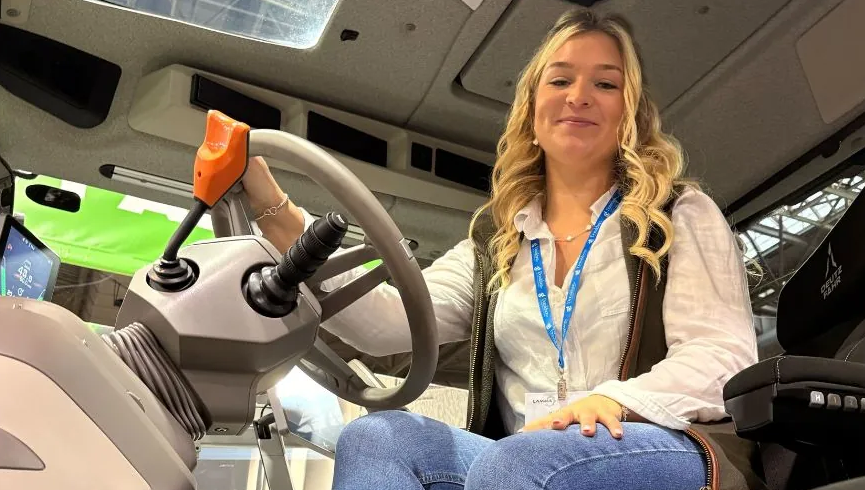
The face of farming is changing, and women are playing an increasingly prominent role in shaping its future. Once a traditionally male-dominated field, agriculture is now attracting more and more women, with prominent figures like Harriet Cowan from Clarkson’s Farm leading the charge and inspiring a new generation to get involved in the industry.
Statistics from DEFRA (Department for Environment, Food & Rural Affairs) show that women accounted for 16% of principal farmers and holders in 2025 — a number that has remained stable over the past five years. However, Suffolk Rural College, a leading institution in agricultural education, has seen a steady rise in female students, actively challenging traditional stereotypes and promoting farming as a viable career option for women.
The Growing Role of Women in Agriculture
The rise in female participation in farming is not just a trend but a significant cultural shift. In 2004, Suffolk Rural College had only five female farming students. Fast forward to 2025/26, and that number has exploded to 115, with nearly 40% of the student body now made up of women. This dramatic increase reflects the evolving attitudes toward women in farming and the growing visibility of female role models in the field.

For 17-year-old Daisy Day from Eye, Suffolk, the influx of women in agriculture has been a source of inspiration. Daisy, who did not come from a farming background, has found her way into the industry through her family’s move to the countryside and the encouragement of friends. Daisy credits women like Harriet Cowan for helping to open up the industry.
“I like Harriet from Clarkson’s Farm,” Daisy said. “And there are more people on Instagram and TikTok now — it’s having an impact. If you can see it, you can be it, as they say.”
Daisy believes that the variety of pathways in agriculture, from marketing and sales to hands-on farm work, has made the industry feel more accessible for women than ever before. Her message to young girls is clear: the farming industry needs more people, and women are more than welcome to join.
Social Media and Increased Exposure
As farming becomes more visible through popular shows like Clarkson’s Farm, many young women are finding that the barriers to entering the industry are breaking down. Ellie Davies, a 17-year-old agricultural student from Hoxne, Suffolk, noticed how the portrayal of farming on television and social media is making the industry more appealing to women.

“It’s more televised, and you have people on social media now. Clarkson’s Farm is entertaining and factual. I think more females are in farming because times have changed, and you are free to do what you want to do,” Ellie explained.
For many young women, this increased exposure is key. With a show like Clarkson’s Farm offering both insight into the challenges of farming and a relatable portrayal of life on a farm, more women are seeing agriculture as a viable and rewarding career option.
Breaking the Stigma
Molly-Mae Reed, another 17-year-old student from Bedfield, Suffolk, believes that farming is becoming more equal and accessible. Coming from a family with a smallholding, Molly-Mae grew up immersed in agriculture, with her great-grandfather being a farmer. Despite this, she has never felt limited by gender in her pursuit of farming.

“There’s less stigma for women today, and it seems more equal,” she said. “I’ve never experienced anything negative as a female in farming. If you want to do it, go for it — the industry needs more people like you.”
Molly-Mae’s experience reflects a broader shift in the industry’s culture. Women are no longer an afterthought in the field of farming. Rather, they are becoming essential contributors and leaders, bringing fresh perspectives and new energy to the industry.
Empowering Young Women Through Education
Suffolk Rural College has played a significant role in driving these changes. The college has worked tirelessly to not only increase female student enrollment but also to empower young women to pursue careers in agriculture by showcasing women in leadership roles.
The college’s efforts to promote farming as an inclusive industry have extended beyond the classroom. In 2022, the college launched a program where female farm students visited local schools to promote farming as a career for young girls. By showing young girls that farming is not just for men, these initiatives help foster a sense of belonging and possibility.
Women in Leadership
The shift toward more female involvement in agriculture isn’t just happening among students; it’s also happening within the industry itself. At Suffolk Rural Farm, three key roles are now overseen by women. One such woman is Sophia Sparkes, an agricultural technician who initially planned to become a genetics consultant in a hospital. After being encouraged by a teacher to consider farming, Sophia discovered her passion for agriculture.

“My original plan was to go to university to become a genetics consultant at a hospital, but someone from the college came into my school and asked if I’d ever thought about doing the same thing with animals,” Sophia recalled. “I love the outdoors — the animals, the community, and the whole farming industry. My message to young girls is — if you love it, go for it, because nothing should stop you.”
Sophia’s journey is just one example of the many women who have found success in the agricultural industry, contributing to the growing representation of women in farming and proving that passion and dedication can take you far, regardless of gender.
A New Era for Women in Farming
As more women enter the agricultural field, it’s clear that the industry is becoming more diverse, inclusive, and accessible. Figures like Harriet Cowan and the increasing number of female students at institutions like Suffolk Rural College are helping to break down the barriers that once limited women’s participation in farming.
The future of farming looks bright, with women playing an integral role in its development. For young girls considering a career in agriculture, the message is clear: the industry needs you, and there is nothing stopping you from pursuing your dreams.
In the words of Sophia Sparkes, “If you love it and you have a passion for it, you should go for it. There will be nothing stopping you.”