Templar Technology? The Structural Clues Hidden in Oak Island’s Swamp.
For more than two centuries, Oak Island has been synonymous with shafts, tunnels, and the legendary Money Pit. Yet in recent seasons of The Curse of Oak Island, attention has increasingly shifted toward the swamp — a waterlogged stretch once dismissed as natural terrain. Now, newly examined structural fragments recovered from its depths are fueling one of the most provocative hypotheses in the island’s long history: that highly organized medieval engineers may have left their mark there.

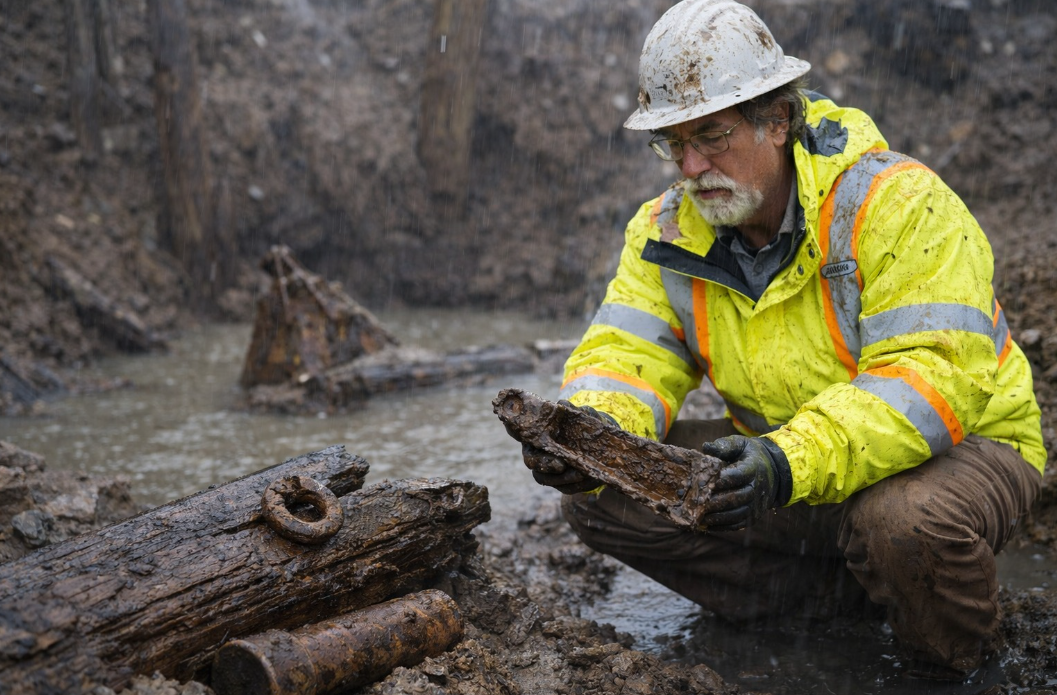
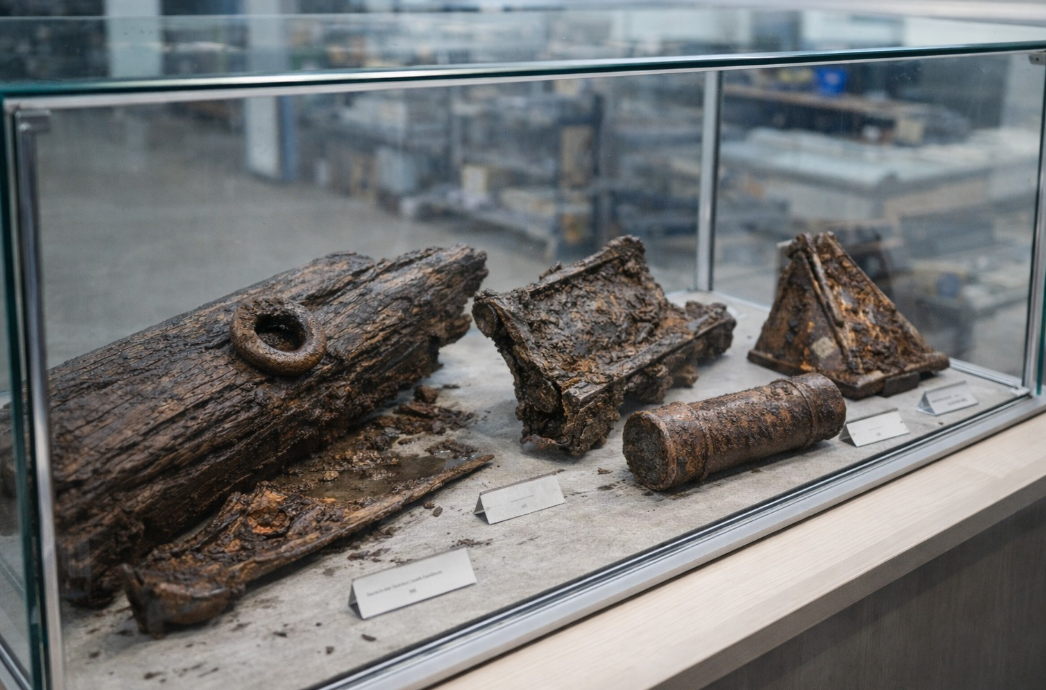
The artifacts in question are not glittering coins or jewel-encrusted relics. They are heavy timbers, reinforced with iron rings and fittings, recovered from mud and brackish water. Some appear shaped or cut with intent, rather than the random breakage of driftwood. Others show signs of having once been part of a larger structural system — perhaps bracing, perhaps anchoring something far more substantial beneath the surface.
At first glance, such fragments might seem unremarkable. Oak Island has yielded wood before — fragments attributed to previous searchers or colonial-era activity. But context is everything. These pieces were located within a zone already associated with stone features, engineered pathways, and prior metal detections. When combined with earlier carbon dating results placing organic material in the late 12th to early 13th century, the swamp begins to look less accidental and more intentional.



The dating window is what has reignited discussion of the Knights Templar. Between roughly 1148 and 1216, the Templar order was at the height of its influence, controlling vast wealth and maritime trade routes across Europe and the Mediterranean. They were not only warriors but also financiers and engineers, known for fortress construction and complex defensive design. Could such an organization have possessed the capability to construct a concealed system far from their established territories?
Proponents of the theory point to several converging factors. First, the structural timbers appear deliberately shaped, with iron rings that may have functioned as anchor points or reinforcement fixtures. Such fittings would have required advanced metalworking and logistical planning — hardly the work of isolated settlers improvising in a remote colonial outpost.
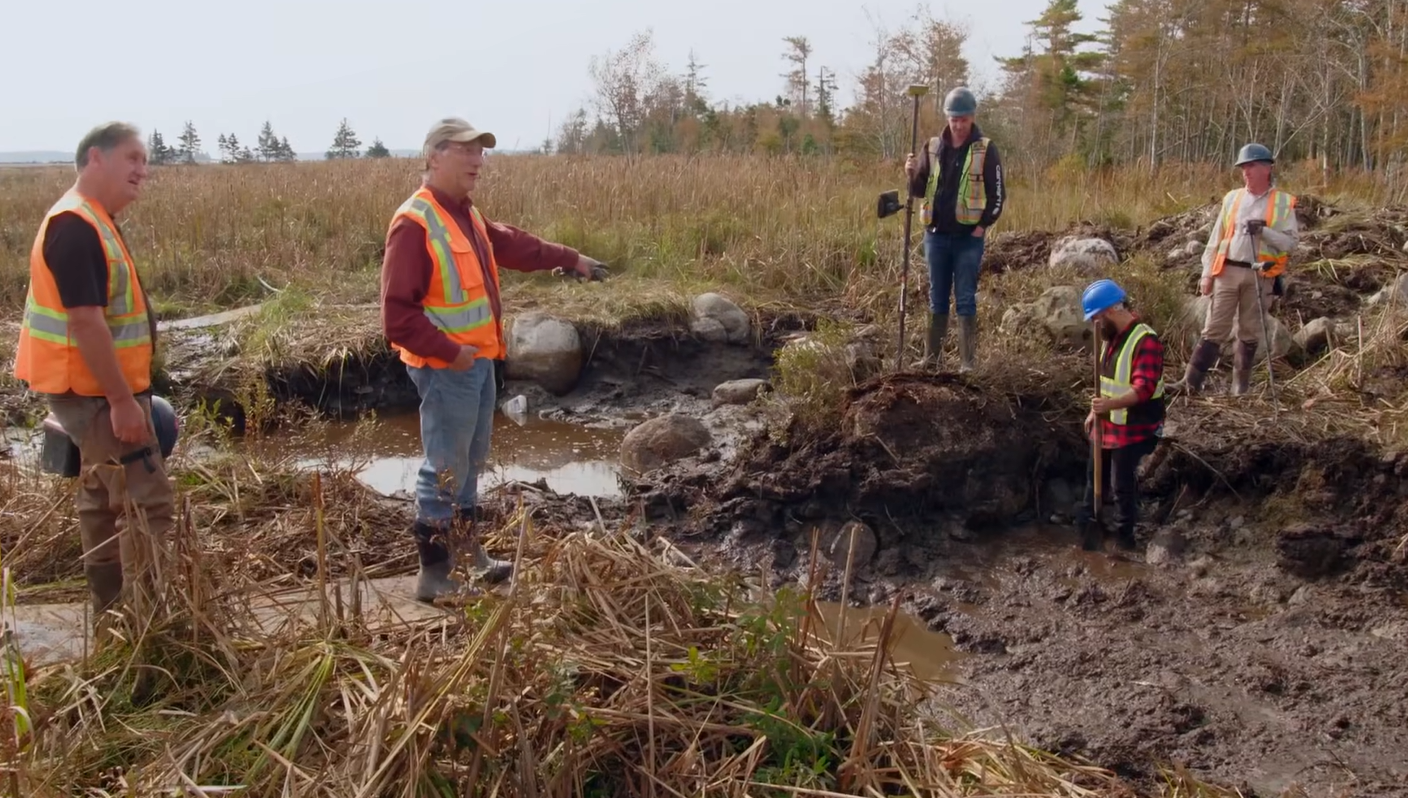
Second, the swamp itself has long been suspected of being artificial or at least partially modified. Earlier sonar surveys suggested geometric anomalies beneath the sediment, including a formation interpreted by some as ship-shaped. If the swamp were intentionally altered, it could have served as a strategic concealment site — masking entry points, storage chambers, or engineered flood systems.
Flood-control engineering is central to Oak Island lore. The infamous “flood tunnels” described in early accounts of the Money Pit imply a system designed to protect something from intrusion. Timber reinforcements in a water-saturated environment could represent components of such a mechanism — barriers, sluice structures, or stabilizing frames designed to manage pressure and flow.
Skeptics, of course, urge caution. Wooden structures do not automatically equate to medieval craftsmanship, and iron rings were used widely across centuries for maritime and agricultural purposes. Natural processes can also produce alignments that mimic intentional design. The swamp has been disturbed repeatedly by previous search efforts, complicating efforts to establish undisturbed context.
Yet the significance lies not in any single artifact, but in accumulation. A leather fragment dated to the 12th–13th century. A key recovered from a cobblestone pathway. Structural timbers reinforced with metal. Geochemical traces of silver detected deeper in the island’s substrata. Each alone invites questions; together, they suggest a pattern demanding rigorous investigation.
If a medieval presence is eventually substantiated, the implications would be extraordinary. It would push back the island’s timeline by centuries, predating not only the 1795 discovery of the Money Pit but also established European settlement narratives for the region. It would imply transatlantic movement and logistical capacity far more complex than traditionally acknowledged.

For now, the Templar connection remains a hypothesis — compelling but unproven. What is clear is that Oak Island’s swamp can no longer be treated as a peripheral curiosity. The structural clues emerging from its depths represent tangible evidence that something deliberate occurred there, whether centuries ago or at some later period of clandestine activity.
In the world of The Curse of Oak Island, where legend often collides with data, the swamp may prove to be the crucible where speculation meets science. Whether these timbers ultimately confirm medieval engineering or reveal a different chapter of human intervention, they have already transformed the conversation.
The question is no longer whether the swamp hides secrets. It is whether those secrets point to organized, high-level planning — and if so, by whom.