The Curse of Oak Island Season 13 Episode 16: Silver Money Pit & Gold Lot 8.

After a season defined by mounting evidence and mechanical ambition, Episode 16 of The Curse of Oak Island arrives at a decisive moment. Titled Raising the Stakes, the installment builds directly on the seismic revelation delivered at the close of Episode 15 — a scientific breakthrough that has shifted the narrative from speculation to historical convergence.
While the 135-ton rotary drill at the Money Pit stalled at just 20 feet due to compacted surge rock, the laboratory results unveiled in the War Room delivered something arguably more powerful than machinery: chronological confirmation. Preliminary carbon-14 dating of a leather shoe fragment recovered from the swamp places the artifact between 1148 and 1216 — firmly within the late 12th and early 13th centuries.
That date range is not incidental. It aligns with the height of the Knights Templar’s influence, an era defined by sophisticated engineering, maritime capability, and immense financial power. Moreover, the timeline converges with prior archaeoastronomical analysis suggesting that Nolan’s Cross — the massive stone formation on the island — may have been constructed in the early 1200s. For the Fellowship of the Dig, this alignment reinforces a growing thesis: Oak Island was active centuries before the 1795 discovery of the Money Pit.
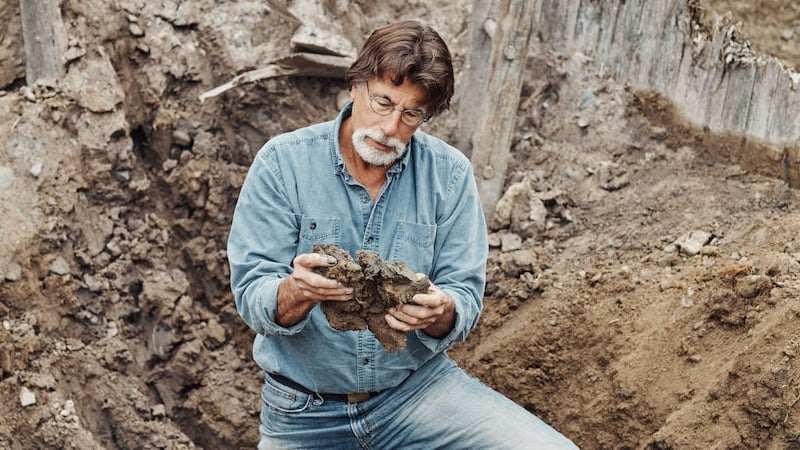




Episode 16 capitalizes on that momentum.
The Silver Signal at the Money Pit
At the center of the episode is the long-awaited continuation of drilling at the Top Pocket Find shaft (TPF). After a frustrating delay caused by heavy gravel backfill from prior excavations, engineers successfully install reduction inserts and deploy a high-capacity hydraulic oscillator. The 135-ton rig, once immobilized, resumes rotation — grinding through the obstruction and advancing deeper into previously unreachable strata.
This is not blind excavation. The team selected this coordinate based on X-ray fluorescence data gathered earlier in the season by environmental scientist Dr. Ian Spooner. Testing from boreholes I-9.5 and K-9.5 revealed anomalously high concentrations of elemental silver within the subterranean solution channel — levels inconsistent with natural background geology.
Such concentrations imply proximity to a metallic source.
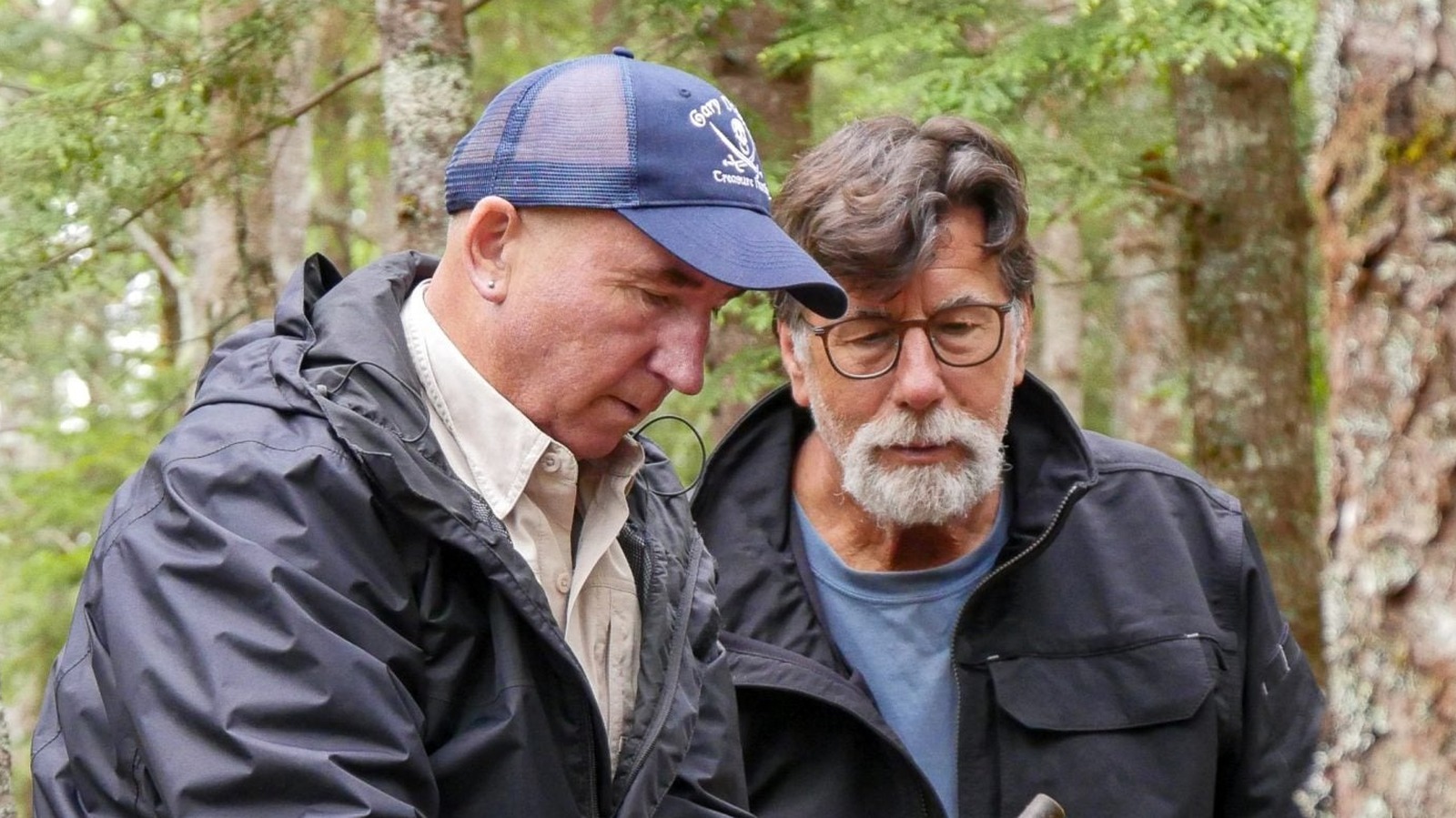
In Episode 16, as drilling penetrates beyond the surge rock layer, anticipation builds around whether core samples will confirm a silver-bearing deposit of significant scale. If the XRF data translates into physical recovery, it would represent one of the most consequential material discoveries in the show’s 13-season history.
Lot 8 and the Gold Question
Simultaneously, attention shifts to Lot 8, where a 130-ton crane positions itself over a massive capstone. The site has yielded compelling artifacts this season, including what appears to be an early medieval key and additional high-value metal detections along a structured cobblestone feature.
The lifting of the capstone marks a pivotal escalation. The working theory suggests the stone may conceal a concealed cavity or deliberately engineered feature — potentially linked to offloading or storage operations centuries ago.
As excavation progresses, metal detection sweeps intensify. The language in the preview suggests visible metallic glints beneath disturbed soil — though whether those signals represent gold, alloy, or secondary debris remains to be verified.

The strategic significance of Lot 8 lies in its geographic separation from the Money Pit. If both sites yield material confirmation — silver at depth and gold or structured deposits at surface-adjacent levels — the island’s activity would appear more complex and coordinated than previously assumed.
Convergence of Evidence
Episode 16 is less about singular discovery and more about convergence. Carbon dating anchors the timeline. XRF data guides the drill. Archaeological excavation on Lot 8 tests surface-level anomalies. Together, these parallel operations create a multi-layered investigative framework.
For the first time in recent seasons, historical dating, geochemical analysis, and large-scale excavation are operating in alignment rather than isolation.
The implications are substantial. A confirmed silver source beneath the Money Pit would lend credibility to centuries of accounts describing buried wealth. A verified medieval artifact cluster on Lot 8 would reinforce the narrative of pre-17th century activity.
Whether the episode delivers definitive treasure or further layers of complexity, Raising the Stakes positions Season 13 at a threshold moment.
After years of incremental clues, Oak Island’s mystery may be entering its most evidentiary phase yet — where science, steel, and history intersect beneath the Nova Scotia soil.