Jeremy Clarkson’s Diddly Squat Shake-Up: The Quiet ‘Sad’ Moment That Forced a Big Change
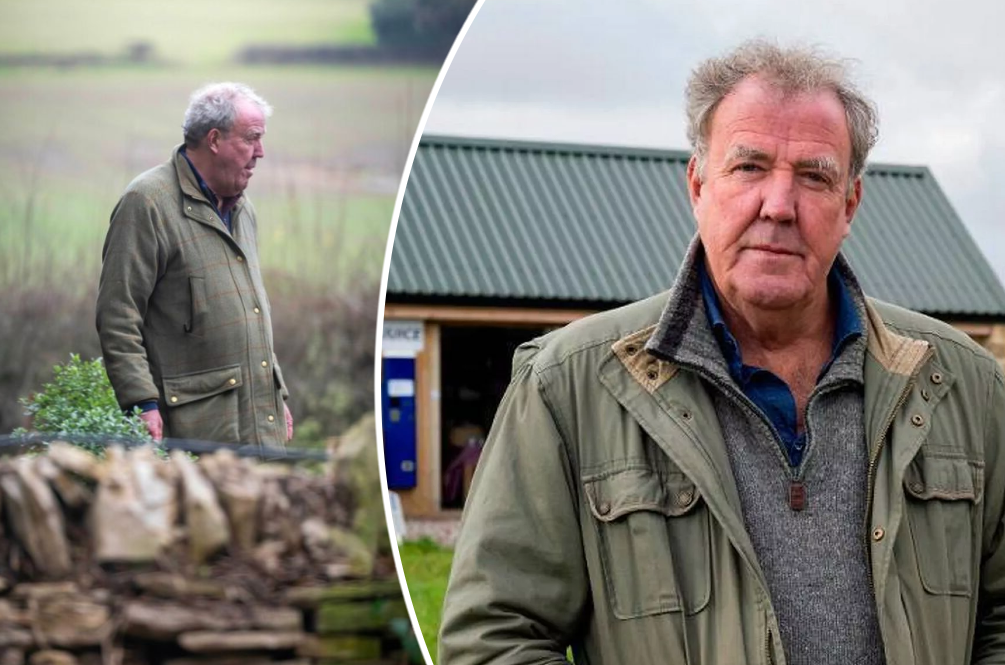
When Jeremy Clarkson first walked the rolling fields of Diddly Squat Farm in Oxfordshire, he didn’t expect silence to be the thing that unsettled him most. The former Top Gear star knew farming would be hard, unpredictable, and often maddening. What he didn’t expect — not in a million years — was how devastated he’d feel standing under an empty sky.
That moment, according to Clarkson, changed the future of his farm forever.
A Quiet Farm, and a Realisation He Didn’t Expect
In a recent column for The Sunday Times, Clarkson revealed the surprising detail that sparked one of the most meaningful transformations at Diddly Squat. After taking over the land in 2019, following the departure of the tenant farmer, he began exploring the property with fresh eyes.
And something immediately felt wrong.
“There were no birds,” he wrote. “Since 1970 their numbers have plummeted by more than 60 per cent, and when I first bought Diddly Squat this sorry state of affairs was obvious. I’d go for a walk and the skies were completely empty.”
For a man known for his love of machinery, speed, and general chaos, the stillness felt eerie — even sad. Clarkson admitted he was struck more deeply than he expected.

“It made me sad,” he confessed.
The Decision That Changed Everything
That sadness became motivation.
Determined to reverse the decline on his land, Clarkson decided to rework substantial areas of the farm — even if it meant sacrificing productivity. He widened field margins far beyond legal requirements, leaving up to 10 metres untouched in some areas instead of the standard 4–6 metres.
He also stopped trimming hedgerows away from the main roads, allowing them to grow wild and thick. And on the advice of ecologist Hannah, who monitors wildlife on the farm, he took an unexpected step: digging new ponds.
“Birds don’t like to travel,” Clarkson explained. “A corn bunting rarely strays more than a mile or so from the hedge where it was born.”
Creating micro-habitats became essential. The idea was simple — if birds don’t go far, bring the resources closer.
Dry weather initially thwarted his attempts to encourage wildflowers, but slowly, something remarkable happened.
Diddly Squat’s Sky Comes Back to Life
Hannah’s surveys eventually revealed a dramatic turnaround. Where the average British farm hosts 27 species of birds, Diddly Squat now hosts 45.

Skylarks, goldfinches, buntings, whitethroats — small birds, Clarkson admits, “mostly boring,” but vital indicators of ecological recovery.
To him, they were more than birds. They were proof that the farm was healing.
And the transformation has become one of the quiet triumphs of Clarkson’s farming journey — a story overshadowed by tractors, red tape, pub drama, and endless battles with council authorities, but perhaps one of the most meaningful victories he’s had since the series began.
A Farm That Now Costs a Fortune — But Clarkson Won’t Stop
Restoring nature hasn’t been cheap. Nor has his expansion into The Farmer’s Dog pub, which he candidly admits is “costing a fortune.” But despite the financial strain, Clarkson says customers have loved it — and he remains fully committed to both ventures.
Diddly Squat is no longer just a farm. It is a biodiversity refuge, a tourist hotspot, a battleground of regulations, and a symbol of modern farming struggles — all wrapped into one.
A Sad Moment Becomes a Legacy
What began as an unsettling silence has transformed into one of the farm’s biggest success stories. The fields no longer feel empty. The skies no longer feel bare. And the small birds Clarkson once described as “boring” have become a source of pride — and a reminder that farming is more than crops and cattle.
Sometimes, it’s about bringing life back to the land.
And this time, Jeremy Clarkson did exactly that.