Episode 4 Uncovers the Biggest Oak Island Clue in Two Centuries.

Oak Island Season 13, Episode 4: The Evidence That Could Rewrite the Entire Legend
Season 13 of The Curse of Oak Island continues to peel back layers of a mystery that has confounded historians, treasure hunters, and scientists for more than 200 years. But Episode 4 marks a turning point — not because of one spectacular find, but because of a convergence of discoveries across the island that all seem to point in the same startling direction:
What happened on Oak Island may have begun centuries — even millennia — before the famous Money Pit discovery of 1795.
From deep boreholes near the Money Pit, to medieval-style structures in the swamp, to European artifacts emerging from Lot 5, Episode 4 connects dots that push the origin of the Oak Island mystery further back than ever imagined.
The Money Pit: Proof That Heavy Artifacts Are Falling Into Hidden Voids
Much of the drama this week centers on borehole F5.5, drilled only seven feet from F4 — a hole that previously showed extraordinarily high levels of dissolved gold and silver. The team believes this “solution channel” may be a geological void where objects dropped over centuries could have migrated downward.
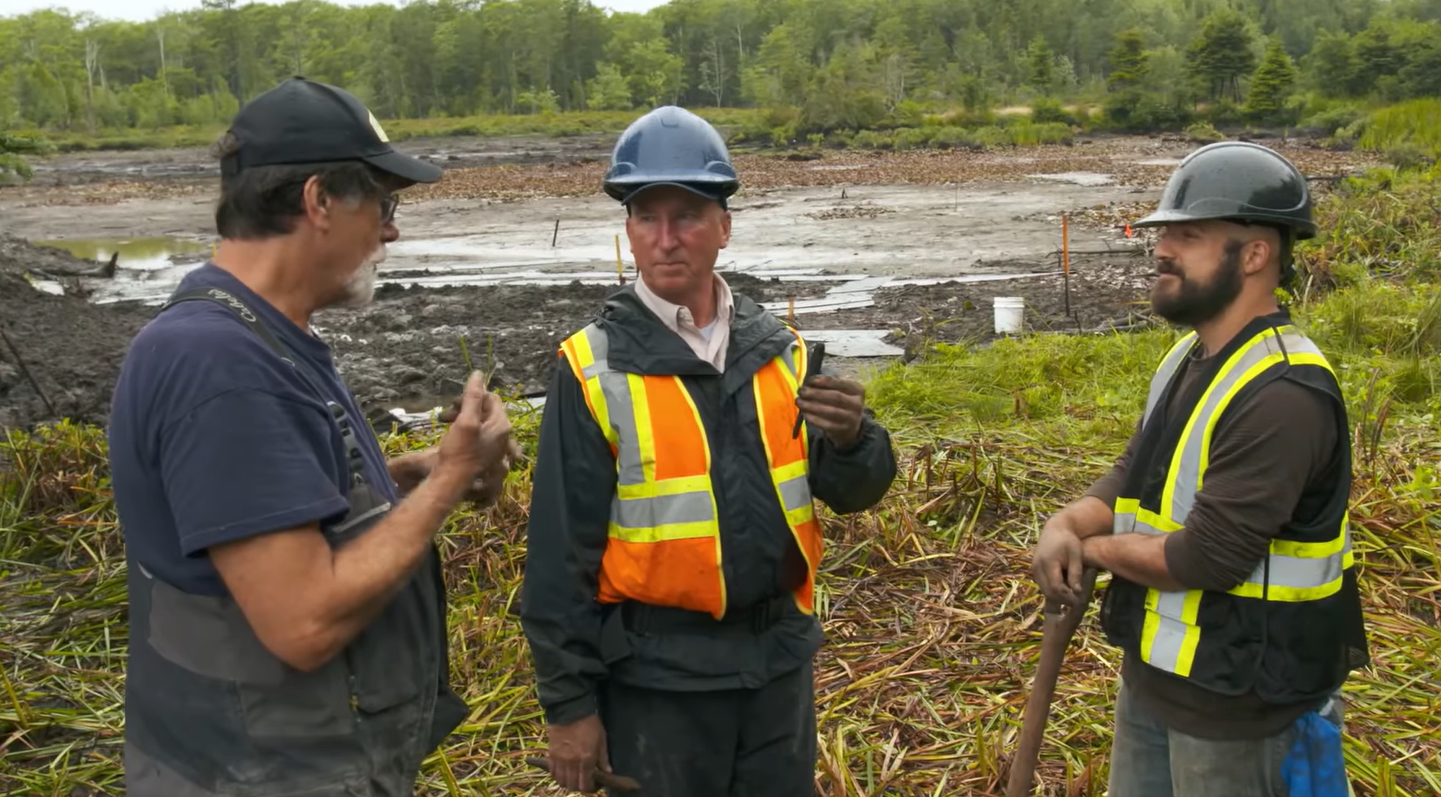



When the drill retrieves a small, dense metal fragment, the team initially suspects a coin. And although the object turns out to be a carbide drill button, disappointment quickly transforms into excitement.
The carbide button proves something critical:
Dense objects can fall through centuries of collapse debris and settle inside deep voids.
If ancient metals can fall into the channel, then so could coins, ingots, or even parts of a vault structure. For the first time, the theory of “treasure migration” is supported by physical evidence.
The Swamp: A Hidden Structure That Mirrors Medieval Engineering
On the opposite side of the island, the swamp delivers one of the episode’s most intriguing surprises. Gary Drayton and Billy Gerhardt uncover dozens of wooden stakes clustered chaotically in a 50×50-foot zone — too many, too organized, and too well-preserved to be natural.
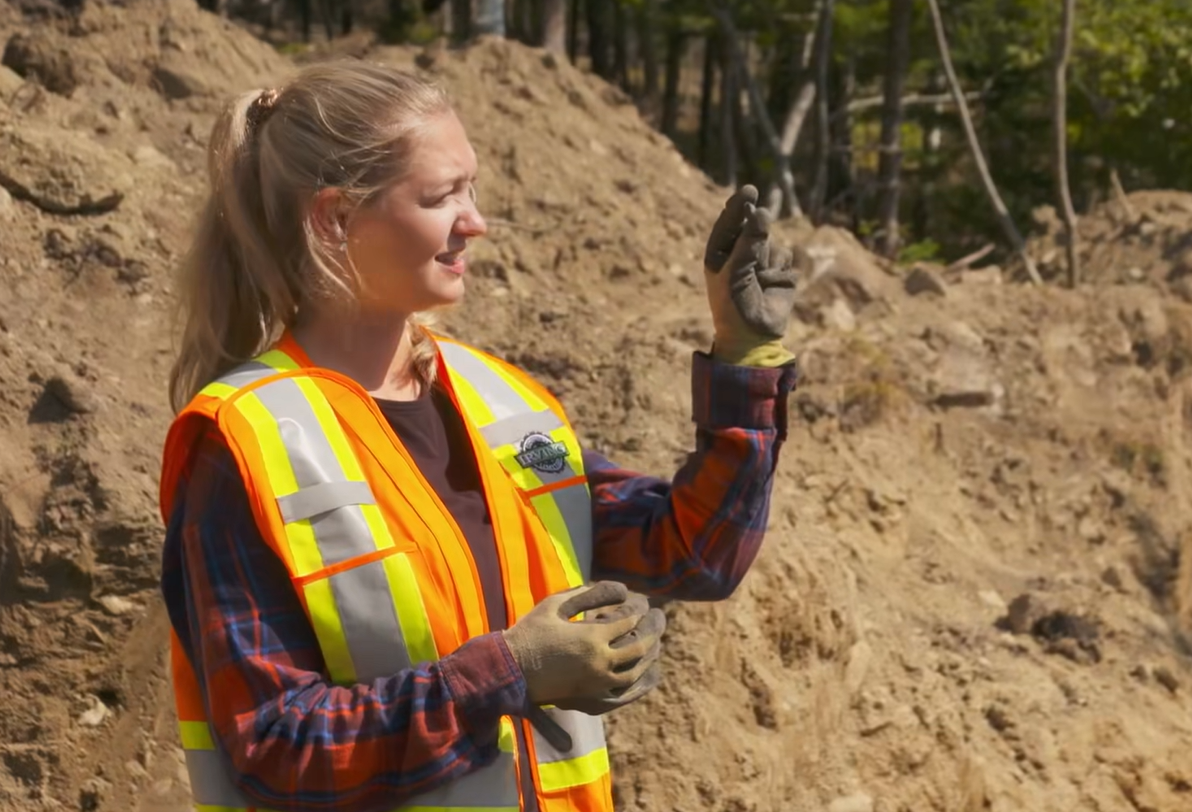
Beneath them lies a layer of sand that should not exist in this part of the swamp — strong evidence that the area was artificially engineered.
Then the breakthrough:
A stone feature appears — leveled, stacked, aligned — almost identical to the famous Stone Road and Paved Area found in earlier seasons.
When Dr. Ian Spooner evaluates it, he immediately recognizes the pattern.
If confirmed, the structure could be part of a medieval construction network stretching across the swamp — possibly connected to the mysterious vault-like structure discovered in Season 10.
Permits are pending, but anticipation is sky-high.
Lot 5: Medieval Lead, 1600s Shears, and a Stone Circle Near the “Roman Coin Zone”
Lot 5 continues to cement its status as one of the most historically rich zones on Oak Island.
1. A Medieval Lead Artifact
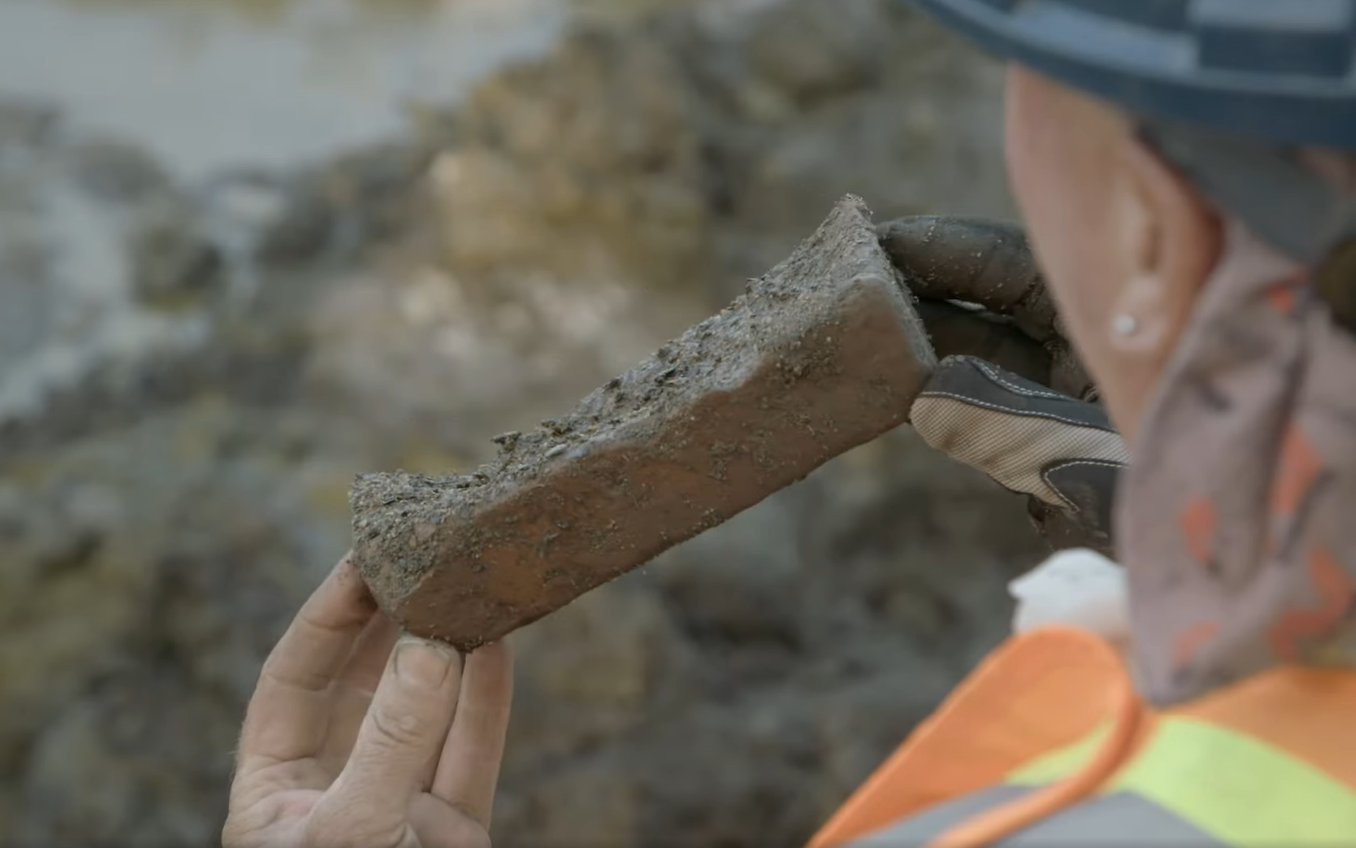
Emma Culligan’s XRF scan reveals a lead object containing no modern alloys — consistent with material from 1700 or earlier, possibly medieval.
If isotopic testing links it to the same southern France mines as the Templar-era cross, Lot 5 could become ground zero for medieval activity on the island.
2. A 1600s Pair of Iron Shears
Originally believed to be horse tack, the fragmented iron pieces turn out to be shears dating to the 17th century — more proof of early European presence long before 1795.
3. A Stone Circle and the Roman Coin Mystery
Rick and Gary uncover a circular stone arrangement centered around an upright slab — eerily similar to features found in ceremonial medieval sites.
And it appears close to where six Roman coins were previously discovered.
Multiple time periods — ancient Roman, medieval European, 1600s colonial — are now overlapping on the same property.
A Possible 14th–16th Century Firearm Fragment
The episode ends with a bombshell:
Gary retrieves a dense iron object that may be part of a petronel, a cavalry firearm from the 1300s–1500s — used by military or elite guards.
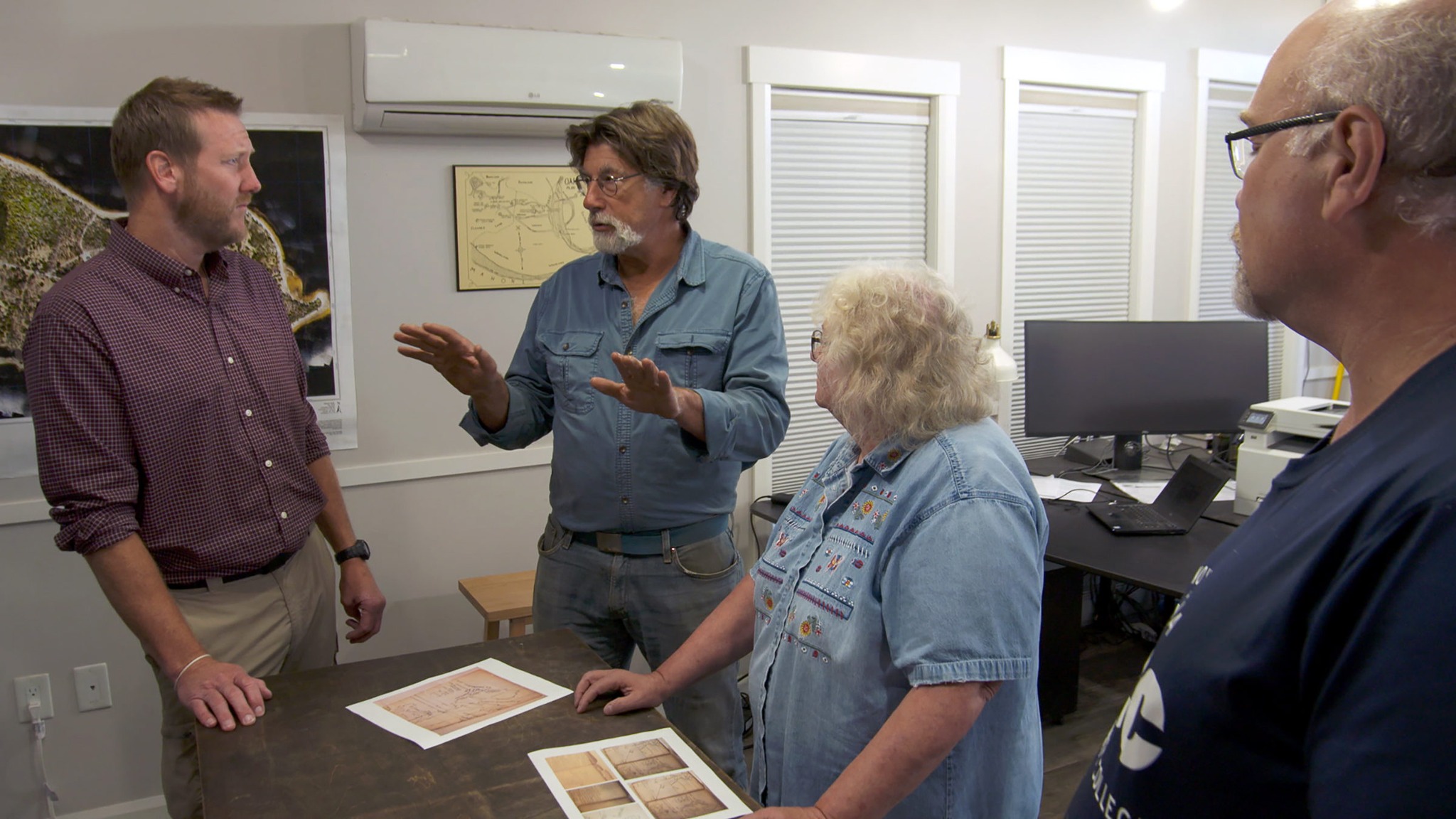
If verified, this becomes the strongest indication yet that Oak Island was not visited by fishermen or wanderers — but by armed, organized Europeans.
A Converging Mystery
Episode 4 doesn’t deliver a single treasure chest — it does something bigger:
It connects medieval lead, early firearms, engineered roads, stone structures, and geological voids into one coherent historical scenario.
The emerging picture is astonishing:
-
A medieval group (possibly Templar-connected)
-
A 1600s European presence
-
Ancient Roman coins appearing centuries out of place
-
A swamp that looks intentionally engineered
-
Deep voids capable of holding heavy objects
-
And a landscape that resembles a deliberately designed operational site
For the first time in years, Oak Island isn’t just a treasure hunt.
It’s becoming a historical revelation — one that may rewrite everything we thought we knew about North America before the 1700s.