‘One of the best things that’s happened to farming’: Farmers in Australia Reveal What They Really Think About Clarkson’s Farm.
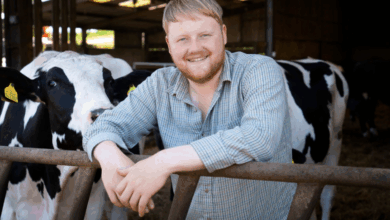
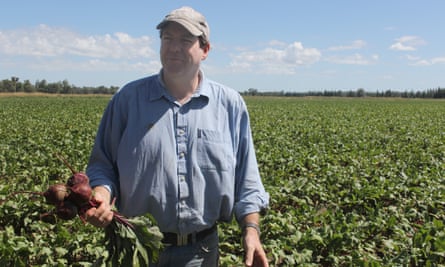
The Australian vegetable farmer Ed Fagan has nearly nothing in common with Jeremy Clarkson. The former has been awarded for his innovation on his 1,600 hectare (3,953 acre) farm in regional New South Wales, the latter nearly lost a television series about his own farm after he was found to have discriminated against the Duchess of Sussex in a column.
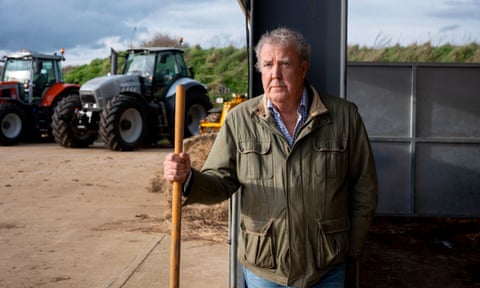
But the two men do have one thing in common: some years, they make no money from farming.
“When Clarkson gets to the very last episode [of the first season of Clarkson’s Farm], he works out that he’s made £14 or something,” Fagan says. “I’d say there are a vast number of farmers in Australia who do that exact same thing, get to the end of the year and go ‘oh my God, is that all I’ve made?’. It’s a lot of work and not a lot of return.
“I think it’s a great way to show people who are otherwise ignorant to farming.
“I don’t mean that in a derogatory way, most people that aren’t involved [in farming] don’t know.”
It is not only the dollars and cents that Fagan says are relatable about the former Top Gear presenter and columnist’s agricultural venture. In the third season, Clarkson attempts to “farm the unfarmed” in an effort to diversify income streams from the land, a challenge many Australian farmers now face.
Clarkson’s property in Oxfordshire is nearly a third of the size of Fagan’s, with about 200 hectares (500 acres) of farmed land and a further 200 hectares of wild land.
But highlighting the work behind the scenes to keep farms up and running is what Fagan relates to. He calls the series “the most realistic farming show”.
He describes the constant auditing, checks and budgeting as “the bane of my existence”, with every farm having their own “cheerful Charlie”, referring to farm adviser Charlie Ireland and his myriad of polite put-downs at Clarkson’s Diddly Squat.
“Farmers have wants when it comes to where you spend your money, which rarely get attended to, and we have needs which have to be attended to,” Fagan says. “The bill is, unfortunately, often quite large, so it’s very rare that we delve into a ‘wants’ scenario when it comes to capital expenditure.
“Never before have we relied on so few for our food in history. People might not realise how thin the margins are.”
With the average age of Australian and British farmers reaching into the late 50s, Fagan says the barriers to entry are high for young, eager, farmers such as Diddly Squat’s newest farm manager, Kaleb Cooper.
“You have a massive asset that you have to buy in the first place, you need to buy all the gear, the input costs are high and there’s a long period of time until you can get a return on income and that expenditure,” he says. “Your money’s out for a long time.”
Martin Murray, who runs cattle and mixed crops from his property near Inverell on the state’s northern tablelands, says he would like to see the Clarkson’s Farm model of television travel to Australia.
“It’s got to be one of the best things that’s happened to farming, in terms of raising awareness and educating the public on actual modern farming,” he says. “It’s not something where they’re hugging lambs in barns or one of those hobby farm type shows, it’s actually doing agriculture.
“They’re farming in a conventional way and explaining why they do the things they do … It’s a really good format, I’d really like to see them try to emulate it in Australia.”
Murray, the chair of the NSW Farmers Young Farmers Council, says the challenges of trying to make the most out of every acre, and break even at the end of harvest, are all too familiar.
“That’s the trouble with diversification, you can sink a lot of time and money into things that just don’t work,” he says. “We had a go at pigs at one stage and it turned into a nightmare.”
Murray’s experience with pigs differed from Clarkson’s, with the small herd digging up water pipes in what became a “game” for the animals.
“You think you beat them but you just slow them down,” he says. “I dropped a whole heap of rocks over where they were digging [the pipes] up and thought that’ll beat them, but it just slowed them down for a day.”
Murray and his partner have left the pigs behind but, from the seat of his precision sprayer, the young farmer has been thinking about the best farm to feature in a potential Australian spin-off.
“It’d probably be a mixed farm, I don’t see why you couldn’t do shows like Outback Truckers and Outback Opal Hunters, they’re all outback something-or-the-other,” he says. “I’d like to see a show like that.”