Newly Unearthed Proof Shows Treasure Dropped Into a Deep Underground Channel!

The Curse of Oak Island Season 13: The Discovery That Changes Everything
A 14th-Century Coin, a 170-Year Mystery, and the Strongest Evidence Ever Found in the Money Pit
For decades, fans of The Curse of Oak Island have asked the same burning question: Was there ever truly treasure in the Money Pit?
This season, the answer finally arrived — not as a theory, not as speculation, but as a physical, historical, irrefutable artifact.
Season 13’s premiere didn’t just tease a mystery. It rewrote the entire Oak Island story, delivering what Rick and Marty Lagina called the most significant discovery in the show’s history:
a bent 14th-century Portuguese silver coin, believed to be the same object secretly pocketed by foreman James Pitblado in 1849.
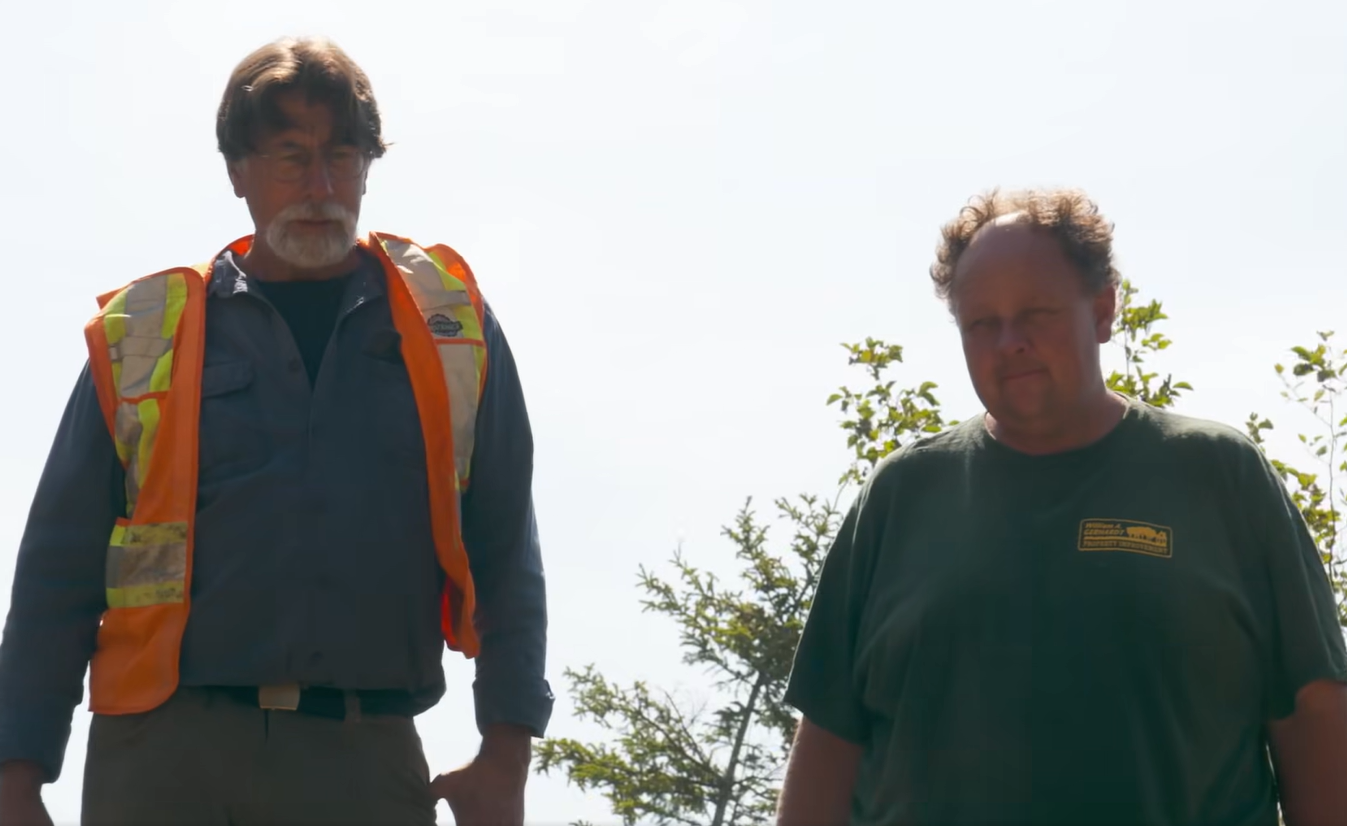
A 170-Year-Old Secret Comes Full Circle
The moment the coin entered the War Room, the atmosphere shifted.
Rick Lagina said plainly:
“To me, it’s proof that something is at the bottom of the Money Pit.”
The coin — a tornês decisal dating from King Ferdinand I (1367–1383) — was delivered by Steve Solomon, a descendant of the Archbold family. According to family history, this is the very item Pitblado retrieved during the 1849 auger drilling — an event that has lingered in Oak Island folklore for nearly two centuries.




During the original dig, the Truro Company’s auger reportedly bored through:
-
a hardwood platform
-
two feet of loose metal pieces
-
another hardwood platform
-
two more feet of metal
That pattern strongly suggested two stacked treasure chests. But when the auger was raised, Pitblado allegedly removed a shiny object and concealed it. He then raced to show the item to businessman Charles Archbold. Immediately afterward, the two tried to purchase the eastern half of Oak Island.

Something had convinced them the treasure was real.
Now, 170 years later, their secret has returned to the island.
The Coin’s Shocking Historical Significance
Emma Culligan’s metallurgical analysis confirmed the coin’s authenticity:
-
Composition: 37.5% silver
-
Dating: Late 14th century
-
Condition: Remarkably preserved
-
Damage: A slight bend — consistent with being struck by an auger in 1849
But the true weight of this discovery comes from its timeline.
This coin emerges from the exact era when:
-
The Knights Templar were dissolved (1307)
-
The order was resurrected in Portugal as the Knights of Christ
-
Portuguese explorers began shaping early global navigation

Finding a medieval Portuguese coin nearly 180 feet underground in Nova Scotia is not merely unusual — it’s transformative.
For the first time, Oak Island’s most dramatic theory — a Templar-connected medieval deposit — has tangible validation.
The Solution Channel: The New Target
Armed with this breakthrough, the Laginas have launched the most ambitious engineering campaign in the show’s history.
Why?
Because the leading theory now holds that the treasure — including this coin — fell into the deep solution channel, a natural underground void.
To reach it properly, the team has overhauled their technology:
From “hammer grab” to surgical drilling
The old hammer grab was destructive, likely driving treasure deeper.

This season introduces:
-
7-foot-wide carbide-tooth augers
-
A massive new scooping drum
-
Precision digging designed to retrieve objects intact
The objective is clear:
Reach 210 feet and finally sample the untouched channel below.
This is the first time in 13 years that the team has full scientific and historical confidence in the Money Pit’s contents.
More Evidence From the Depths
Additional artifacts from the premiere strengthened the case:
-
Searcher artifact: Drill casing from a 19th–20th century operation
-
Depositor artifact: A pre-1795 metal piece containing no modern alloys
Finding pre-discovery metals at 180 feet only deepens the mystery:
Who placed them there — and what were they protecting?
Meanwhile on Lot 5, the team uncovered a pits-and-mounds survey marker, an ancient mapping feature potentially linked to Roman or Viking traditions. Combined with the medieval coin, Oak Island begins to resemble a deliberately engineered landscape, not a random dig site.
A Future Defined by Certainty, Not Hope
For the Laginas, this discovery changes everything.
Season 13 is no longer a search — it is a retrieval.
The coin serves as the “lost key” to the Money Pit, proof that Pitblado’s legendary find was real and that the treasure once rested exactly where history claimed it was.
Now, with medieval evidence in hand and advanced drilling finally capable of reaching the deepest chambers, the question haunting Oak Island watchers for centuries transforms:
Not “Is there treasure?”
But “When will they find it?”
And season 13 may be the year the curse breaks.