Clarkson’s Farm: The TV Show That’s Quietly Changing UK Education.
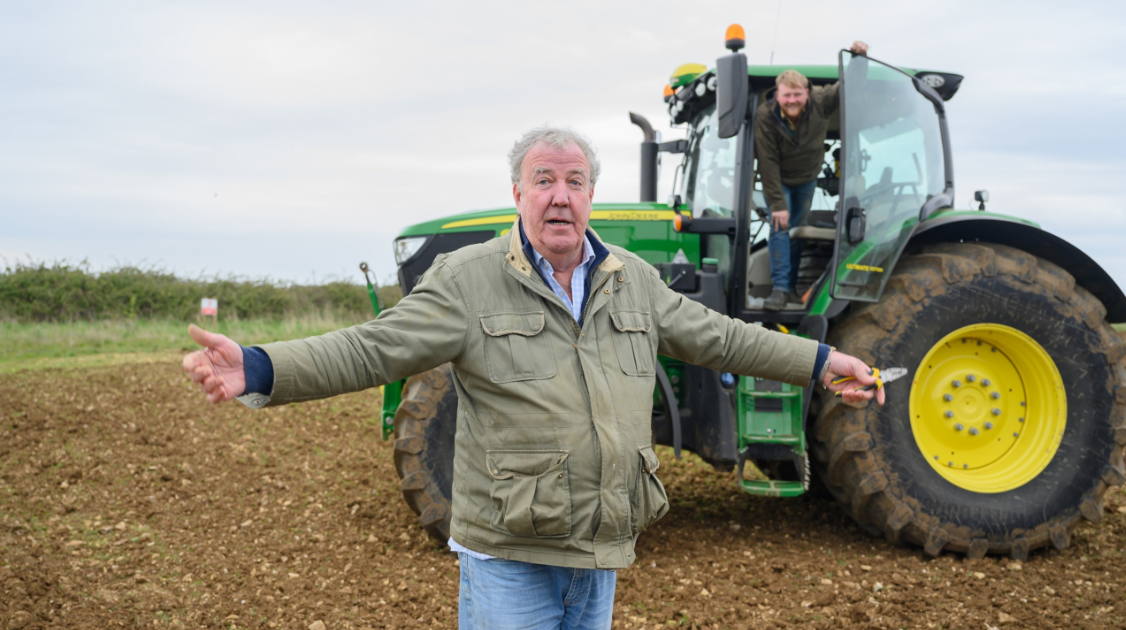
Clarkson’s Farm Sparks Surge in Student Demand for Agricultural Degrees
Jeremy Clarkson may be best known for roaring supercars around racetracks, but his foray into farming is leaving an unexpected legacy—one that is reshaping the future of Britain’s agricultural education. New statistics reveal that Clarkson’s Farm, the Amazon Prime hit documenting his often-chaotic adventures at Diddly Squat Farm, has helped drive a dramatic rise in student applications to agricultural universities.
The “Clarkson Effect” on Higher Education
Since its debut in 2021, Clarkson’s Farm has captivated millions of viewers by offering a candid, humorous, and sometimes sobering look at the realities of farming. But beyond its entertainment value, the show has struck a chord with young people, many of whom are now considering agriculture as a viable and exciting career path.
According to the Universities and Colleges Admissions Service (UCAS), the number of students accepted onto agricultural courses in 2024 rose by 8% compared with 2023. Even more striking, applications to agriculture, food, and related degree programs have grown by nearly 20% since 2019—an increase that industry experts are now calling the “Clarkson effect.”

Clarkson’s Co-Star Inspires Students
Part of this surge has been attributed to Charlie Ireland, known affectionately as “Cheerful Charlie” on the show. As Clarkson’s pragmatic land agent and agronomist, Ireland has become a standout figure, showcasing the breadth of expertise required to make a farm successful.


At the Royal Agricultural University (RAU), applications for its three-year rural land management BSc course rose by 11% this year. For the same program with an added farm placement, applications jumped 18%. The two-year rural land management foundation degree also saw a 14% rise.
Will Marsh, RAU’s director of external relations, said Clarkson’s sidekick may be playing a bigger role than anyone expected.
“The increase could well be inspired by Jeremy Clarkson’s land agent ‘Cheerful Charlie,’” Marsh explained. “We’ve also seen more visitors attending both undergraduate and postgraduate open days, alongside rising interest in agriculture and farm management courses.”

Harper Adams University Sees Ripple Effect
Harper Adams University, one of the UK’s leading agricultural institutions, has experienced similar momentum. Vice-chancellor Professor Ken Sloan believes Clarkson’s Farm has reached audiences who might never otherwise have considered agriculture.
“One of the strengths of these shows is how they demonstrate the breadth of experience new entrants to farming—whether celebrities or students—need to succeed,” Sloan said.
He pointed out that applications are not only growing in traditional areas like land management and business, but also in cutting-edge fields such as robotics and agri-technology. Harper Adams has even expanded its programs into urban Telford, hoping to attract students from cities who are now, thanks to Clarkson, viewing farming in a new light.
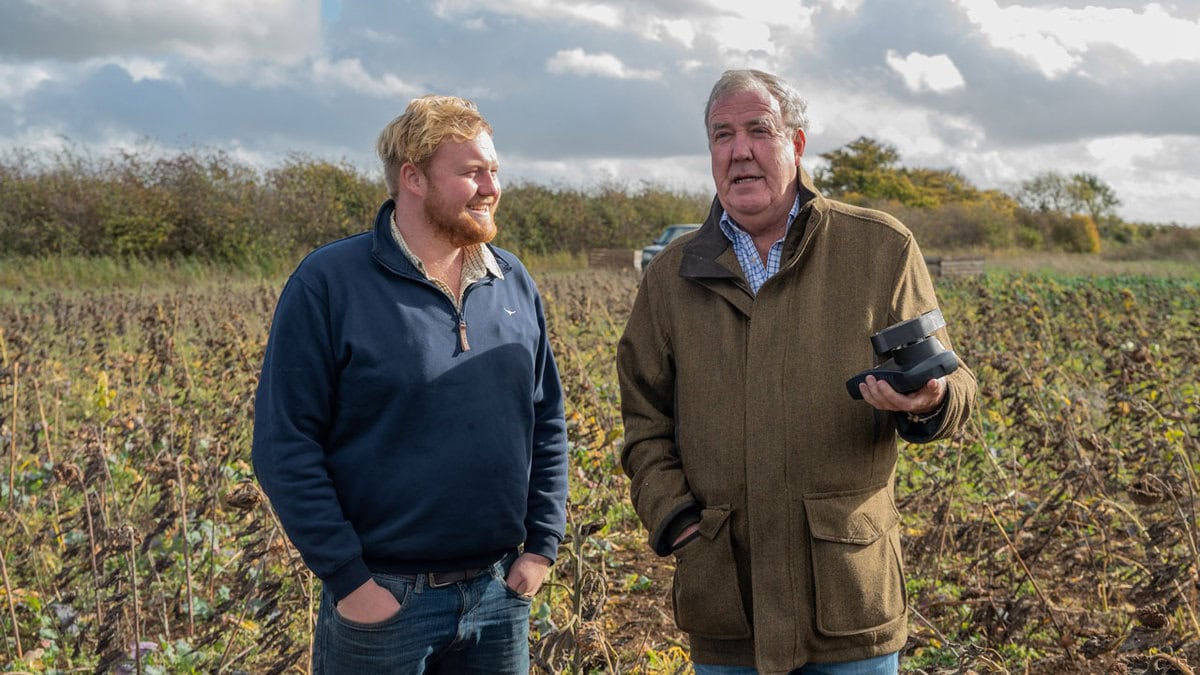
A Broader Shift in Perception
For many young people, farming once seemed like an outdated or inaccessible profession, but Clarkson’s unpolished portrayal has made it feel relatable, modern, and even adventurous. The show’s massive audience—over seven million in the UK alone—has fueled curiosity and challenged stereotypes.
Professor Sloan said the ripple effect goes well beyond Clarkson.
“Viewers are also tuning into other shows like The Yorkshire Shepherdess and Fletcher’s Family Farm. Everything that broadens awareness of land-focused careers is valuable, and Clarkson’s Farm has certainly opened that door.”
Senior lecturer Andrew Black, who teaches land and property courses at Harper Adams, agreed:

“The impact of Charlie’s role in Clarkson’s Farm is far more wide-reaching than people realize. We’re seeing a ripple effect in open day attendance and enrolments as a result.”
Farming’s Future, Fueled by Pop Culture
What began as a lighthearted series about a motoring journalist fumbling his way through crop rotations and sheep shearing has grown into something much larger. Clarkson’s Farm has not only entertained—it has inspired a new generation to look at agriculture as a serious, rewarding career.
As Britain faces the challenges of climate change, food security, and rural development, this influx of students into agricultural courses may prove more important than anyone imagined. And while Jeremy Clarkson may still struggle with tractors and stubborn cows, his unlikely contribution to the farming industry could have lasting benefits for decades to come.