Clarkson’s Farm Fights Back: Breakthrough Water Treatment Could End bTB Crisis.
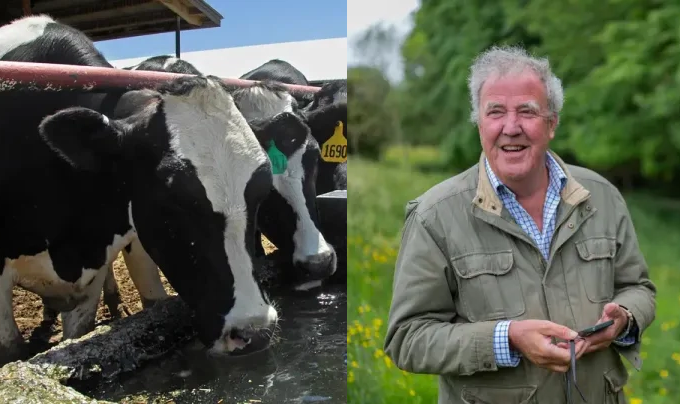
Water Treatment Innovation Offers New Hope in bTB Fight After Clarkson’s Farm Outbreak
A pioneering water treatment system, originally designed for poultry farms, is now being hailed as a potential weapon in the battle against bovine tuberculosis (bTB) after TV presenter Jeremy Clarkson revealed that his own Oxfordshire farm had been struck by the disease.
The FarmWater system, developed by vets and engineered to provide livestock with consistently clean drinking water, uses chlorine dioxide to kill harmful microbes. Already in use in parts of the dairy sector, the technology has shown encouraging results in trials and is now being promoted as a way to help farmers “control the controllables” in the fight against bTB.
From Poultry to Dairy – and Now Cattle Health
First deployed in the poultry industry, the FarmWater system was designed to combat the high microbial loads that can be present in livestock drinking water. Its creators claim that by delivering a stable dose of chlorine dioxide into water lines, it eliminates pathogens before they can cause disease.



In a 12-month trial at a Somerset dairy farm, the technology delivered significant results: mastitis cases dropped by 37%, while bactoscan readings — an indicator of bacterial load in milk — fell by an impressive 81%.
Phil Elkins, a respected farm vet and former member of both the British Cattle Veterinary Association (BCVA) board and the British Veterinary Association (BVA) council, said those figures suggest the system could play a wider role in disease prevention.

A Tool in the Fight Against bTB
While careful not to overstate its impact, Elkins argued the system offered farmers another valuable defence against bTB spread.
“It’s something that can be done with no negative effects to potentially help reduce that risk,” he explained during a webinar in late January. “We’re not going to come out and say that you won’t have TB on your farm if you put the FarmWater system in place. But it does kill the active pathogen and, as a result, empirically, it should reduce the risk.”
Elkins stressed that clean water is fundamental to animal health, welfare, and productivity — and any step that strengthens a farm’s biosecurity should be considered part of a broader disease control strategy.
Clarkson’s Farm Struck by bTB
The significance of the discussion became more pronounced just hours later, when Jeremy Clarkson announced on social media that his Diddly Squat Farm had been hit by bTB.
Posting on X (formerly Twitter), the former Top Gear host described himself and his team as “devastated” by the outbreak, though he quickly dismissed reports claiming the entire farm had been forced to shut down.

The news has reignited debate around bTB control measures — particularly the controversial badger cull programme, which the UK government has pledged to wind down within the current parliamentary term.
Badgers, Culls, and Controversy
bTB remains one of the most challenging animal health issues in Britain, with strong disagreement over how best to tackle it. While the Agriculture and Horticulture Development Board (AHDB) maintains that current measures are making progress, groups such as the Badger Trust reject the notion that culling badgers is the solution.
In Clarkson’s case, the Badger Trust suggested that his previously recorded remarks about shooting badgers should not be used to assume the animals were responsible for the outbreak.
The argument is part of a broader, long-running dispute over the role of wildlife in transmitting bTB to cattle.
The Hygiene Factor
Questions about hygiene in relation to bTB transmission surfaced again last summer when a BBC documentary — fronted by Queen guitarist Sir Brian May — highlighted research suggesting that the bacterium Mycobacterium bovis can survive in cattle faeces and potentially spread via contaminated feed and water.
The BCVA was sceptical of the documentary’s conclusions, calling aspects of the programme “misleading.” Still, some veterinary experts believe there is a strong case for ensuring cleaner feed and water sources as part of a multi-layered bTB prevention strategy.

Ben South, a poultry vet involved with FarmWater, is among them.
“I don’t see why people aren’t looking at it more and doing something about it,” South said. “If we know a pathogen can survive in water, then why wouldn’t we focus on making that water as clean as possible?”
Not a Silver Bullet, but a Step Forward
While no one in the veterinary community is suggesting that water treatment alone will eliminate bTB, advocates see the FarmWater system as a valuable addition to existing biosecurity and disease-management tools.
The approach, they argue, complements — rather than replaces — other measures such as regular herd testing, wildlife control, and farm-specific biosecurity plans.
Elkins summed it up: “It’s about controlling what you can control. If we can make a farm’s water supply as clean and pathogen-free as possible, we’re removing one possible route for infection.”
Industry Response
Following Clarkson’s announcement, industry bodies and farming organisations expressed sympathy but also used the moment to underline the importance of vigilance.

For the dairy sector — where the financial and emotional toll of bTB outbreaks can be devastating — technologies like FarmWater could offer hope, especially if they also deliver secondary benefits such as reduced mastitis and improved milk quality.
For now, the system continues to roll out across UK dairy farms, and researchers are monitoring its potential long-term impact on both herd health and productivity.
Bottom line: while the fight against bTB is far from over, innovations in water hygiene could prove to be an important part of the solution. As Clarkson’s experience shows, the disease can strike anywhere — but cleaner water may help farms fight back.