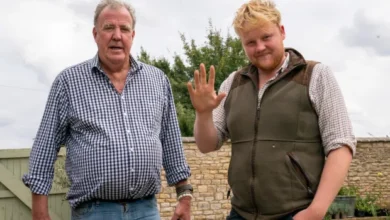
Jeremy Clarkson Grapples With Heavy Losses After Diddly Squat Farm’s ‘Catastrophic’ Harvest.
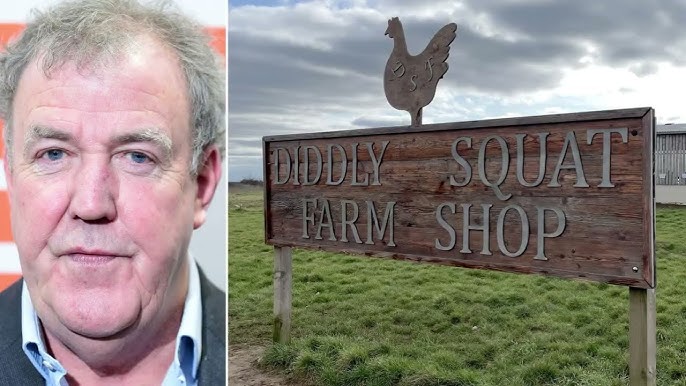
Clarkson’s ‘Catastrophic’ Harvest Adds Mounting Pressure at Diddly Squat Farm
Jeremy Clarkson warns that without income from the farm shop and pub, the business would struggle to survive — as poor weather and bovine TB hit hard.
A Dire Warning from the Cotswolds
Jeremy Clarkson, the outspoken host of Clarkson’s Farm, has sounded the alarm over what he calls a “catastrophic” harvest at his Cotswold-based Diddly Squat Farm. The Prime Video star, who has been documenting the trials and tribulations of farming life for three seasons on his hit series, took to social media this week to share a grim update.
“It looks like this year’s harvest will be catastrophic,” Clarkson wrote. “That should be a worry for anyone who eats food. If a disaster on this scale had befallen any other industry, there would be a lot of wailing and gnashing of teeth.”
His comments have sparked concern not just among fans of the show, but across the UK farming community — where many are experiencing similar challenges due to erratic weather patterns and market pressures.



Not Alone in His Struggles
Clarkson’s remarks were echoed by fellow arable farmer Ally Hunter Blair from Herefordshire, who described 2025’s harvest as “the worst of my life to date.” Many farmers, particularly those reliant on consistent rainfall and seasonal stability, are facing similar shortfalls.
When asked whether Diddly Squat could continue operating without the supplementary income from the now-famous Diddly Squat Farm Shop and the Farmer’s Dog pub, Clarkson was blunt:
“Not a cat in hell’s chance.”
Weather Woes and Crop Failure
The biggest culprit, according to Clarkson, has been the weather. The farm suffered from a prolonged lack of rainfall during crucial growing periods, severely impacting yields.
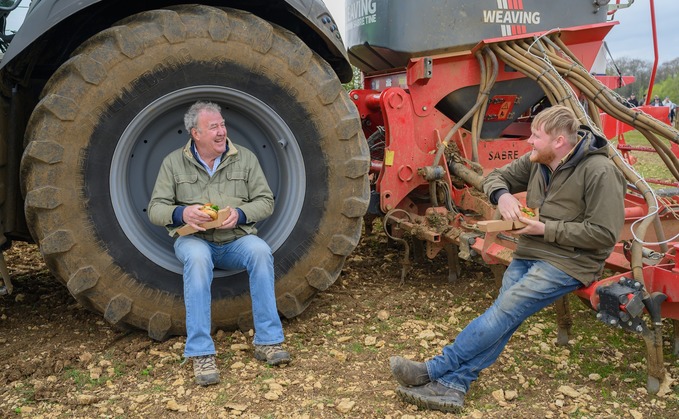
“It is the crops that have been disastrous,” he explained. “I planted 400,000 beetroot. Two grew.”
While the comment was laced with his trademark sarcasm, the underlying truth is serious: poor weather has decimated many crops, particularly those requiring steady moisture and stable growing conditions.
‘Good TV’ — But a Grim Reality for Most Farmers
Some fans suggested that the farm’s misfortune would at least make for engaging television when Clarkson’s Farm returns for its next season. Clarkson’s response was as quick as it was sobering:
“Yes. But most farms do not have TV shows to keep them going.”
It’s a reality that underscores the stark difference between Clarkson’s diversified revenue streams — buoyed by Amazon Prime royalties, merchandise, and tourism — and the plight of thousands of small farmers who have no such safety net.
Bovine TB Brings More Heartbreak
As if poor crop yields weren’t enough, Clarkson revealed another devastating blow earlier this month: an outbreak of bovine tuberculosis (bTB) at Diddly Squat.

Posting to his 7.9 million social media followers, he shared that one of his cows — pregnant with twins — would have to be culled following a routine test.
“Bad news from Diddly Squat,” he wrote. “We have gone down with [bovine] TB. Everyone here is absolutely devastated.”
Bovine TB is one of the most serious animal health issues facing UK cattle farmers, often leading to compulsory slaughter, strict movement restrictions, and significant financial losses.
Mixed National Picture
Clarkson’s dire harvest comes as the Agriculture and Horticulture Development Board (AHDB) released its third harvest report of 2025. While national data shows some crops performing above last year’s levels, there’s significant variation across regions.
According to AHDB, the winter wheat harvest was 48% complete as of August 6 — ahead of both last year (37%) and the five-year average (31%). Yields are averaging 7.66 tonnes per hectare, just 1% below the five-year average, but 5.2% higher than in 2024. However, the averages mask large disparities depending on soil type and regional weather conditions.
Oilseed rape has fared better nationally, with harvests averaging 3.98 tonnes per hectare — the highest UK average since 2011 for the winter-sown crop. The range, however, is wide, with some farms producing as little as 2.88 t/ha and others achieving 5.31 t/ha.
Spring barley harvest is 19% complete, well ahead of both the 7% seen at the same time last year and the five-year average of 9%. Early yield reports are encouraging, though results so far are weighted towards the east of England, and variability is expected as harvesting continues.
The Bigger Issue: Farming Under Pressure
Clarkson’s frank assessment of his farm’s fortunes highlights a broader challenge: UK farmers are operating under immense strain. Unpredictable weather linked to climate change, rising costs of inputs like fuel and fertiliser, and disease outbreaks are combining to threaten profitability.
For Clarkson, diversification projects like the farm shop, a restaurant, and a pub have been a financial lifeline — drawing tourists and fans willing to spend on Diddly Squat-branded goods and local produce. Without these additional income streams, he admits, the farm would be financially unsustainable.
Many other farmers, however, lack the platform or celebrity profile to launch such ventures, leaving them dangerously exposed to bad seasons.
What Comes Next
Filming is underway for the next season of Clarkson’s Farm, which promises to show the most brutal side of farming yet. Between extreme weather, crop failures, and livestock disease, the challenges faced by Clarkson and his team will likely mirror the struggles of countless farmers across the UK.
While audiences might tune in for entertainment, Clarkson is determined to ensure his show also serves as a reality check. As he has often stated, Clarkson’s Farm is not just about comedy and mishaps — it’s about showing the high-stakes, high-risk nature of modern farming.
One thing is certain: if the situation at Diddly Squat is any indication, 2025 will be remembered as a year when resilience, adaptation, and diversification were the only ways to survive in British agriculture.