Backwoods Empire: Inside the Largest Illegal Still Site in Modern Franklin County History

Backwoods Empire: Inside the Largest Illegal Still Site in Modern Franklin County History
Franklin County, Virginia—Deep in the storied heart of America’s moonshine capital, history is being rebuilt pot by pot. With eight massive submarine stills smuggled across state lines, Josh Owens, Tickle, Henry, and a new generation of outlaws are resurrecting a liquor legacy that hasn’t been seen in over 40 years.
“We don’t know anybody running eight stills. This ain’t just moonshining. This is an outfit.”
Under a weathered tin-roof barn surrounded by old-growth woods, a dream team of backwoods distillers has assembled the largest illegal operation the region has seen in decades. It’s a full-blown “still farm,” equipped with four 800-gallon submarine stills, four 400-gallon pots, thump kegs, worm condensers, and enough malted corn to flood the county.
The Rise of a Modern Moonshine Cathedral
The effort began with a simple goal: revive a lost art—at scale. The team worked tirelessly, burying block foundations for insulation, constructing oil-fired brick furnaces, and installing copper piping with surgical precision. The goal wasn’t just volume; it was legacy.



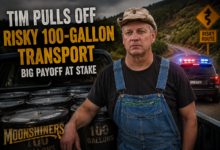
Josh, Digger, and Henry aren’t just making shine—they’re reviving the techniques of Henry’s father and mentor, Amos Law, a man who once ran 60 pots in secret and produced more than half a million gallons of liquor in just five years. According to some, that number is conservative.
“That ain’t no still site. That’s a cathedral,” one of the men says, staring down the 50-foot stretch of stills.
Switching to Oil: Safety in Scale
Instead of using propane—known for being explosive and unstable in closed quarters—they opted for fuel oil burners, common in home furnaces but rare in illegal distilling. The burners are safer, quieter, and easier to manage.
“A propane tank tips over and blows up. These burners? Quiet as rain on a roof.”
They’ve built the furnaces airtight, allowing the heat to flow efficiently under each pot, out through a chimney, and away from the barn. It’s cleaner, safer, and more professional than anything typical of outlaw operations.
Mash in, Fire Up
Once the infrastructure was in place, the team moved in nearly two tons of malted corn from Tim’s farm and hundreds of pounds of sugar. The recipe? Almost 80% corn, followed by malted barley and a bit of rice—true to the style of authentic Tennessee whiskey.
“Just ‘cause you make whiskey in Tennessee don’t mean it’s Tennessee whiskey,” Henry jokes. “You gotta mash it, cook it, filter it the right way.”
They run two pots at a time, reusing caps and thump kegs in a leapfrog pattern to finish a batch of 600 gallons. It’s a logistical ballet that only seasoned shiners can choreograph.
Legacy Meets the Lawless Future
For men like Henry and Kenny Law, this is more than just a liquor run—it’s a return to family tradition. Kenny’s father, Amos, was a moonshine legend in Franklin County, and this site echoes his scale and ambition.
“It’s been 40 years since anyone’s built a setup like this. Who did it? We did.”
There’s a mix of awe and humor on the site. Between cutting pipes, firing burners, and stirring mash, they crack jokes, steal each other’s glasses, and talk about marriages and in-laws. But the camaraderie can’t hide the weight of what they’re building.
Conclusion: More Than Moonshine
This isn’t just about whiskey. It’s about preserving a cultural craft, passed down through generations, adapted for modern times but never sanitized. From sweet potato liquor to Tennessee standards, from outlaw roots to engineering brilliance, this crew isn’t just making moonshine—they’re making history.
“It’s the Dream Team,” Josh says. “Let’s light these things up.”