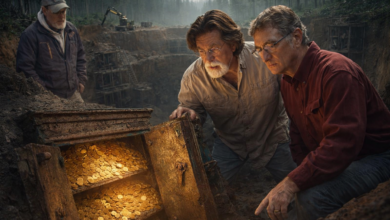
Secrets Beneath the Surface: 6 Mind-Blowing Theories That Might Finally Explain Oak Island’s Treasure.
For over two centuries, Oak Island has captivated explorers, historians, and treasure hunters alike with its mysterious Money Pit, strange artifacts, and flood tunnels. But what if some of the wildest theories about the island’s secrets are actually true?
Thanks to the relentless work of the Lagina brothers and their team on The Curse of Oak Island, viewers around the world have witnessed jaw-dropping moments that may shed light on some of history’s deepest mysteries. From Aztec gold to secret societies, here are six of the most compelling theories that could explain the riddle of Oak Island.
1. The Aztec Connection: Treasure Hidden in a Remodeled Trap
One of the boldest theories proposed by Oak Island expert John suggests the Aztec Empire had a role in the island’s construction. John claimed that around 800 AD, Mayan or Aztec explorers reached Oak Island and discovered valuable blue clay deposits.
According to him, they used basic mining methods to dig shafts, possibly turning a mine into a booby-trapped vault. John even believed the true treasure lies not at Nolan’s Cross but just a few hundred yards from it.
The theory links the Aztecs’ advanced engineering, sacred resources, and historical migration patterns—painting a picture of a Mesoamerican civilization leaving its mark far from home.


2. The Enochian Chambers: Solomon’s Temple Recreated in Nova Scotia?
Historian and author Alan Butler offered a theory connecting Oak Island to ancient spiritual knowledge. He believed that the Money Pit was a symbolic reconstruction of Solomon’s Temple—complete with a hidden vault inspired by the Royal Arch of Enoch, a concept found in Masonic tradition.

The chamber’s layout, the platform of flat stones, and even the alignments are thought to mimic the Vault of the Adepts—a sacred space used in Enochian ceremonial magic.
This connection ties Oak Island not just to treasure, but to deeply mystical and spiritual traditions stretching back to ancient Israel and Renaissance-era occult practices.
3. Founding Fathers and Secret French Alliances
Another surprising theory involves Louis-Alexandre Rochambeau, son of a French Duke, and close associate of Benjamin Franklin and Thomas Jefferson. Could Rochambeau have passed secret knowledge about Oak Island to America’s Founding Fathers?
The idea suggests that the island played a covert role in financing the American Revolution—a national treasure hidden in plain sight, protected by political and military elites.
Rick Lagina has openly speculated that if this theory holds true, Oak Island might be one of the most important historical sites in North America.
4. Zena Halpern’s Templar Map and African Gold Links
New York researcher Zena Halpern shook the Oak Island community with her discovery of a Templar map dated 1347, detailing French-labeled locations that seemed to match real island landmarks—like the swamp (marsh), the dam, and the infamous Money Pit.
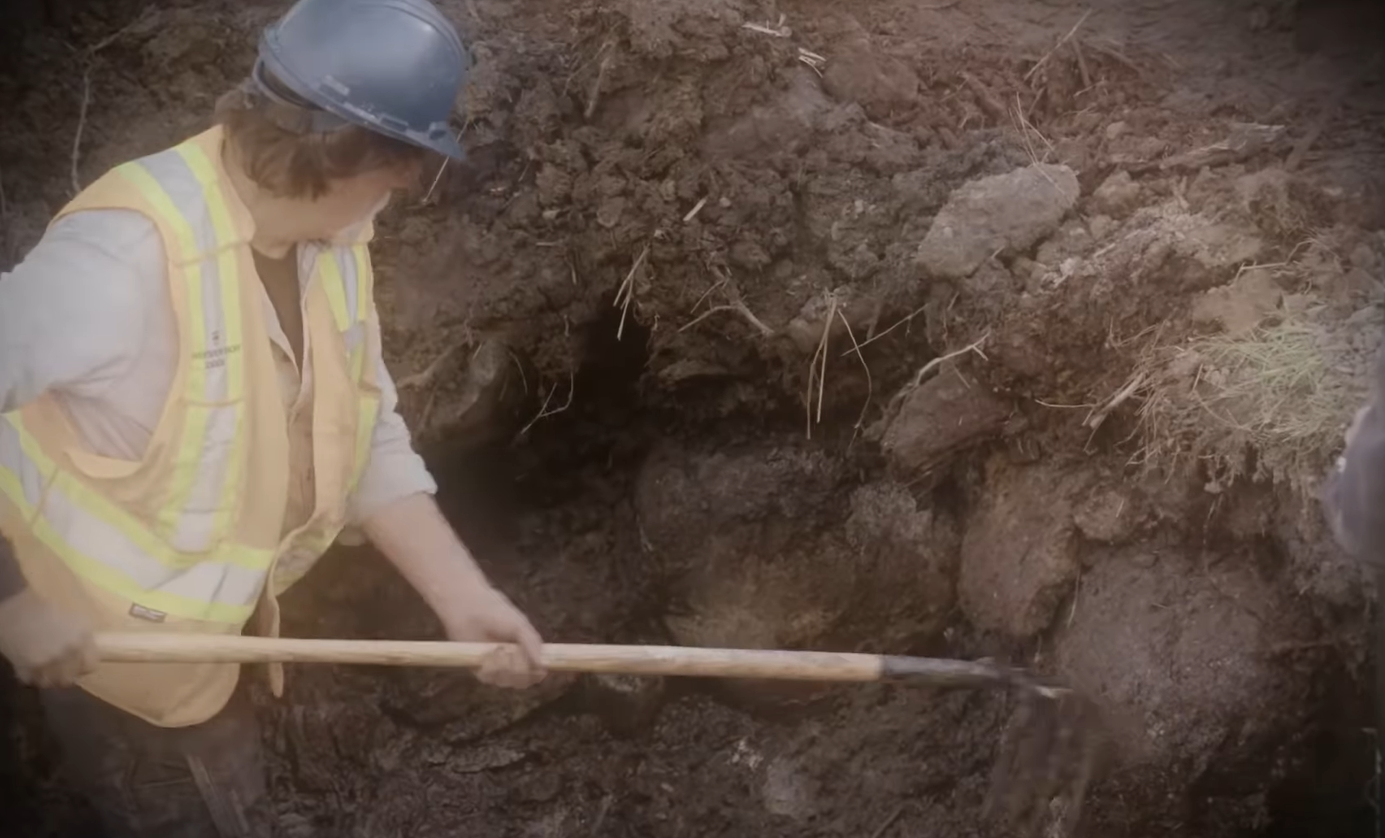
Zena also uncovered a cipher linked to a stone found 90 feet below the island’s surface, believed to be tied to Portuguese forts in Africa, Templar voyages, and even biblical figures like Joab from King David’s army.
Despite skepticism, the map showed undeniable overlap with Oak Island’s geography. Marty and Rick Lagina admitted the evidence was intriguing enough to keep investigating.
5. Star Maps, Freemasons, and the “As Above, So Below” Code
Physicist and investigator Travis Taylor offered a completely different angle: astronomy. He noted that many Oak Island researchers were Freemasons and that their maps could be based on celestial alignments, particularly the Pleiades star cluster.
By overlaying the constellation onto Oak Island, Travis and the team discovered massive boulders at the exact mapped star points—possibly ancient markers tied to Masonic symbolism.
Could the treasure be located where the stars align? The idea that “as above, so below” guides the map-making gives this theory a cosmic twist rooted in sacred geometry and ancient wisdom.
6. The Money Pit and the Templar Legacy
The legendary Money Pit remains the heart of the Oak Island mystery. Originally discovered by young explorers in the late 1700s, it revealed wooden platforms every 10 feet, booby traps, and even a mysterious 90-foot stone with cryptic symbols.
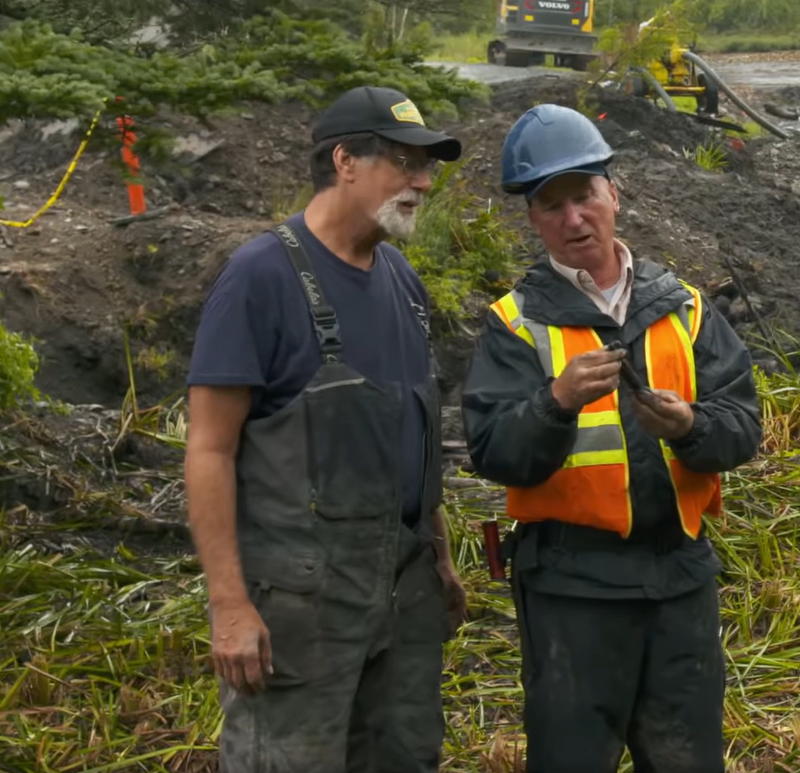
Over the years, the Lagina brothers have unearthed Spanish coins, Templar crosses, European and Middle Eastern human remains, and ancient tools inside and around the Money Pit.
From a mysterious trap built with advanced engineering to possible links to the Knights Templar, this site could hold the final piece of the puzzle.
Final Thoughts: Which Theory Is Closest to the Truth?
Each theory—from Aztecs and Masons to Founding Fathers and Freemasons—offers a fascinating glimpse into what could lie buried beneath Oak Island. Whether you’re drawn to ancient rituals, lost empires, or secret societies, Oak Island provides a unique lens through which to explore some of history’s greatest mysteries.
As Rick and Marty Lagina continue their relentless excavation, the world watches with bated breath.
Which theory do YOU believe? Let us know in the comments below—and don’t forget to like, share, and subscribe for more stories uncovering history’s deepest secrets.